Tag Archives: kit miracle

Yearning for Spring

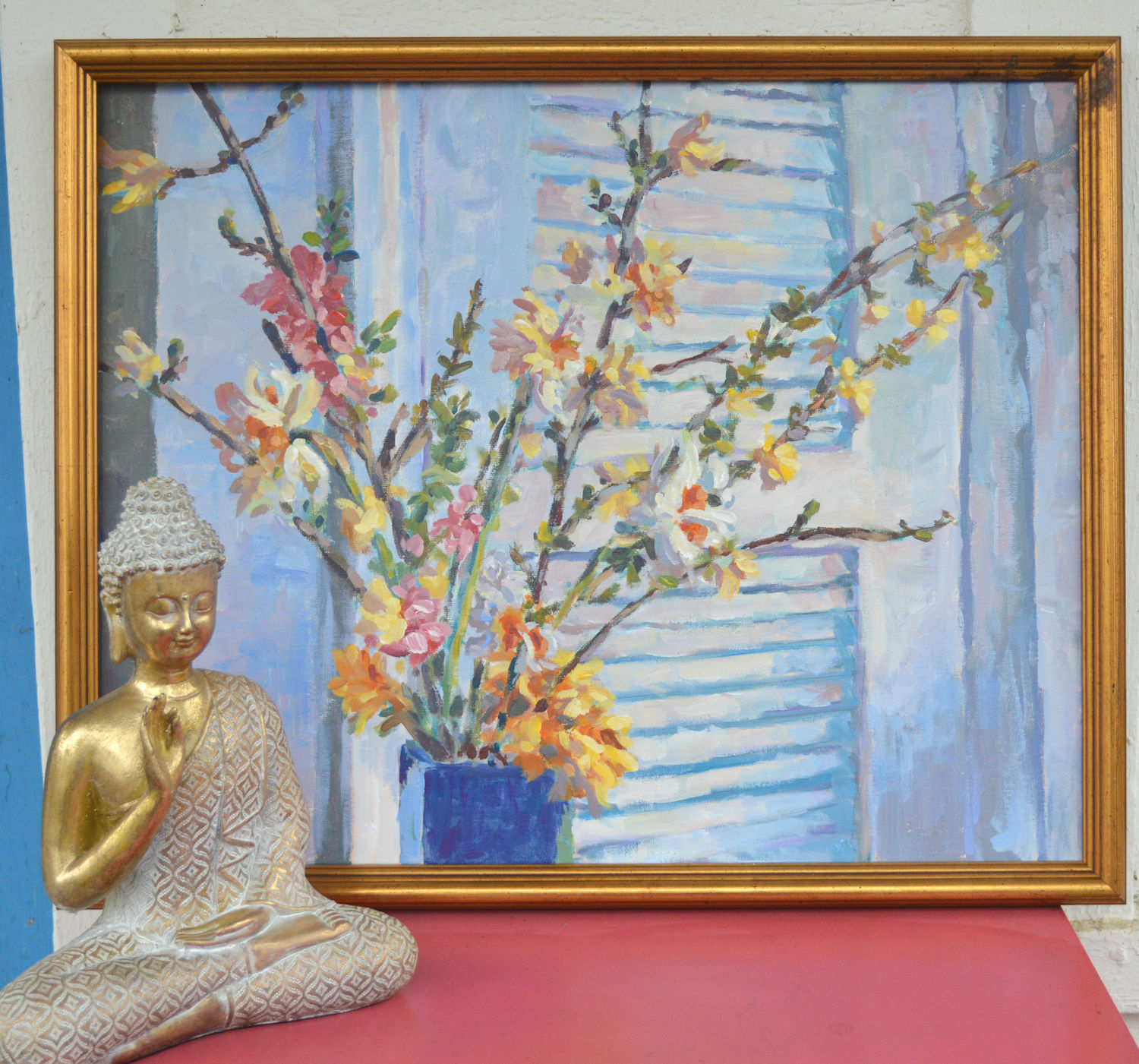
Yearning for Spring, framed, 16 x 20, acrylic on canvas, Kit Miracle, contemporary impressionist

I am just so ready for spring.  Living here in southern Indiana, the winters are usually rather mild, at least compared to my years in Michigan.  We will often get a little snow but not much to worry about.  I think winter here is really like a long fall.

However, this year Mother Nature seems to have taken a fit.  Warm one week just enough to tease the early bulbs out of the ground.  Then the next week, temperatures diving for the bottom of the thermometer.  Last week we saw lows of 10 degrees which meant our wood furnace (The Beast) was doing its best to keep up.  Yesterday we saw a high of 62 with some 70s predicted for next week.  Last evening the peepers could be heard in chorus in the bottoms.  Did I mention that I am really ready for spring?

I felt an irresistible urge to paint some spring flowers. With few early flowers out yet except a couple of bedraggled crocuses and some hardy daffodils, I turned to my photos of some spring bouquets.  And to step outside my usual style.  Same old, same old, gets boring in my opinion.
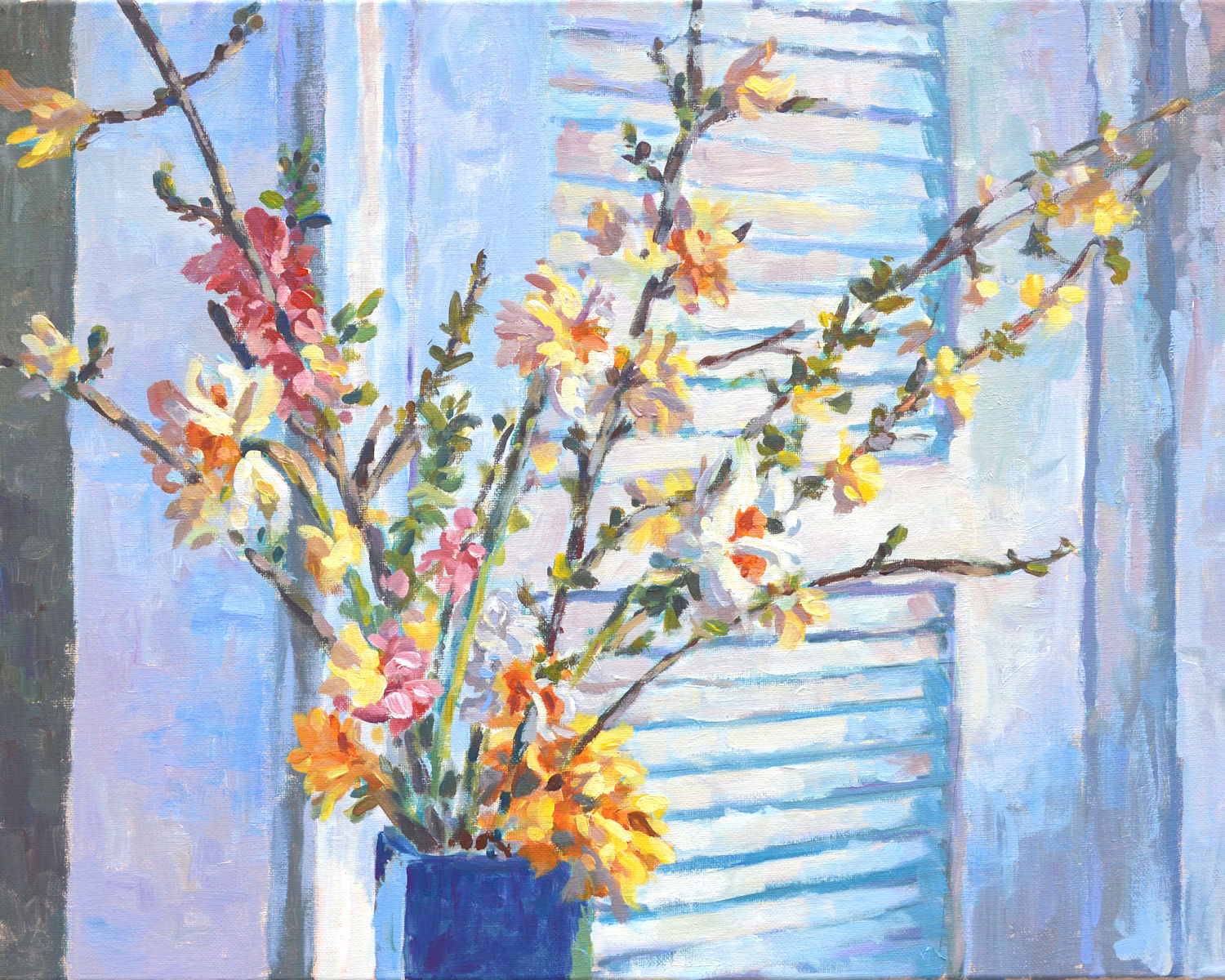
Yearning for Spring, acrylic on canvas, 16 x 20, contemporary impressionist, Kit Miracle

The first bouquet consists of forsythia, double fancy daffodils and some branches of flowering quince.  I like the subtle colors here and aimed at coordinating the background to the flowers but to subjugate it to the foreground.
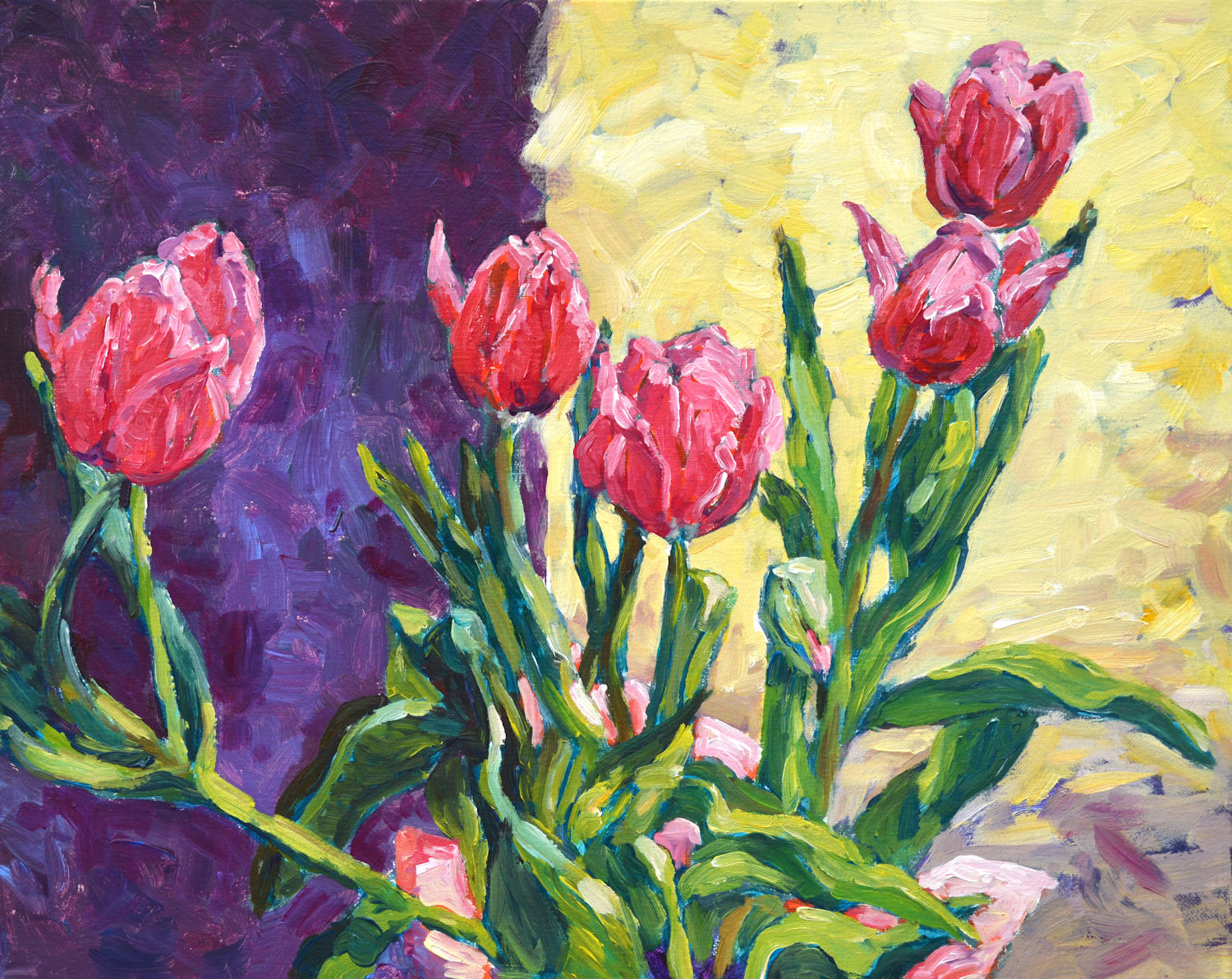
Dancing Tulips, acrylic on canvas, 16 x 20, contemporary impressionist, Kit Miracle

The second flower painting took me in a different direction.  I aimed for bold colors and lively strokes.  This painting certainly accomplished that.  It almost looks as if the tulips are dancing.  To see the step by step for this painting, click here or go the Artworks tab and click on Dancing Tulips.

With the warming temps coming this week, my real tulips might be blooming. They’re already up several inches and it will just need old Sol to entice them out.  I’m ready!

Of course, both paintings are for sale at my Etsy shop.

Thanks for stopping by.

Spring is Nature’s way of saying, “Let’s Party!”       Robin Williams
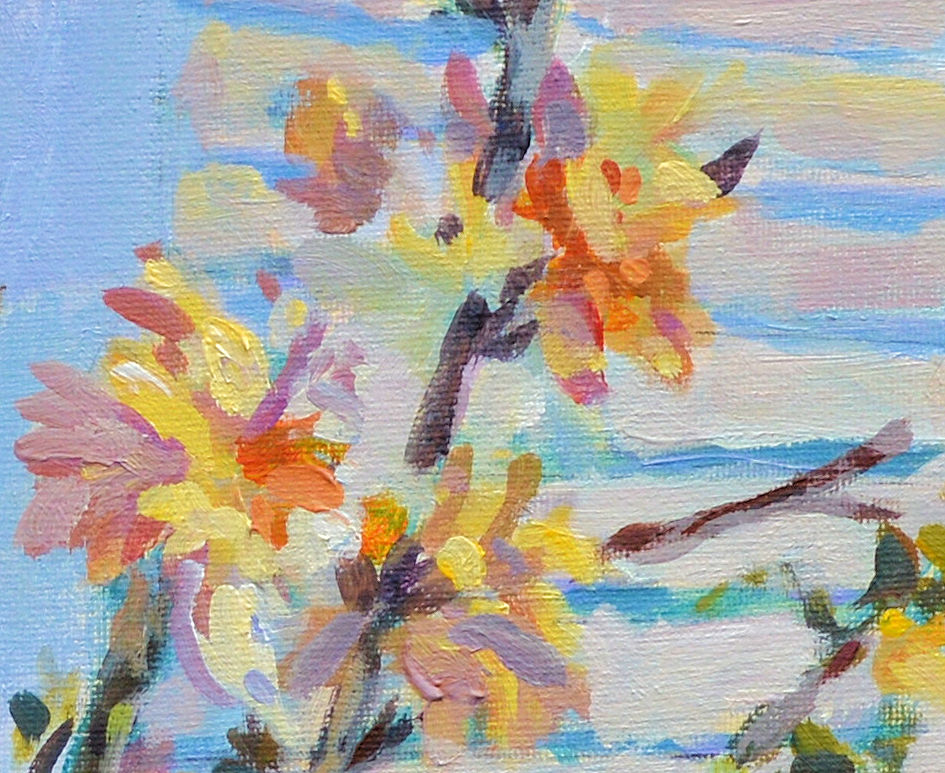
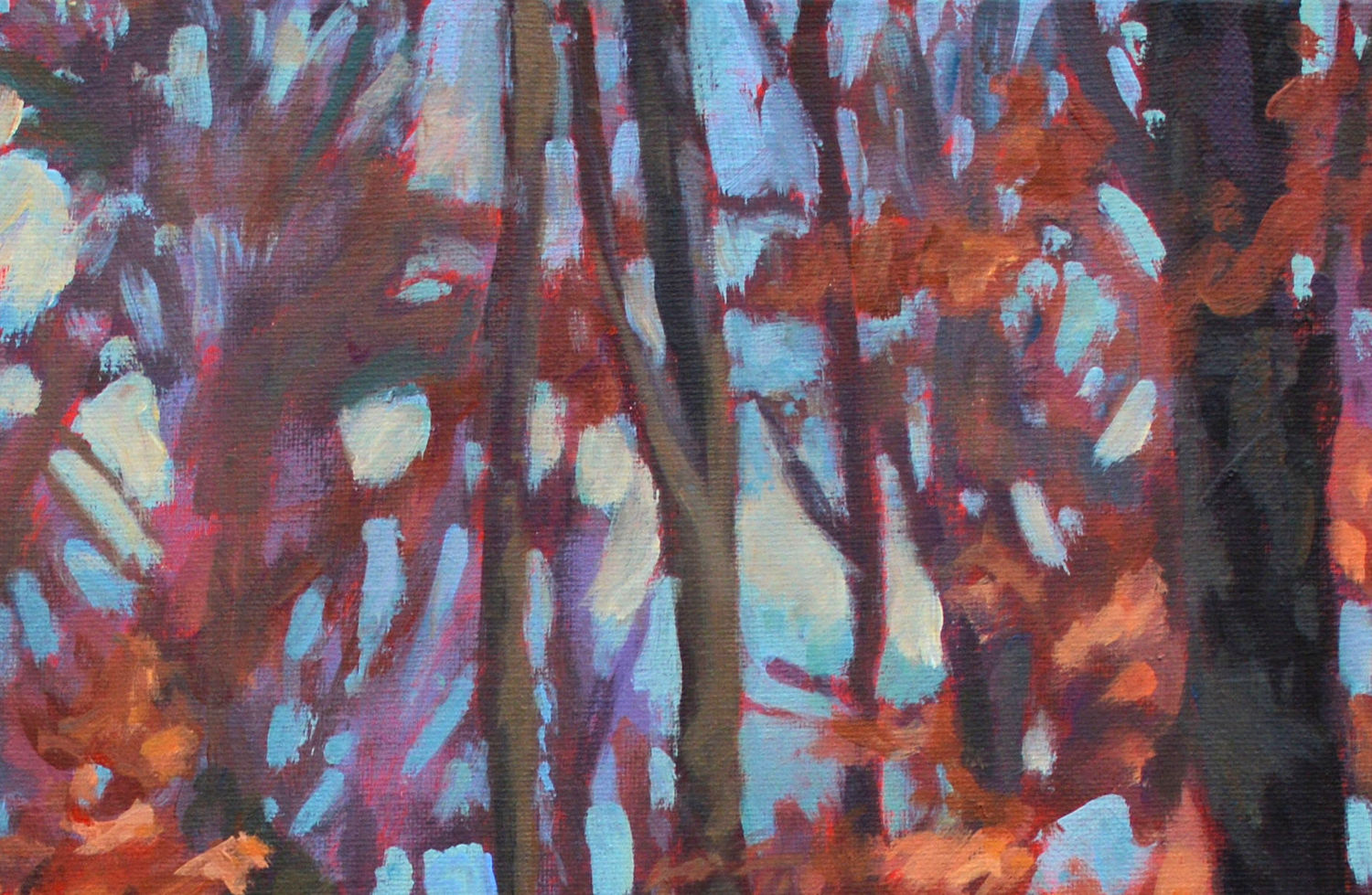
Yearning for Spring, detail 1

Yearning for Spring, detail 2
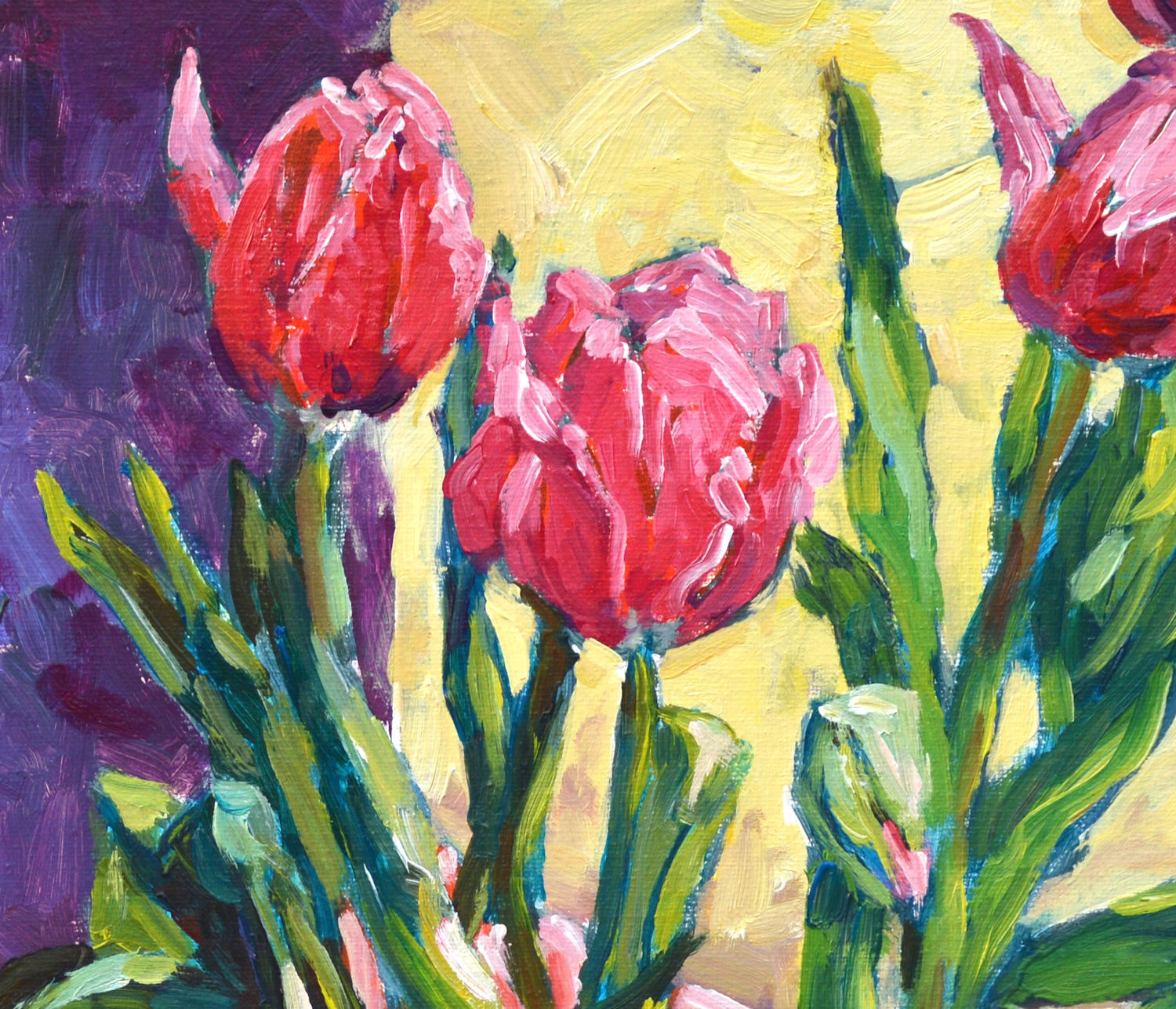
Dancing Tulips, detail 1, Kit Miracle
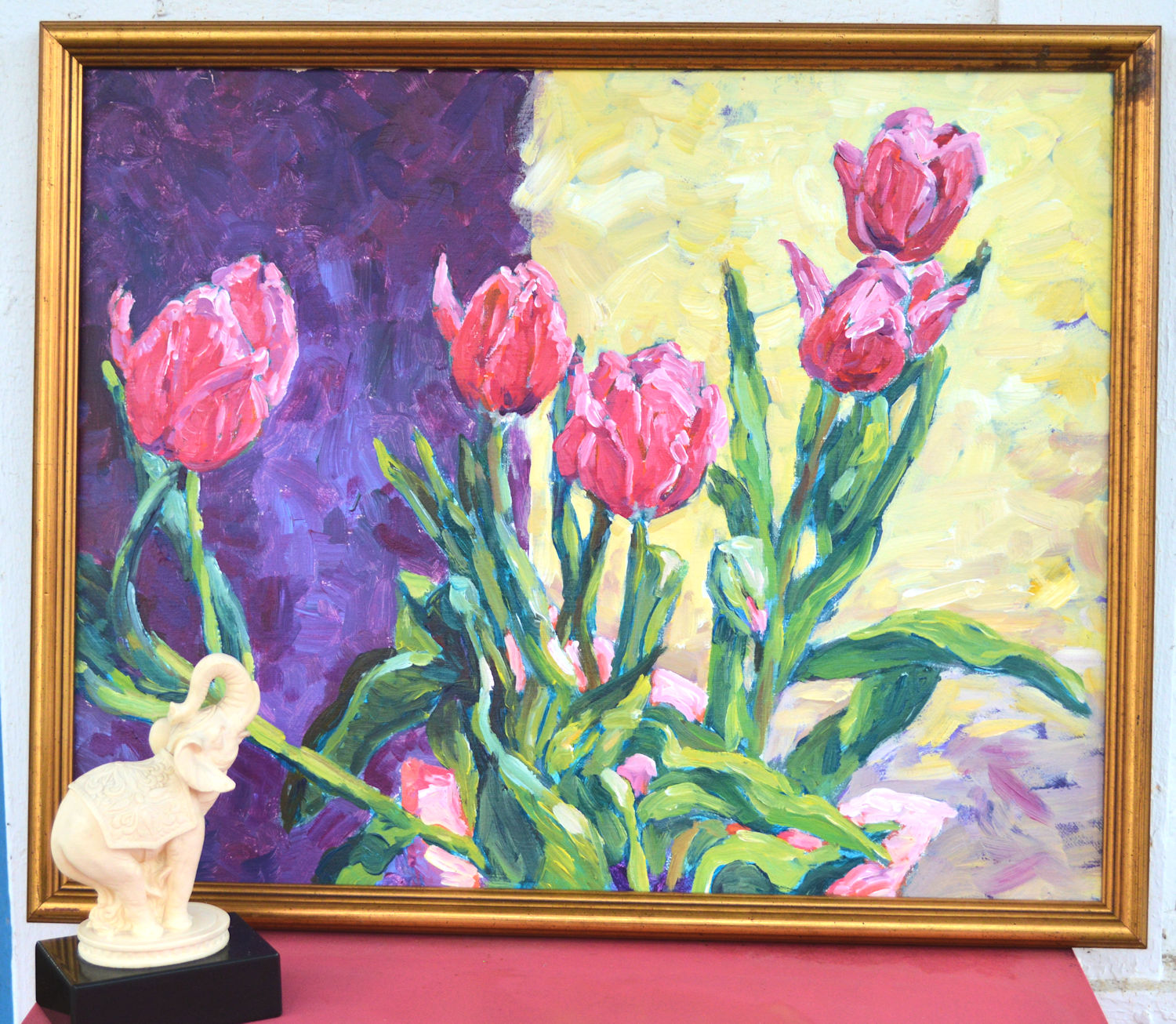
Dancing Tulips, framed, acrylic on canvas, 16 x 20, Kit Miracle
Painting beyond the scene

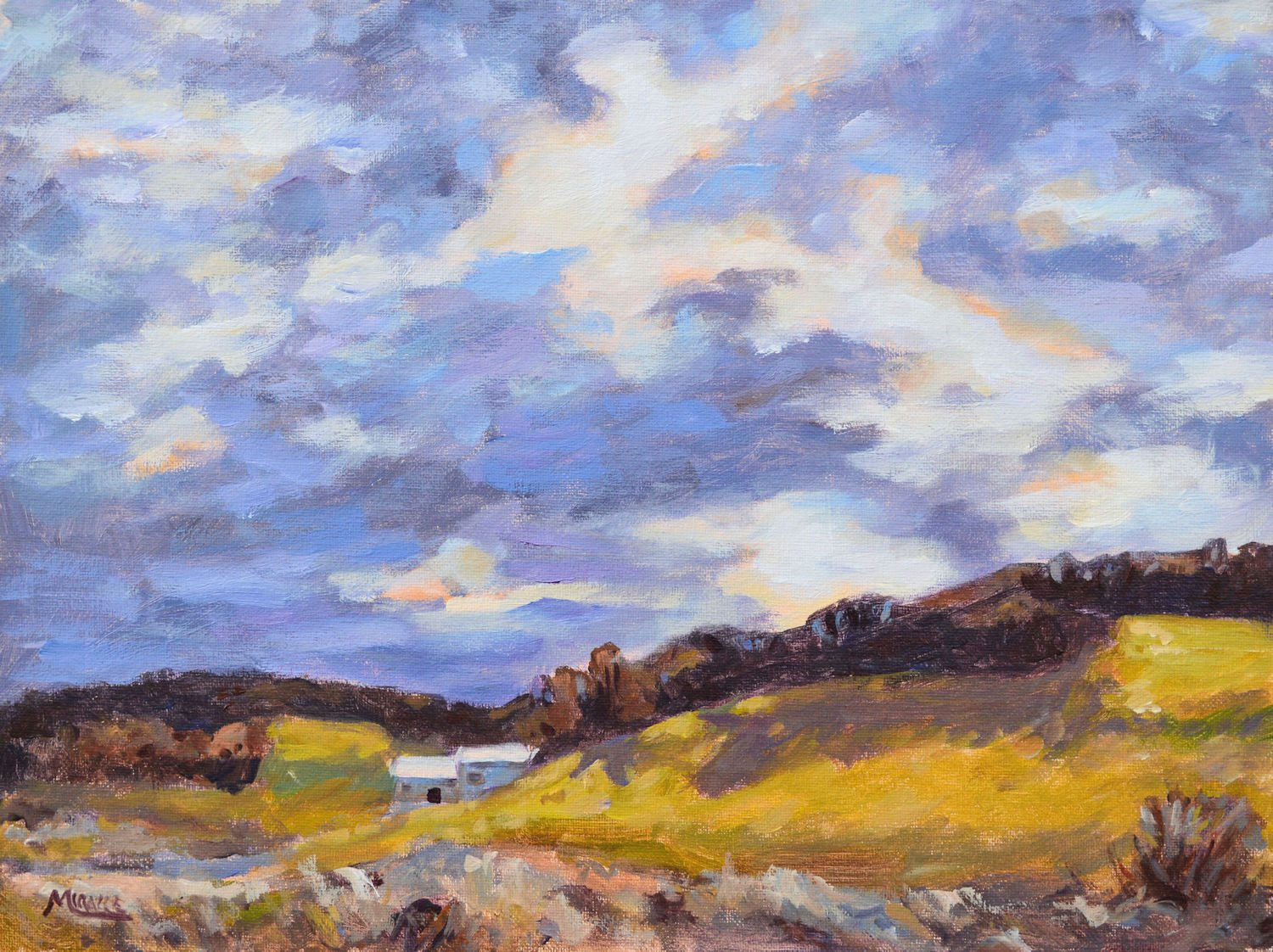
West Wind Blows, original painting, 12 x 16, impressionistic, Kit Miracle

Artists are known for traveling over the world seeking new things to paint.  I have done so myself and have captured many scenes of my travels over the years.

I don’t know why travel is so inspiring but maybe it makes us see the world with new eyes.  We return home refreshed and look at our surroundings in a new way.

However, we don’t need to go away to appreciate what we have.  It is often right there before us.  A new light, a different angle, maybe the same scene in a different season.

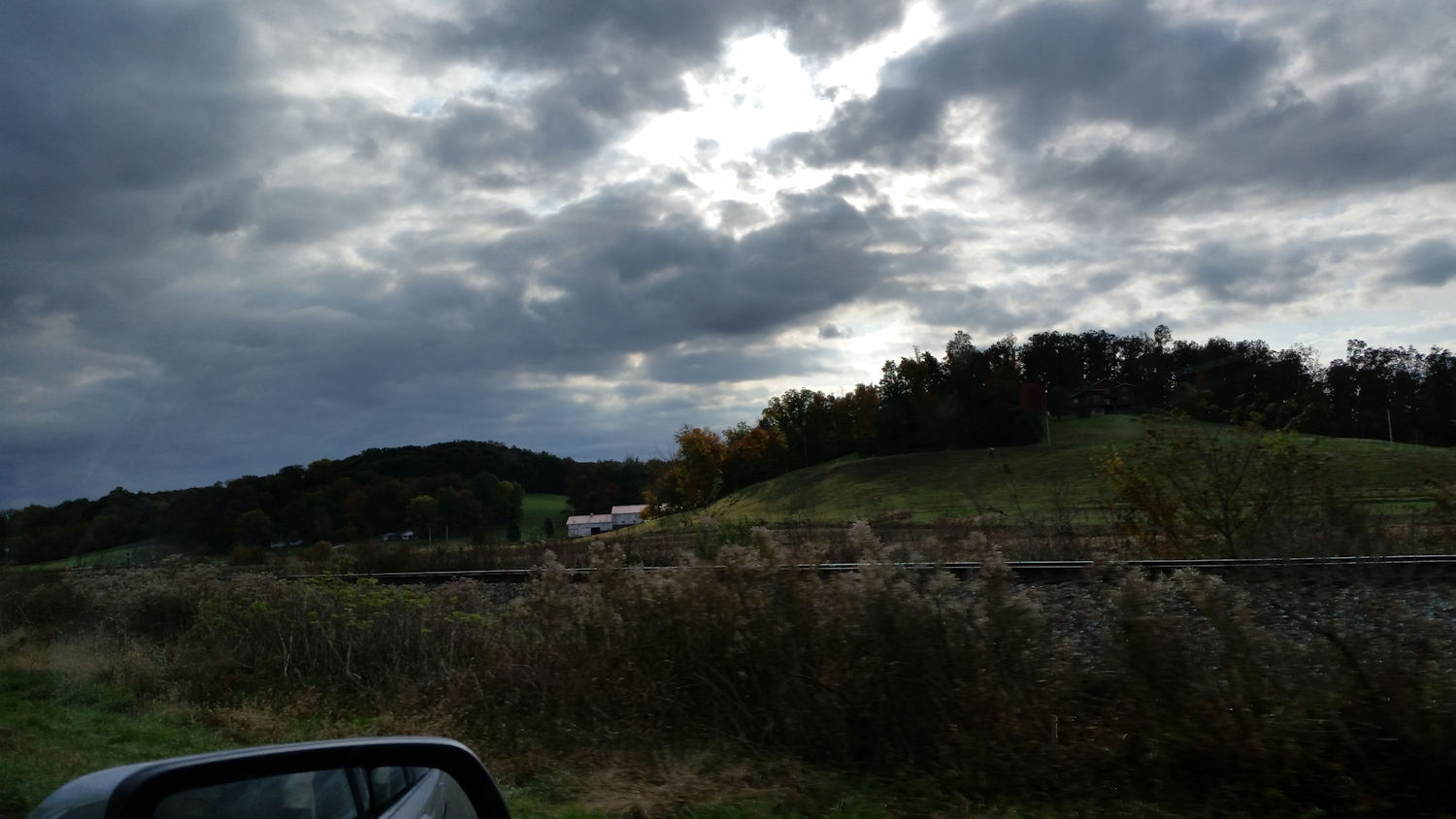
This is a scene that I have passed thousands of times. I’ve always liked this valley with the hills but on this particular day, it really pulled at my attention.  Maybe it was the backlit clouds scudding across the sky.  Maybe it was the farm in the valley.  I even found the shadows of the trees across the pasture interesting.

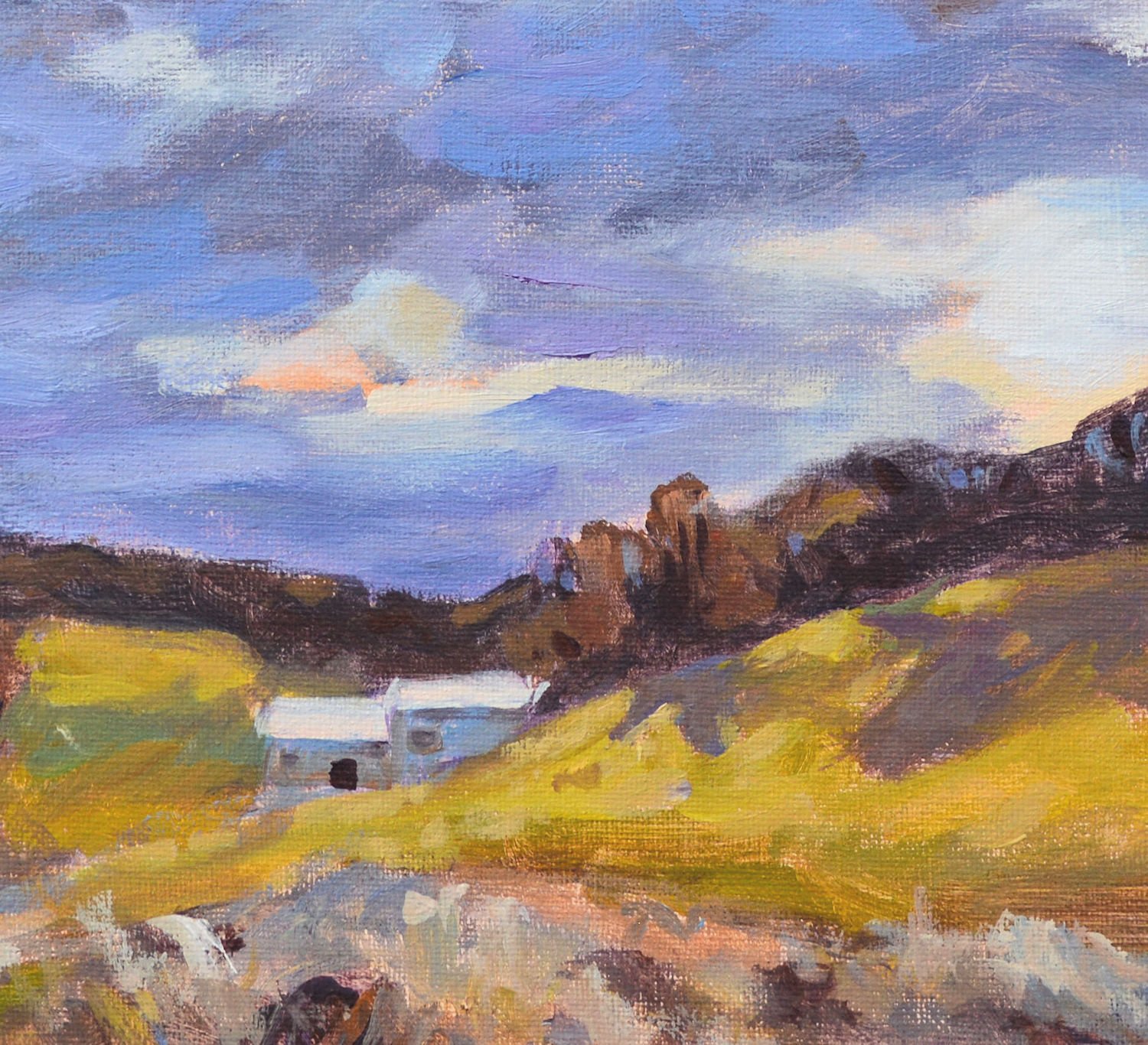
West Wind Blows, detail, painting, Kit Miracle

Of course, I took some artistic license….like I need a license…and edited the landscape to suit myself. But compare the original photo to the scene that I captured. A little editing maybe but any local person would recognize this place.

West Wind Blows, original photo for painting

I’m teaching a class on painting from photographs.  One of the points that I’ve been trying to get across to my students is to use a photograph as a tool, a place to start, but you don’t have to be religious to the exact photo.  It is up to you, the artist, to change it to suit your needs and desires.

It’s a warm wind, the west wind, filled with bird cries.

John Masefield

West Wind Blows 

Little Stone Church, Provence – demonstration painting from photographs

Little Stone Church, Provence, France – final. Acrylic, 12 x 16. As you can see, I made the sky more interesting and edited the road a bit, too.

I thought I’d share another lesson from the class that I’m teaching about painting from photographs.  Frankly, this process can be as complicated or as simple as you want to make it.

Little Stone Church, Provence – original photo

In this example, I have a real photo – you know, the printed kind – from a biking trip that I took through Provence, France many years ago.  I like to browse through the old photos and inevitably I see a new subject that I overlooked before.  In this case, I remember exactly how I felt cruising through the olive groves when I passed this old stone church one morning.

Little Stone Church cropped.

The original photo included more subject matter than I wished to include in my painting so I cropped it to fit my canvas size.  This is easy to do if it is a digital photo, but in this case with a real picture, I used paper L-shaped pieces to manipulate the photo (not shown here.)  I don’t usually need to do this anymore since I’ve been painting for so many years but it’s a good hack for new painters.

For the purpose of the class, I actually scanned the photo and used these images to demonstrate.

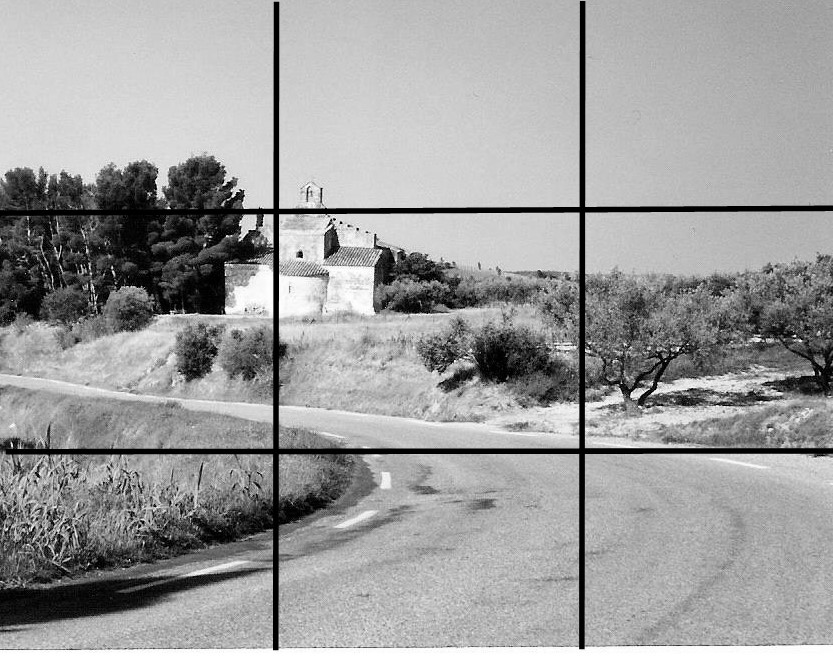
Little Stone Church – photo divided into thirds. The center of interest – the church – is at the intersection of one of the thirds. Also, notice how the road leads the eye into the painting and points towards the church.

I divided the selected picture area into thirds each way and then placed the church on one of the intersections.  This generally makes a nicely balanced composition.

NOTAN Here I changed the photo to black and white, then pushed the contrast to the extreme. This helps one get a better idea of the basic shapes. Notice how the stone church (center of interest) also has the greatest contrast with the trees framing it.

The prior week we had discussed NOTAN – the theory of making your image extreme black and white in order to seek balance in the composition.  Here, I manipulated the image by computer to show a high contrast in black and white which is essentially NOTAN.  Here is a link to a very good explanation of NOTAN by artist Mitchell Albala.

A black and white image of the same photograph. This helps the artist gain a better handle on values, lightest to darkest. The same effect can be achieved by viewing the color photograph through a piece of red gel. See a prior post on the subject at the link.

I then showed a regular black and white photo to the class so they could get an idea of the values.  Again, you can use the trick of a piece of red gel to get the same effect.  (Click here to see an earlier post about using red gel.)

The next step was to demonstrate to the class my procedure for painting the scene in color.  In oil or acrylic, one usually starts with the darks and works towards the light.  Watercolor usually proceeds the opposite way with laying in the lights (or reserving the lights) and adding more and darker color as the painting progresses.  There are several demonstrations of both of these methods under the tab Artworks at the top of the page.

The takeaway here is that composition can be enhanced for using old photos as painting materials by manipulating the size and shape of the photos, taking care of the placement of the center of interest, and selecting pleasing balance and contrasts of lights and darks.

Little Stone Church, Provence

Way the Wind Blows – a quiet painting

Way the Wind Blows, acrylic on wood panel, 8 x 10, original painting, Kit Miracle

With the nasty weather screaming through the Midwest the past couple of weeks, I’ve been surfing through old photos and files for subjects to paint.  I came across some images taken on a visit to New England to visit family.

This is a painting of the cupola on the 200 year old barn at my brother’s home in New England.  Made of red oak, the original timbers inside were marked with Roman numerals for assembly at some time in the past. I was attracted to the late afternoon sun as it caught the weather vane on top.  One wonders at the history this barn has seen in its long existence.  These old buildings always make me reflect on life as it was back then.

Although the subject of the painting is not one of the more complex that I’ve painted, I just enjoy the peace and calm of the scene.  Very plain.  Which just demonstrates that a one doesn’t need a lot going on in a scene to make compelling painting.

Painted on wood panel in a contemporary impressionist style, this small painting will fit in many spaces.

Way the Wind Blows, framed. Sometimes framing a painting makes all the difference.

When the wind is in the east,
It’s good for neither man nor beast.
When the wind is in the north,
The old folk should not venture forth.
When the wind is in the south,
It blows the bait in the fishes’ mouth.
When the wind is in the west,
It is of all the winds the best.

Link to painting on Etsy.  

Year of the Pig

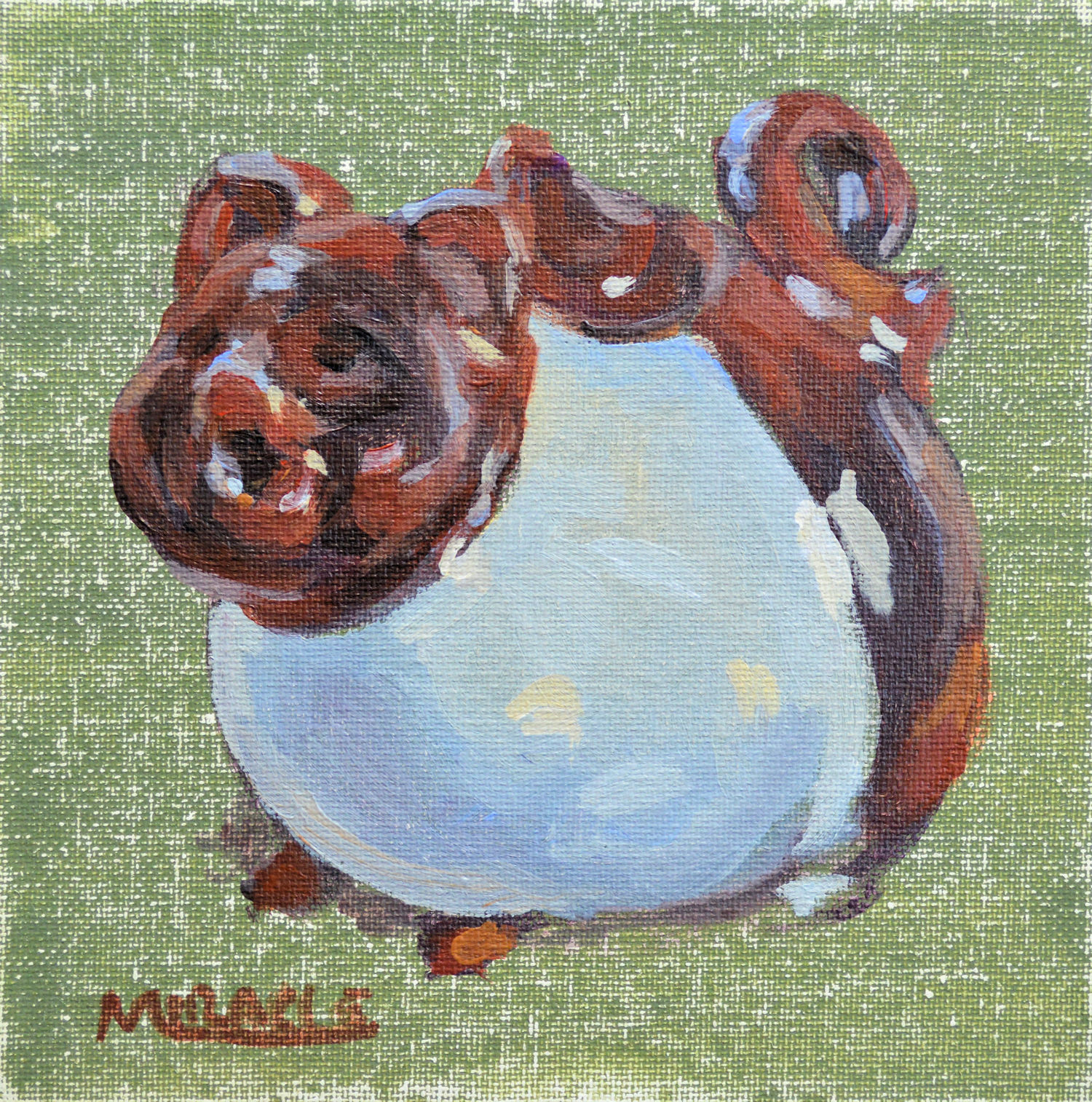
Year of the Pig, green background, original painting, 6 x 6, Kit Miracle

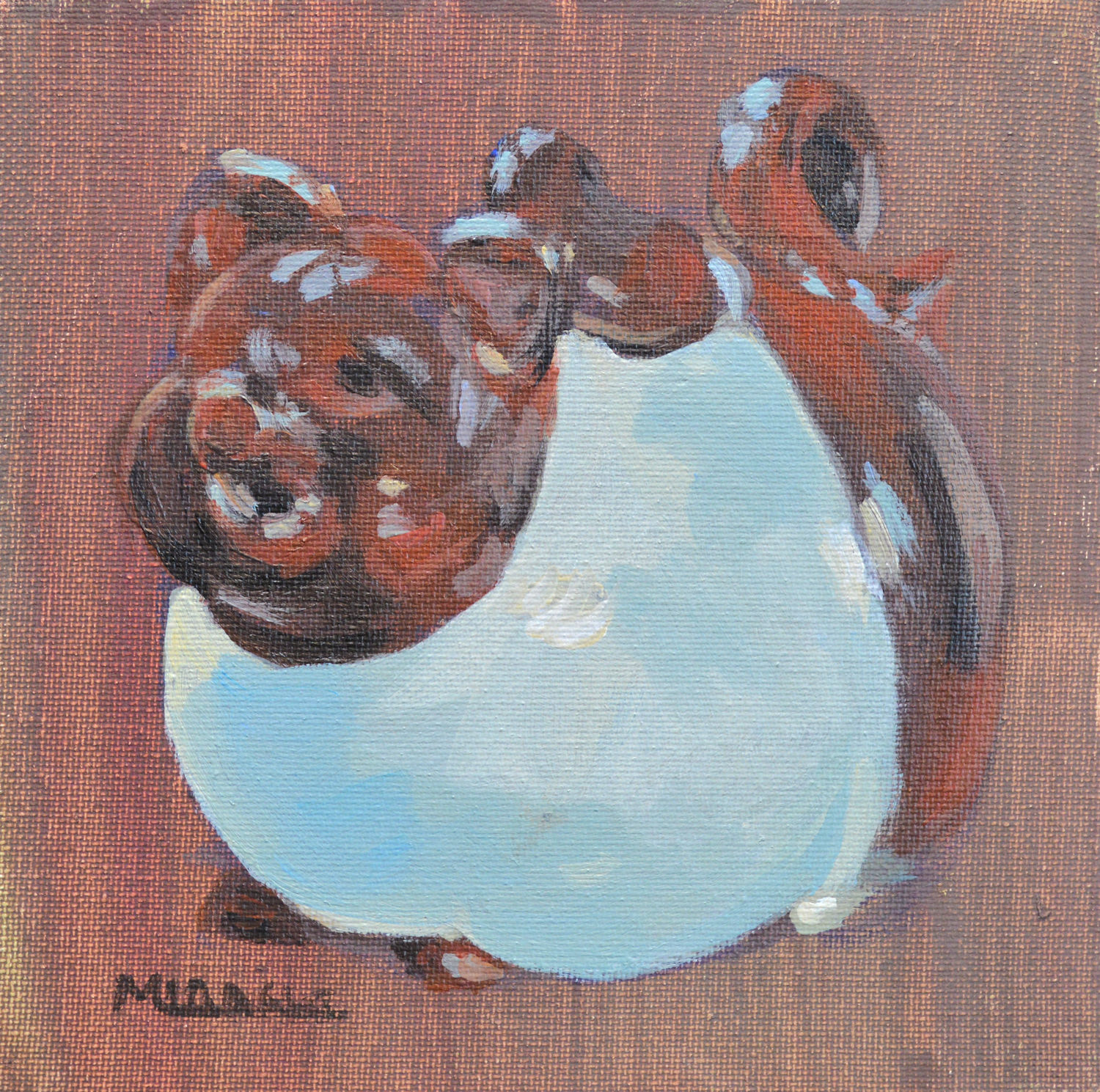
The Chinese Year of the Pig begins on Tuesday, February 5th.  I had this cute little pig teapot and decided to paint it for a close family friend who is Chinese and whose birth year is the Pig.  Actually, I painted two versions.

The painting is a very simple portrayal in acrylic on a canvas panel.  Although the teapot is small, the pig is big on character.  It was very fun to do after some of the more complex paintings that I’ve been doing lately as I don’t usually paint on this small scale except for watercolors.

The Year of the Pig (birth years 1935, 1947, 1959, 1971, 1983, 1995, 2007, 2019) portends good luck for the people born in this year.  They are hard workers, energetic and enthusiastic.

So, to my friends of Chinese background, and to everyone else, Happy New Year!

One version of this painting will be listed in my Etsy shop.

Year of the Pig, brown background, acrylic on panel, original painting, 6 x 6, Kit Miracle


Beeches – Painting Beyond the Photo

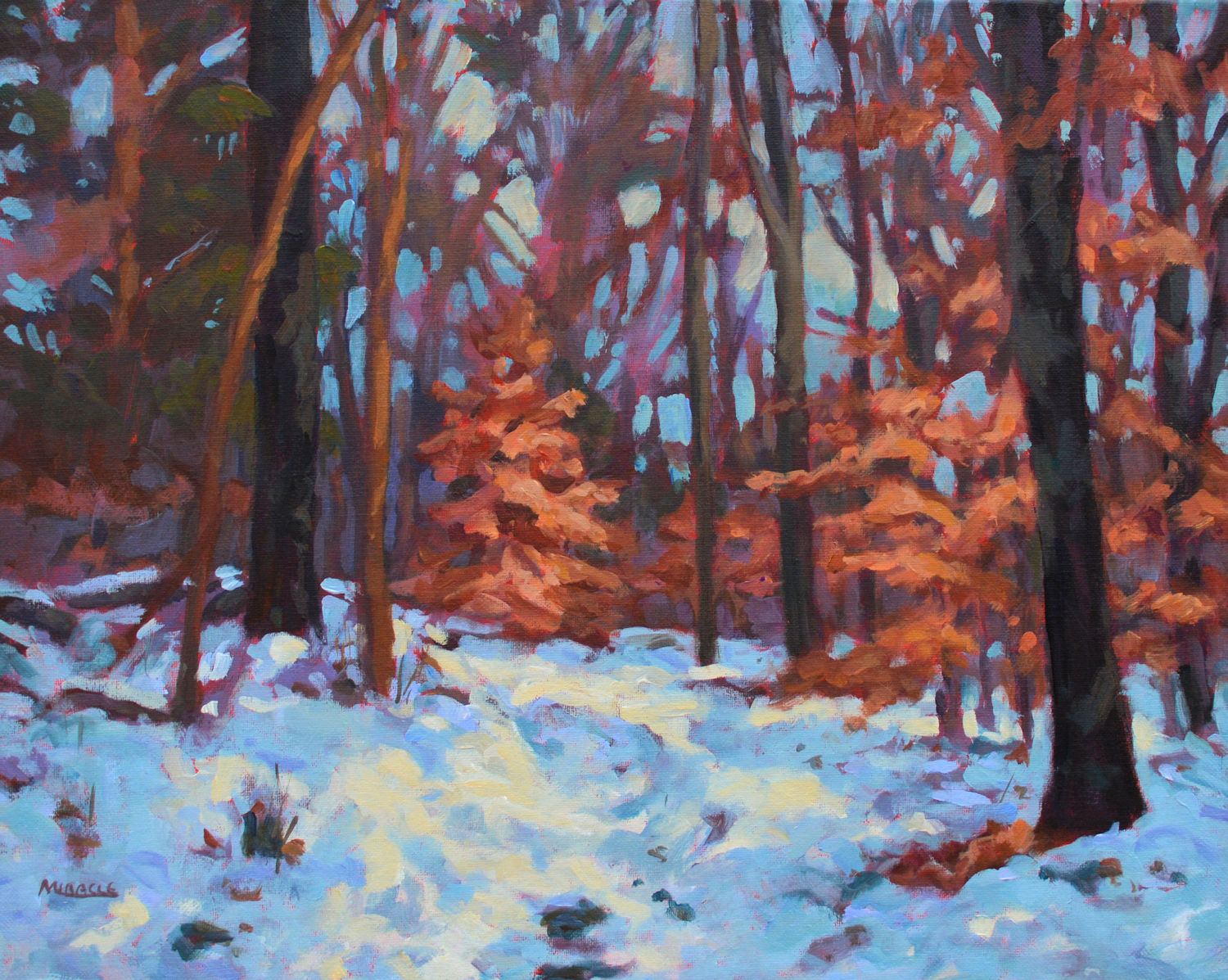
Beech Trees in Winter, snow scene, original painting, 16 x 20, Kit Miracle

Photographs are a wonderful tool for artists and have been used for well over a century.  I’m teaching a class on painting from photographs and wanted to create a demonstration of how a photo can best be used.

I would guess that most artists who paint in a realistic manner use photos at least some of the time.  I know that I have boxes of photos from years past when film was developed.  Now, with digital cameras and phones, we have thousands of images available to us.  Digital photos are also easy to use on a computer and crop or change as needed. I use an old laptop in my studio for this purpose.

For some reason, some artists seem to be ashamed of using photos but I consider them just another tool. I always paint still lifes from real life but might take some photos of flower bouquets to save for future reference.  And I love plein air painting so most of my landscapes are painted from life.  However, I take plenty travel photos for later use.  I also participate in life drawing studios which is great for building hand/eye coordination, but many figure paintings are from photos.  And it goes without saying that I only paint from my own photos; never from commercial or other pictures which could violate copyright laws.

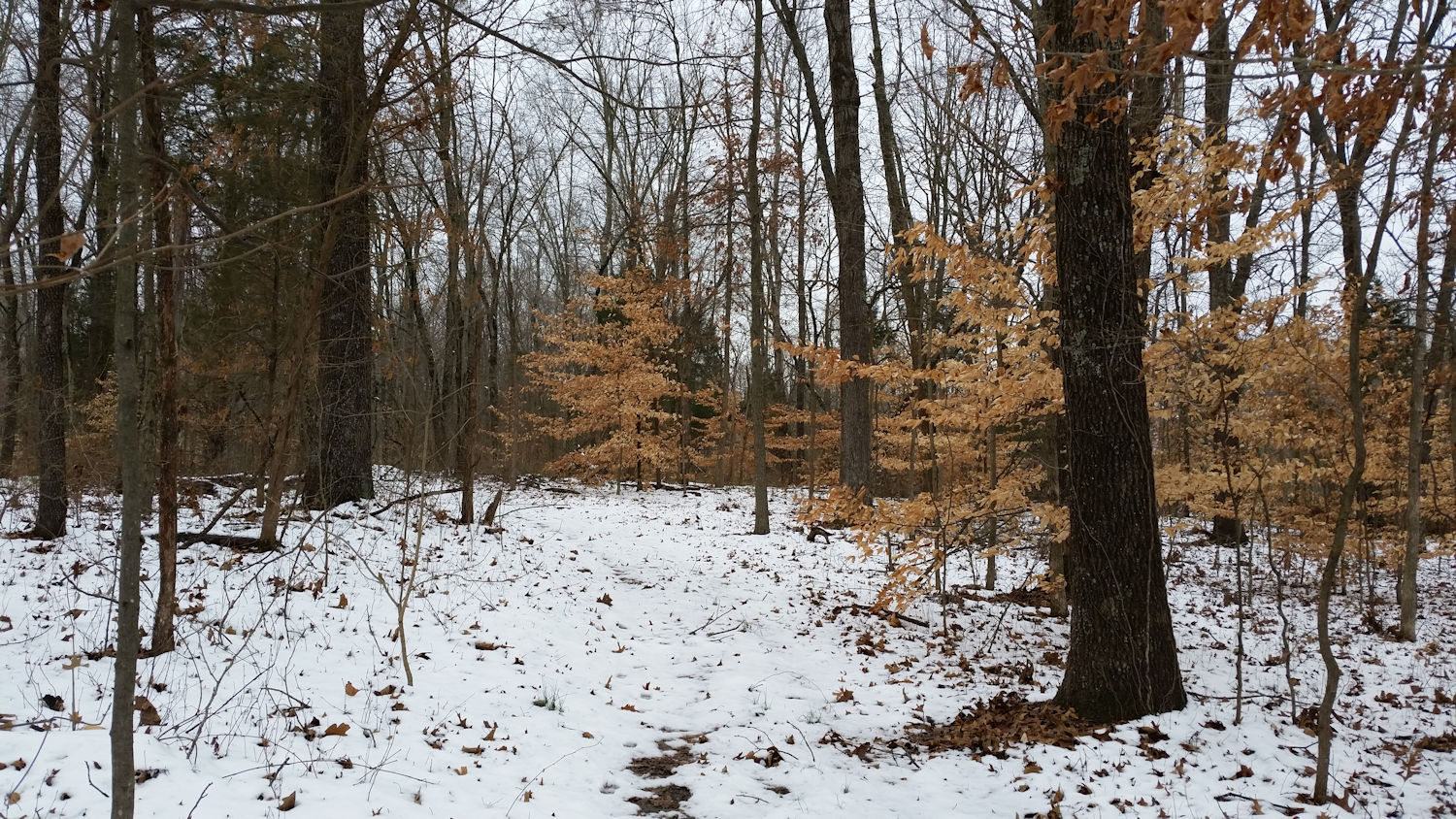
Beeches, original photo. It was too wide for the format I planned to use so I cropped it to a more pleasing composition.

We haven’t had much snow here yet this winter but we had a couple of inches a few weeks ago.  I took the dog for a walk in the woods and the snow made the beeches really stand out.  Beech trees are native to this part of the country but we don’t have many on our property.  They make pretty good firewood and were chopped down long ago (before our time).  However, we’ve noticed a resurgence of beech trees since we moved here over thirty years ago.  They hold their leaves over the winter so the orangey color contrasts nicely with the snow.

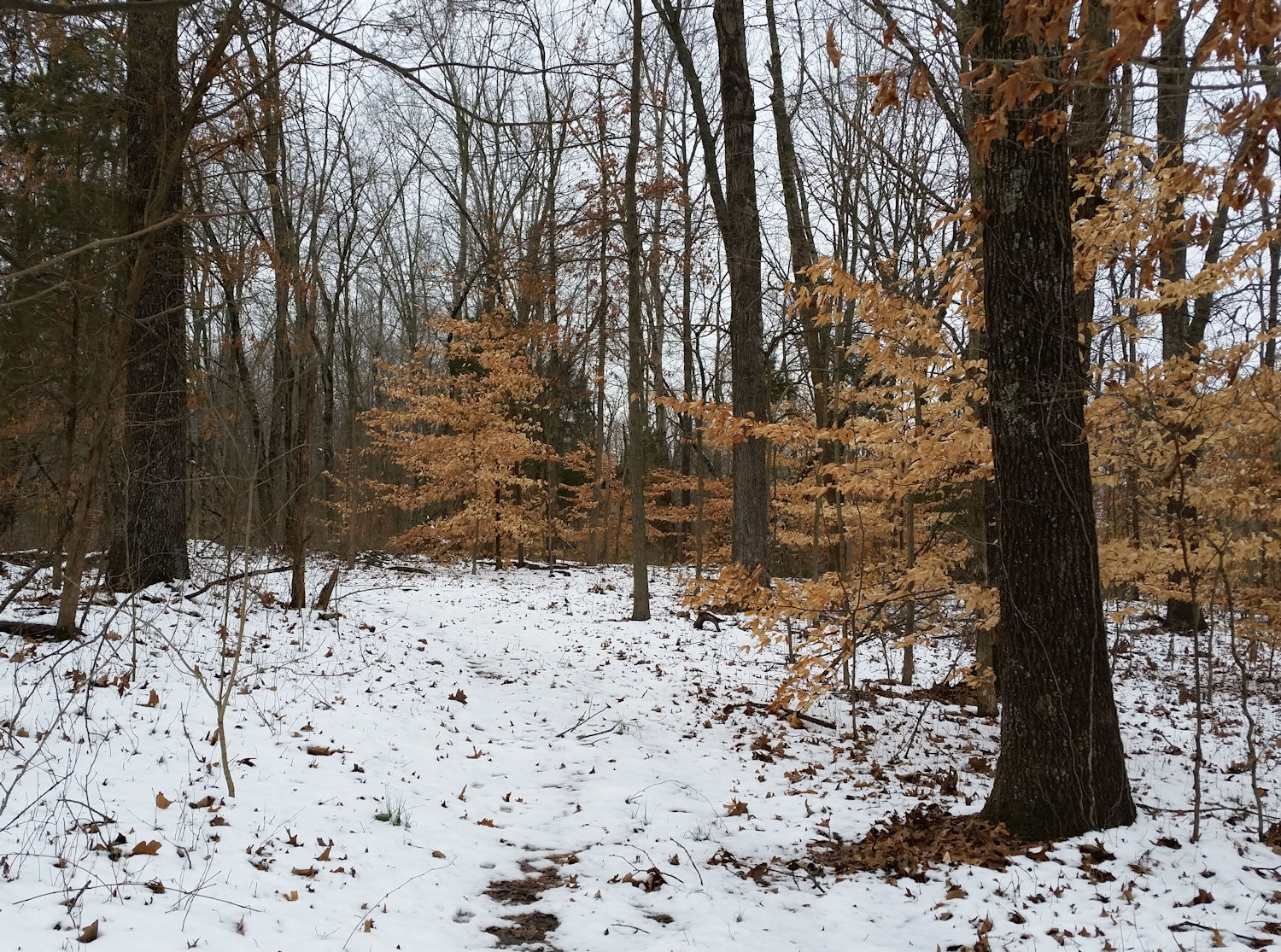
Beeches cropped photo.

As you can,  my original photo was wider than the format I chose (16 x 20) so I cropped it to a more interesting composition.  I divided my canvas into thirds each way (nine squares) and drew directly on canvas with a brush loaded with a darkish color.  The canvas had been primed in red.

I usually start with the darks and then add the midtones and then the lights, starting at the top of the canvas.  As I was painting, I realized that the painting was a bit drab with the overcast sky and muted shadows.  Although the beech trees gave it some color, I want to put more oomph into it.

Therefore, I decided to make it a sunny day and added some sunlight streaking in from the right, with a brighter sky and some clouds behind the distant trees.  This defined the path through the woods much better.  I added some sunlight on a few of the trees to bring them out more.  Ah, it’s great to be an artist and to change the world to suit myself!

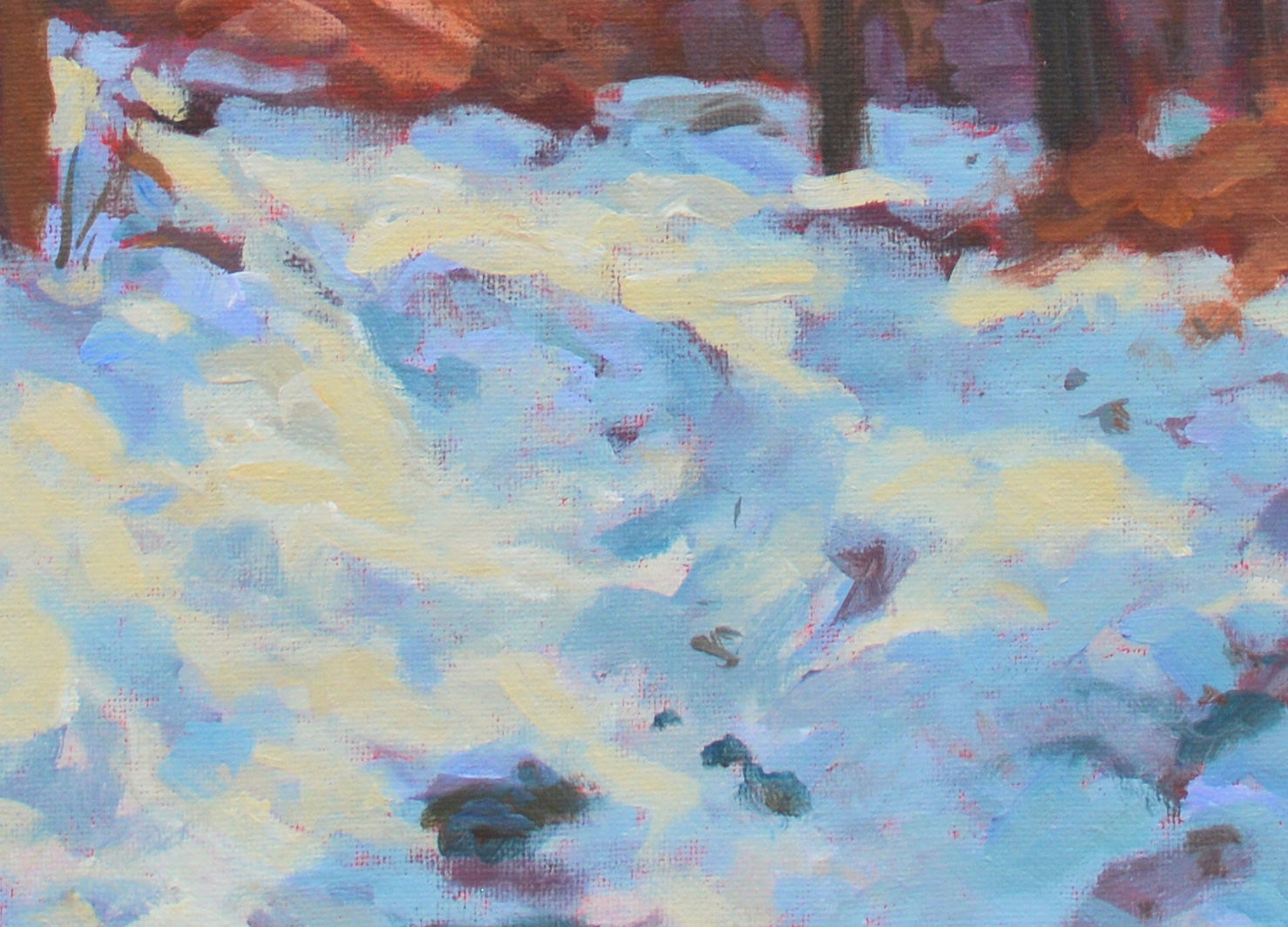
Beech Trees in Winter, detail 1. This is the road through the woods. I probably made the snow look deeper. And I’ve learned over time that white will often look brighter with a little yellow thrown in than just plain white. It certainly catches that sunlit feel.

Beech Trees in Winter, detail 2

Beech Trees in Winter, detail 3, notice the clouds in the blue sky behind the distant trees

The point here gets back to what I said at the beginning of the post.  A photograph is a tool.  It’s the artist’s job to use what we can, to add more or to change whatever we want.  I certainly think the sunlit painting has much more appeal than the original photo.  What do you think?

Dreaming of Rabbits

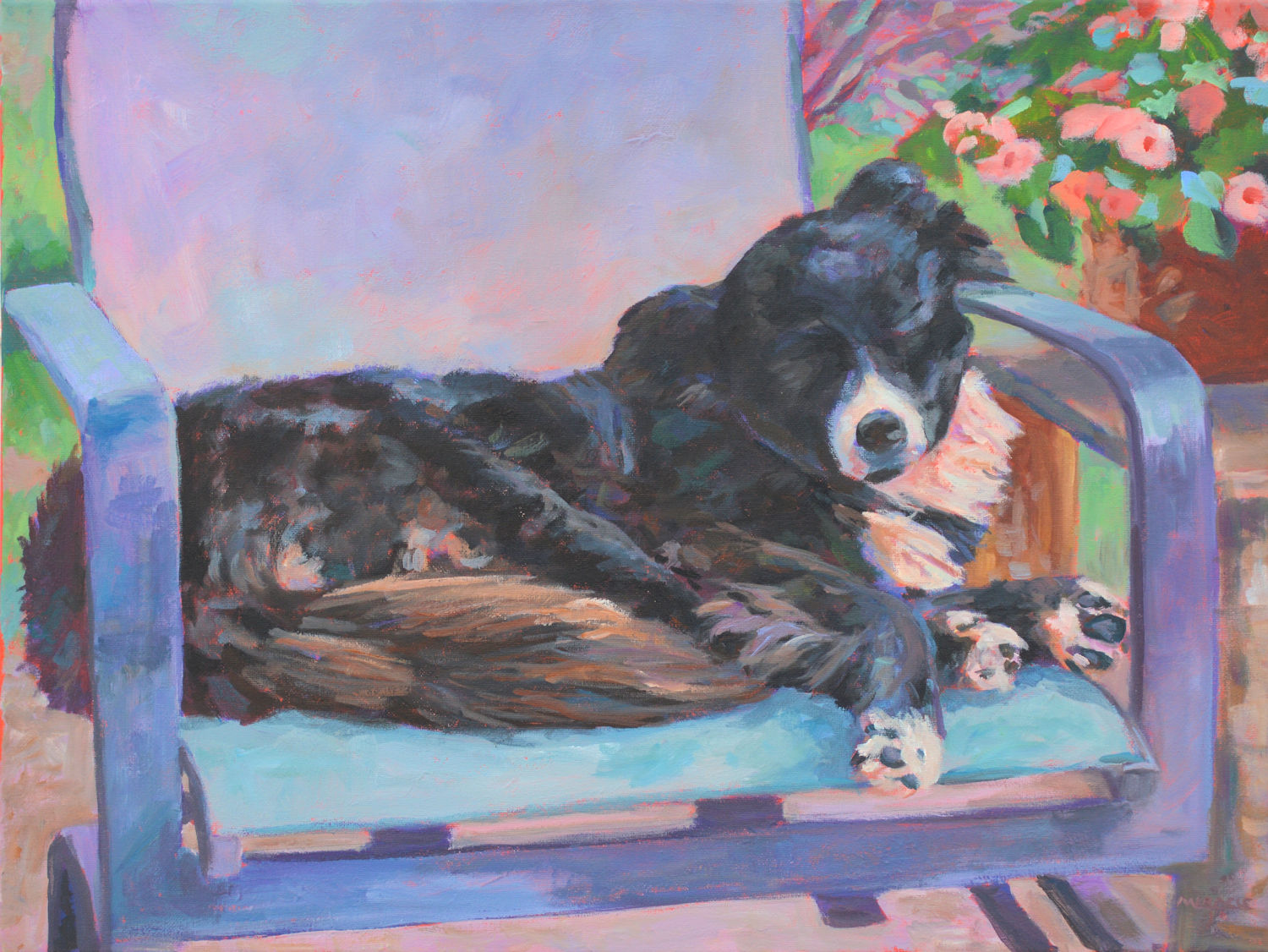
Dreaming of Rabbits. Border collie painting, 18 x 24. Acrylic on canvas. Contemporary impressionism. Kit Miracle

This is a rare quiet moment of my dog Mikey.  Anyone who has ever been owned by a border collie knows that they are power plants of energy, always ready for a walk, a ride or a new adventure.  Mikey spends much of his days chasing squirrels, birds, rabbits, anything that moves, really.  Here you see him in one of his other favorite pastimes.  He climbs up onto a patio chair and takes a nap, even if no one else is around.

Artists who paint in a realist fashion are always advised to paint what you know.  This is what I know.  Just a common, everyday scene.

Painted on canvas in a contemporary impressionist style. Check out the muted colors of the shadows and the impatiens flowers.  The lovely, soft colors are so easy to love.

Yes, for sale here:  KitMiracleArt.


A hot cup o’ tea

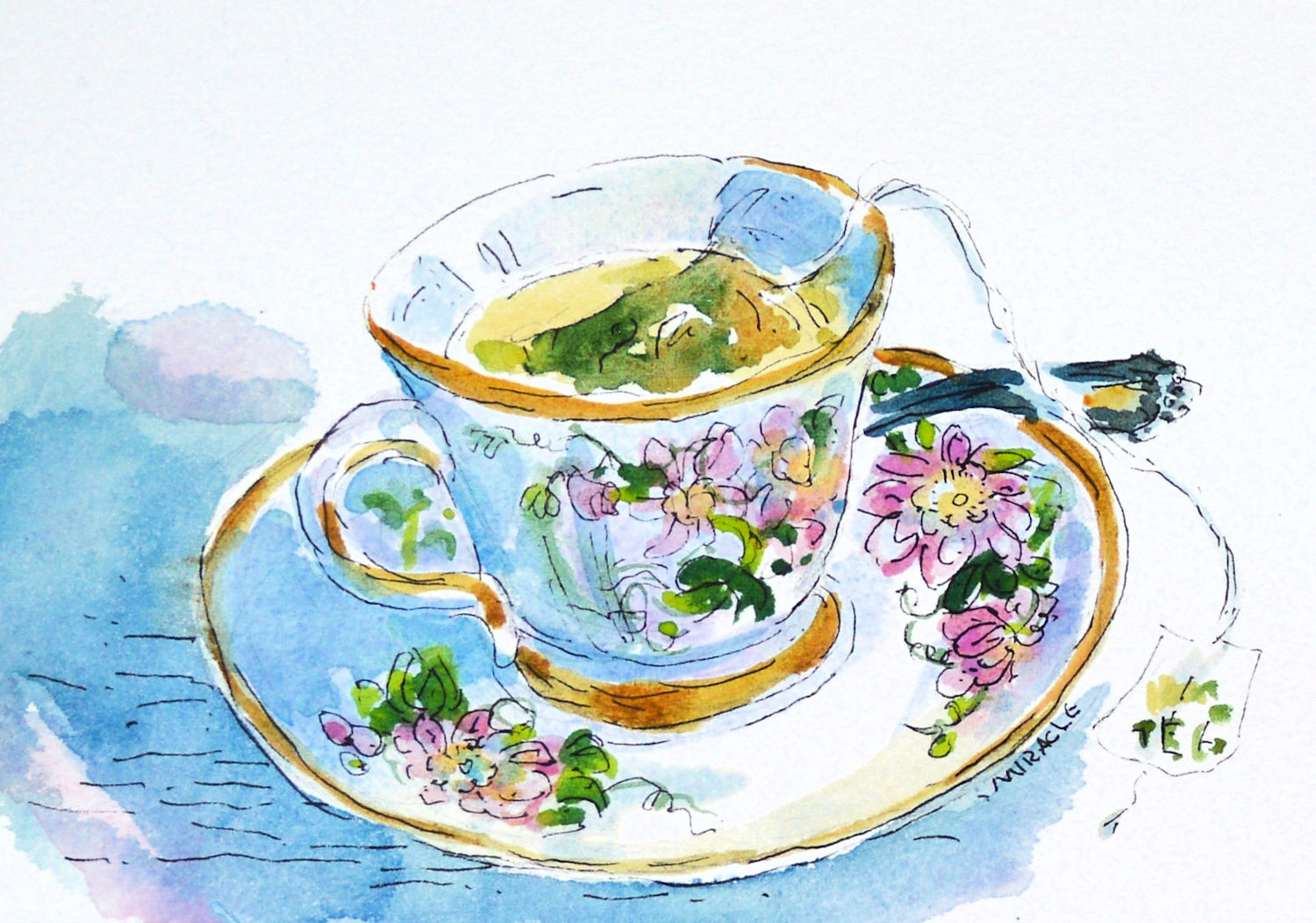
Laura’s Grandma’s Teacup. watercolor, pen and ink, 4.5 x 6.5, Kit Miracle

In celebration of National Hot Tea month – which is especially appropriate for January – I thought I’d paint a few images of my teacup collection.

This is a small watercolor / pen and ink painting of a teacup which is especially dear to me.  It was given to me by a friend who was moving and had to pare down.  I was honored to being gifted this beautiful teacup which had belonged to her grandmother.  It is a Royal Doulton in the Passion Flower pattern.  Very light and pretty.

I’ll put this up on one of my Etsy shops soon.

Wings, a beach scene

Wings – final, acrylic on canvas, 18 x 24. Kit Miracle

I was looking through some old photographs for subjects to paint which I haven’t visited for awhile and came across the inspiration for this painting. Sometimes the subject doesn’t grab me for several years until I revisit the pictures but this photo was only from last summer. I love the beach scenes by Sargent, Sorolla and Zorn, particularly the ones involving children.

For this painting, I decided to work slowly and do plenty of preliminary work.  My last post included several sketches, some Notan studies, and one painting study of the central figure. The latter is actually larger than the figure in the final painting.  See the sketch for this painting.

The title comes from the focus on the little girl with her water wings and the flapping wings of the seagulls.  Sargent did a wonderful painting of Neapolitan Children at the beach and one of them is wearing a contraption of bladders for floating, similar to today’s water wings.

To learn more about this painting, check out my step-by-step page here.

Preliminary work

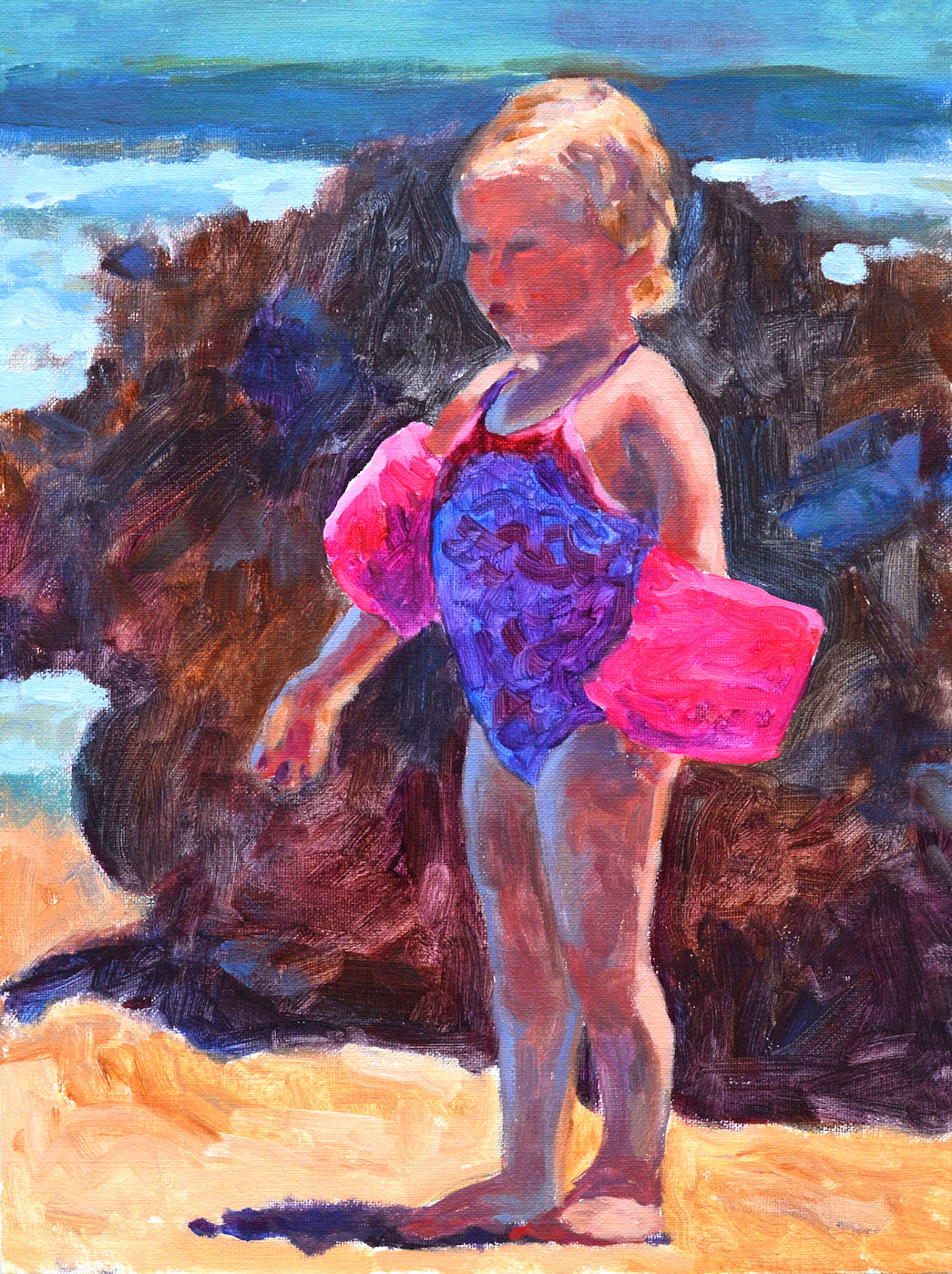
Beach girl, color sketch. 16 x 12, acrylic. Kit Miracle

I often have mixed feelings about the importance of creating preliminary sketches and paintings.  Sometimes I just want to grab the brush and dive right into a painting.  This is especially true of my plein air painting although, usually I at least do a few value sketches before I put any paint to the canvas.  Usually.

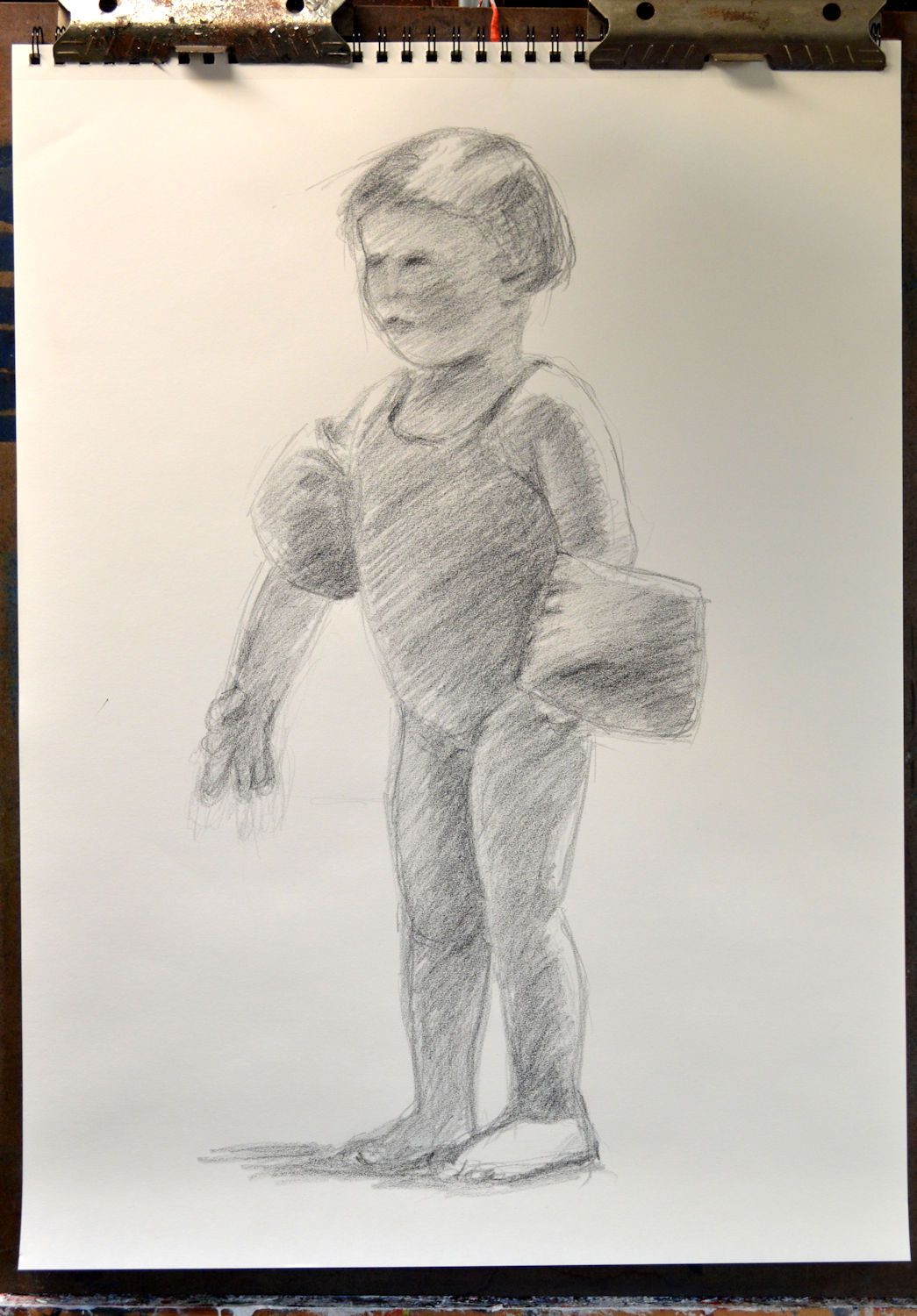
Beach girl, pencil sketch. 18 x 24, Kit Miracle

On the other hand, I know from experience that when I want to create a large piece, results will normally be better with more planning.  Preliminary sketches and paintings basically create a road map for a painting or work of art.  If you think about it, you wouldn’t build a house without a plan.  Probably wouldn’t take a vacation without a map.  So it makes sense to do some support work before you begin a major piece of work.

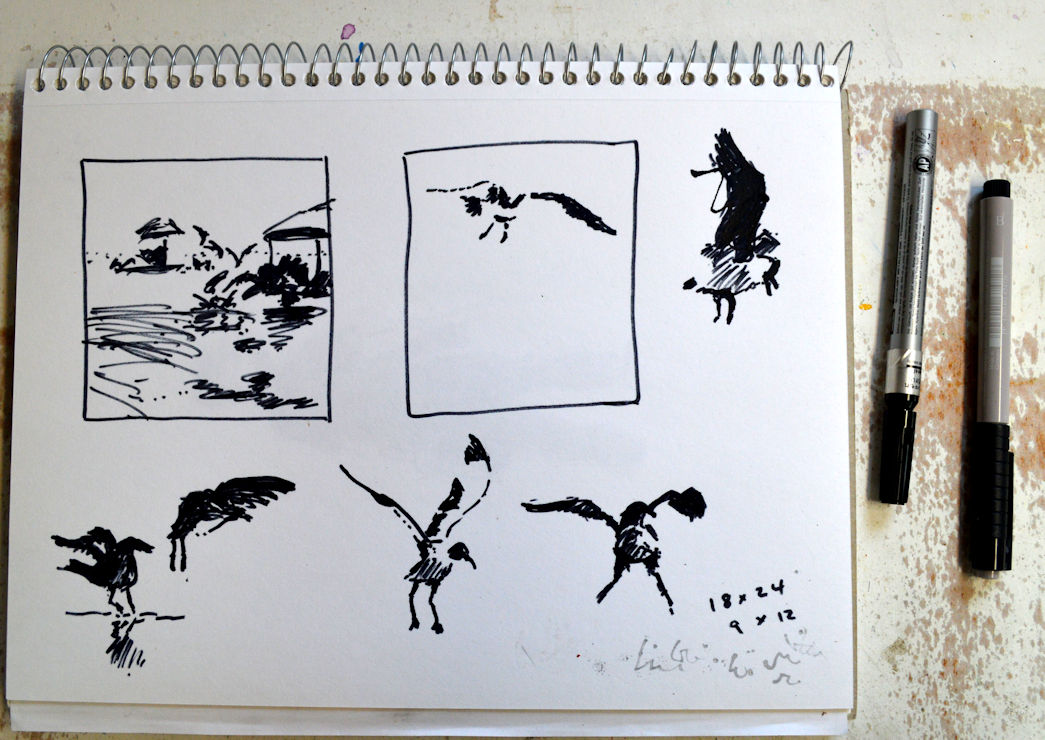
Notan sketches for beach painting.

I’ve been working on a large beach scene lately.  First I started with some sketches for the layout or composition.  Then I did a few Notan sketches in black and white.  Sometimes I’ll add a middle grey value but usually not.  Next I did a large pencil sketch of the main figure.  This helps me to address any problems and get to know the scene.  Finally, I did a fairly quick color sketch (acrylic) of the little girl.  This was, in fact, much larger than the final figure in the painting which is not necessarily how most people would work.

I’ll post the final painting and more sketches next Sunday.  I really like this preliminary color sketch but I’ll let you be the judge.

As an aside, most famous artists of the past spent quite a bit of time and effort to create their masterpieces, including numerous sketches.  This is still quite common for artists who practice classical education in ateliers.

To learn more, check out the work of John Singer Sargent, Joaquin Sorolla y Batista, Anders Zorn, Cesar Santos, Norman Rockwell, or Juliette Aristides.