Category Archives: garden

What a difference a week makes

We returned from vacation last Monday and have been playing catch-up in the garden this week.  Apparently we had seven inches of rain while we were gone for ten days.

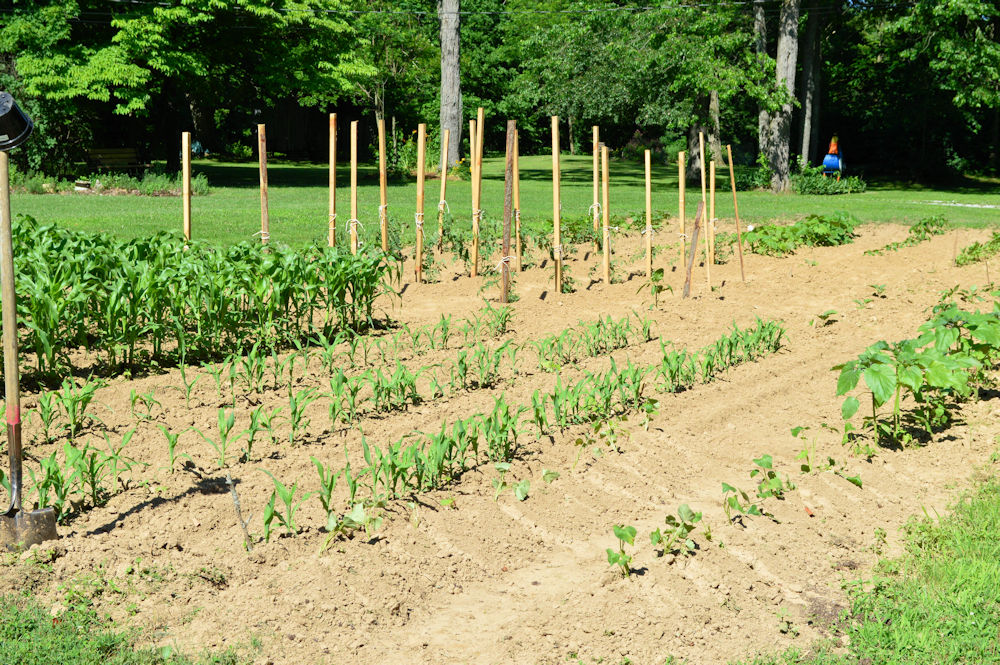
The main garden, about 40 x 60.  June 7th before we left.

Here is a photo of the garden right before we left.

The garden on June 21st. Quite a difference, eh?

And here are a couple of  photos of the garden after we returned.  After it’s been hoed and weeded, of course.  Corn at least two or three feet taller.  Everything else coming along.  Already harvested squash and peas.  Lots more to come.


Wildflower perfumes in spring

Spring in southern Indiana is a cacophony of overload for the senses.  As an artist, I’m naturally attracted to the visual of the changing season.  From the pale greens of new shoots and leaves to the endless variety of flowers.  Something new is blooming every week.  And sounds add to the wallpaper of the experience as I presented the cheerful house wren in a recent post.

One thing that I haven’t touched on are the beautiful scents that waft through the air.  Yes, there are plenty of floral perfumes from cultivated plants, but today I want to show you three wildflowers with really strong scents.

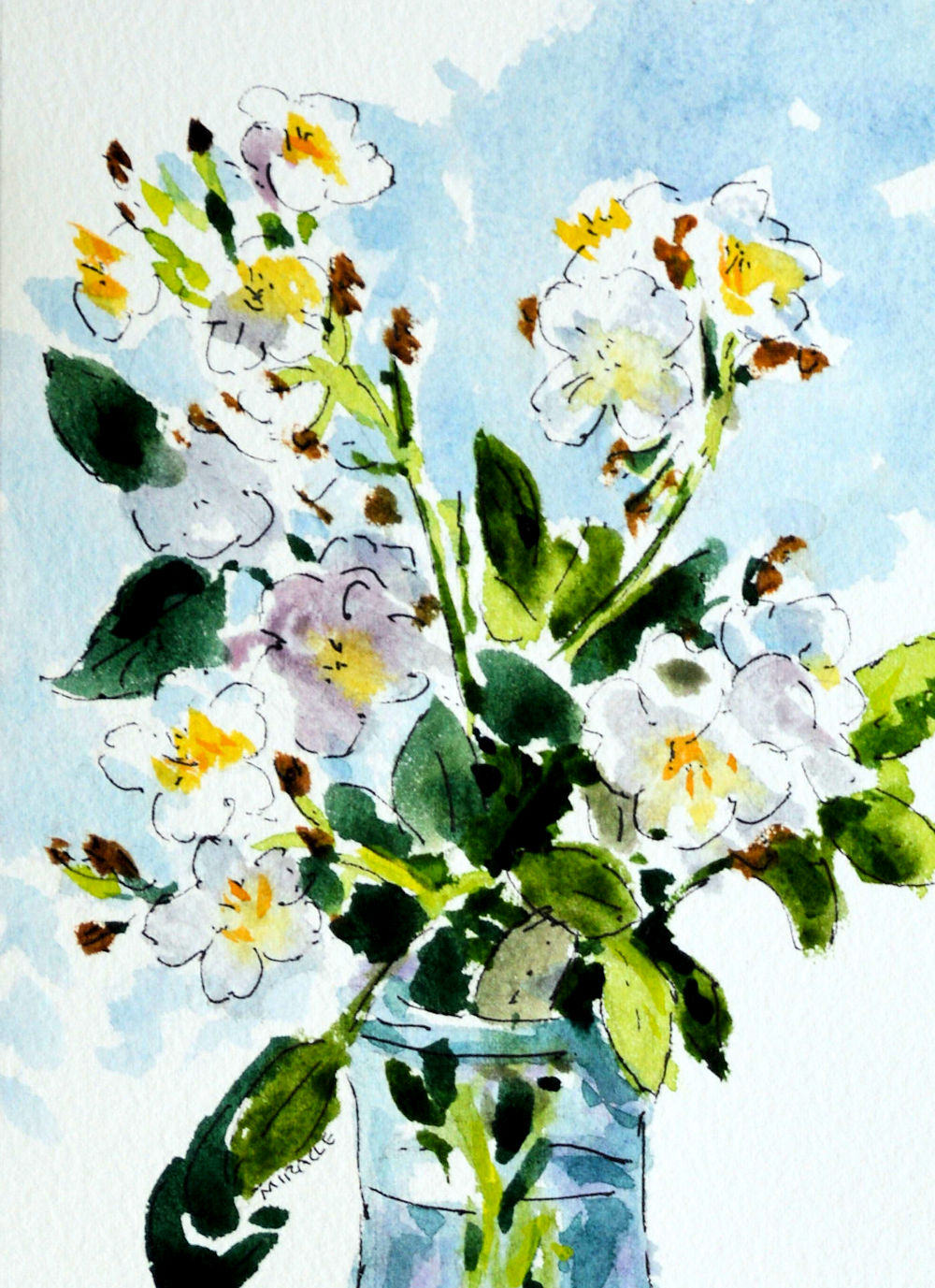
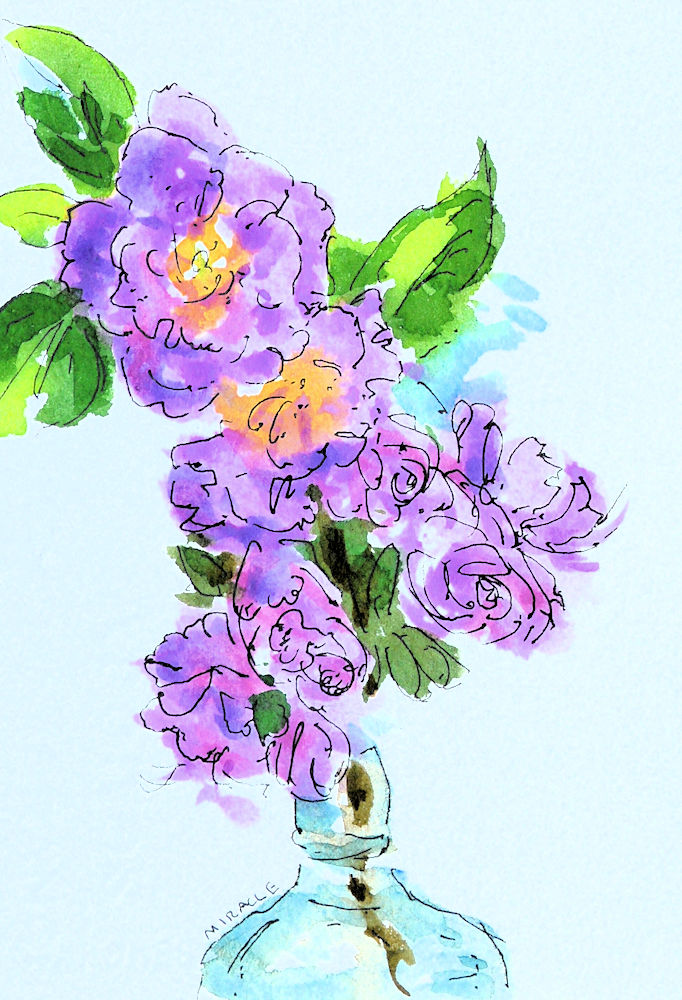
Multi-flora roses, watercolor, pen and ink, Kit Miracle

The first is the multi flora rose.  First introduced from Asia as a soil erosion remedy, it quickly got out of hand and is truly a noxious weed.  So difficult to get rid of.  However, for a few short weeks in spring, the scent of this flower is almost overpowering in the woods and ravines. It’s only redeeming quality in my opinion.

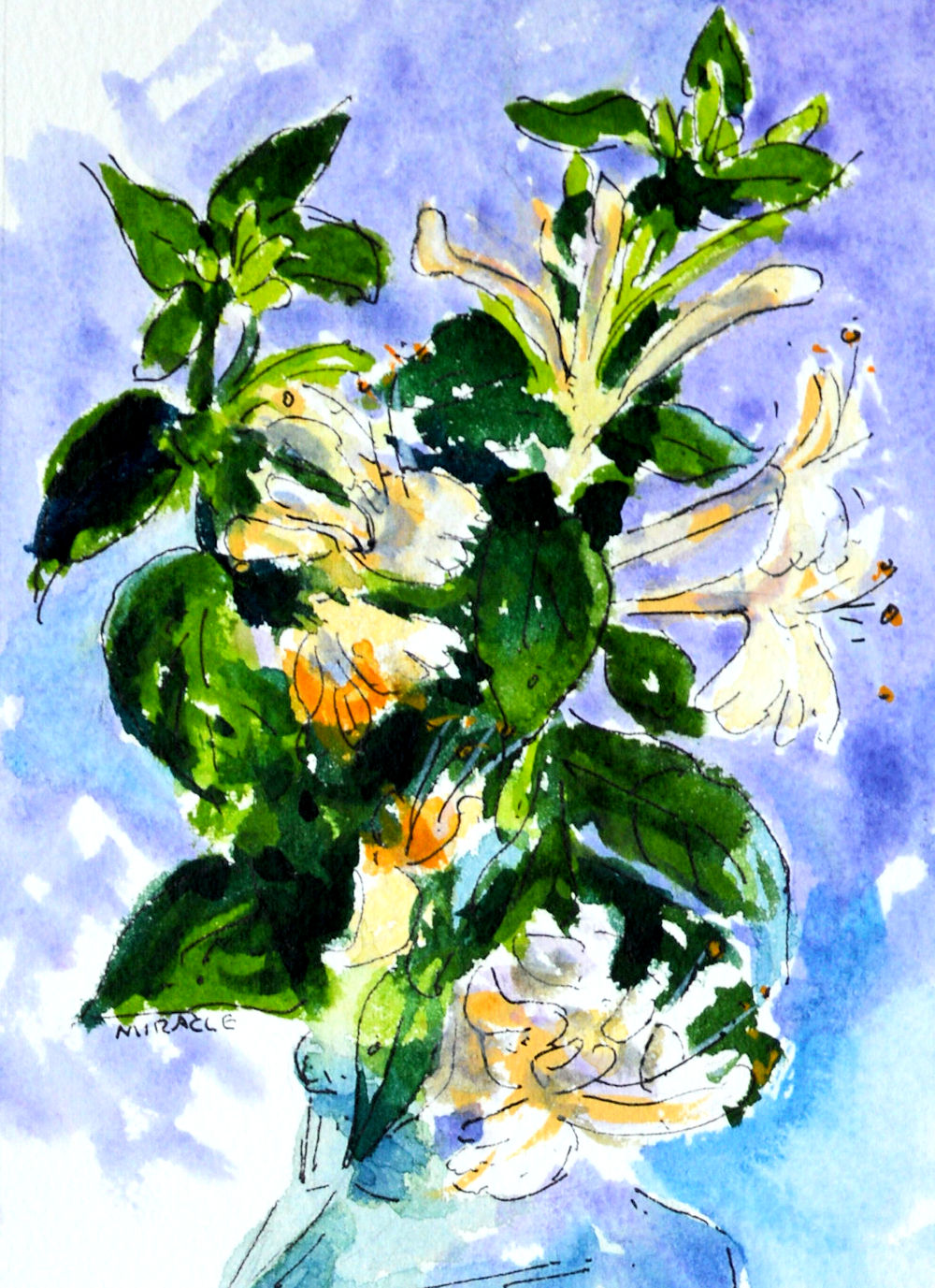
Honeysuckle vine in bloom, watercolor, pen and ink, Kit Miracle

Blooming right on the heels of the multi flora rose is the wild honeysuckle vine.  I’m not sure if this species was introduced but is is definitely invasive.  Around here we have the variety with white blossoms which fade to a creamy yellow as they die.  Great food for hummingbirds, they unfortunately tend to strangle many trees and bushes.  If you’ve ever seen a walking stick with a spiral design, it was naturally created by the honeysuckle vine.  Its perfume is so strong as to be almost nauseating.

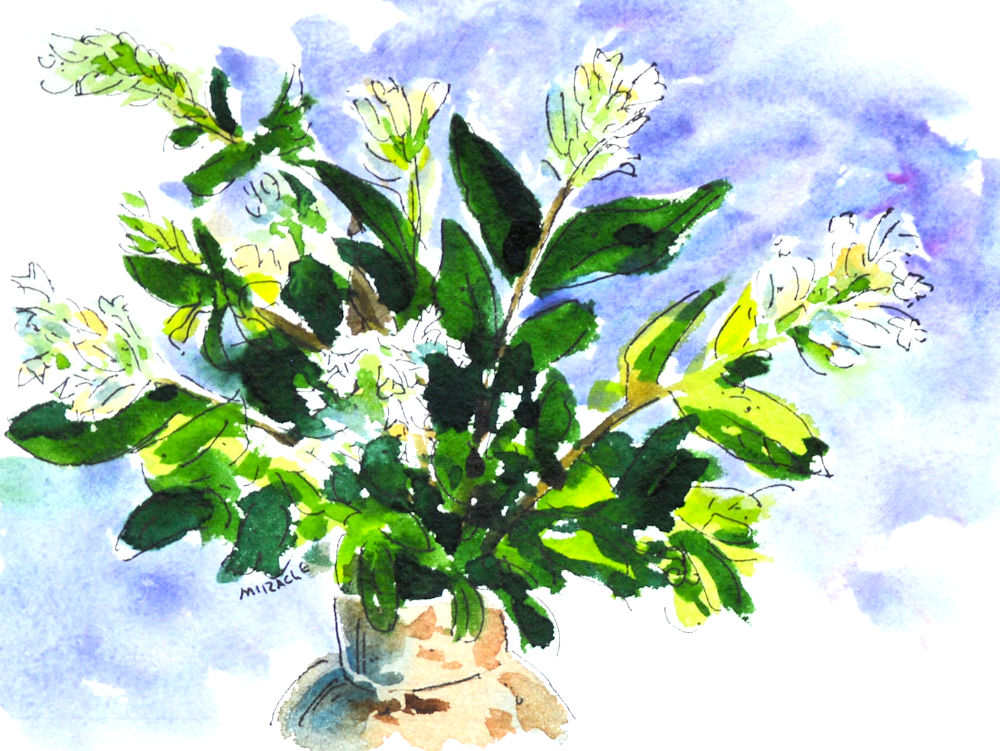
Common boxwood in flower, watercolor, pen and ink, Kit Miracle

Following on the heels of the honeysuckle vine is the common boxwood.  This shrubby bush is semi-evergreen in this area.  It is an under story plant and likes the shade of larger trees.  There are many varieties of this plant but around here it has smallish white flowers in little groups which look a lot like a small honeysuckle blossom.  Again, the perfume is pleasant and not as overpowering as the first two plants.

For people with allergies, the Ohio River Valley is probably not the most pleasant place to live, but the wildflowers certainly put on a show, both in blooms and scents.

A visit to the garden in late spring

One of my blog readers recently asked to see more of the garden than just my flower paintings.  So I thought I’d take you on a little tour.

The immediate yard around the house is about two acres and it sits in the middle of the whole property.  Much of that is in woods, fields, streams and some fields.  Very private.  Love it.
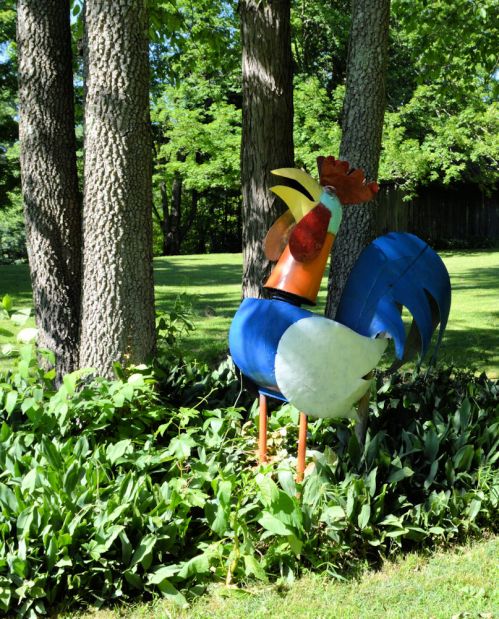
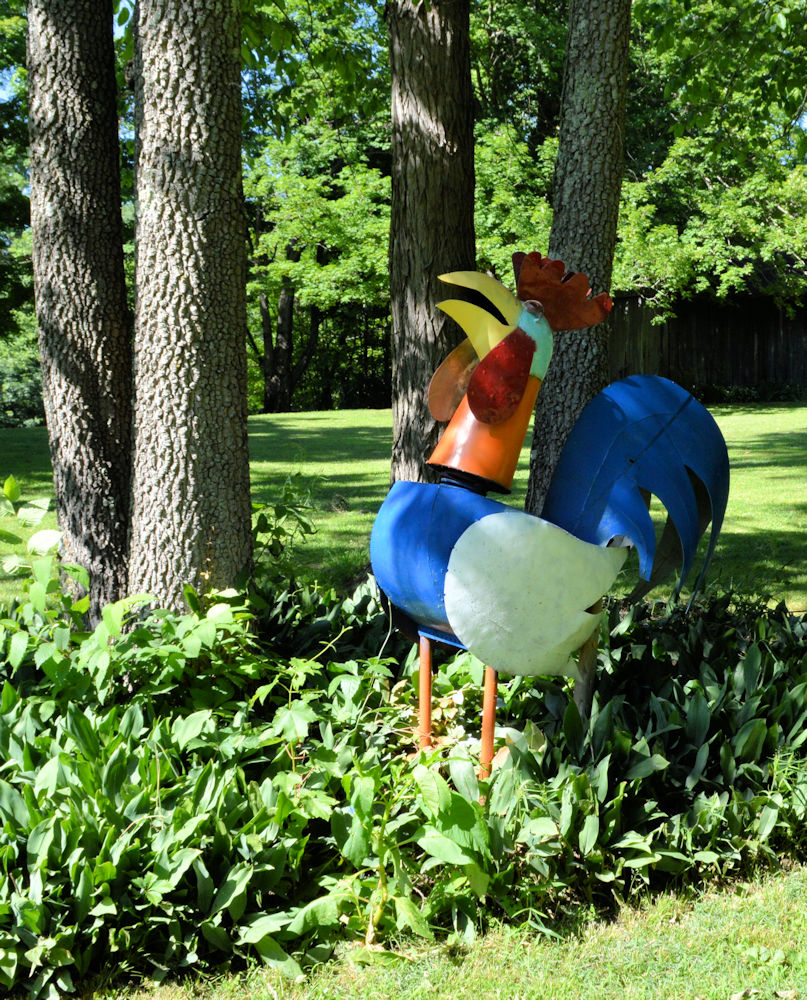
The Big Chicken standing in a bed of Lilies of the Valley

As visitors drive up the long lane which turns at the end, they’re greeted with my giant chicken.  His head bobs on a spring in the wind. Children and silly grownups like to beat on it with a stick so it sounds like a metal drum.  It stands in a patch of lilies of the valley which acts as a ground cover of sorts.

The main garden, about 40 x 60.

To the left and south of the house is the main garden which is about 40 x 60.  We have this plowed each spring and then I plant it in thirds, rotating crops each year.  Here you can see two crops of sweet corn, many varieties of tomatoes and peppers, some eggplant, squash, beans, herbs, and always always flowers, including a whole row of sunflowers.  I do all the planting and hoeing between plants.  My husband rototills between rows.  However, by late July, most of the garden takes care of itself.

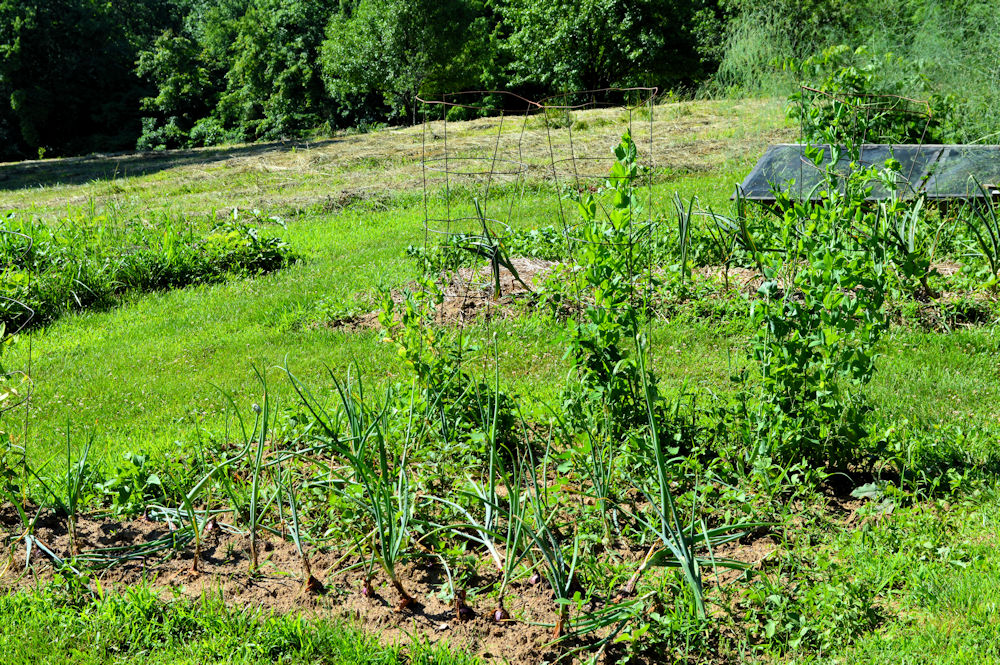
The spring garden. Onions, garlic, pea pods, kale, asparagus patch, with spinach and lettuce bolting in the cold frame.

This is the spring garden which is pretty messy this time of year.  Three kinds of onions, garlic, kale, lettuce and spinach bolting in the cold frame, asparagus, and to the far left two more kinds of squash.
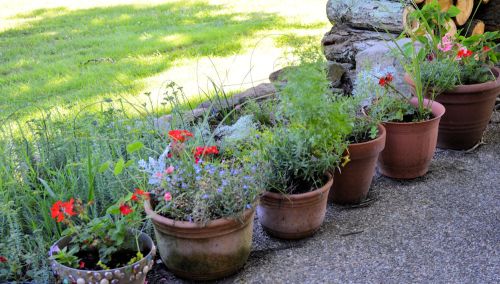
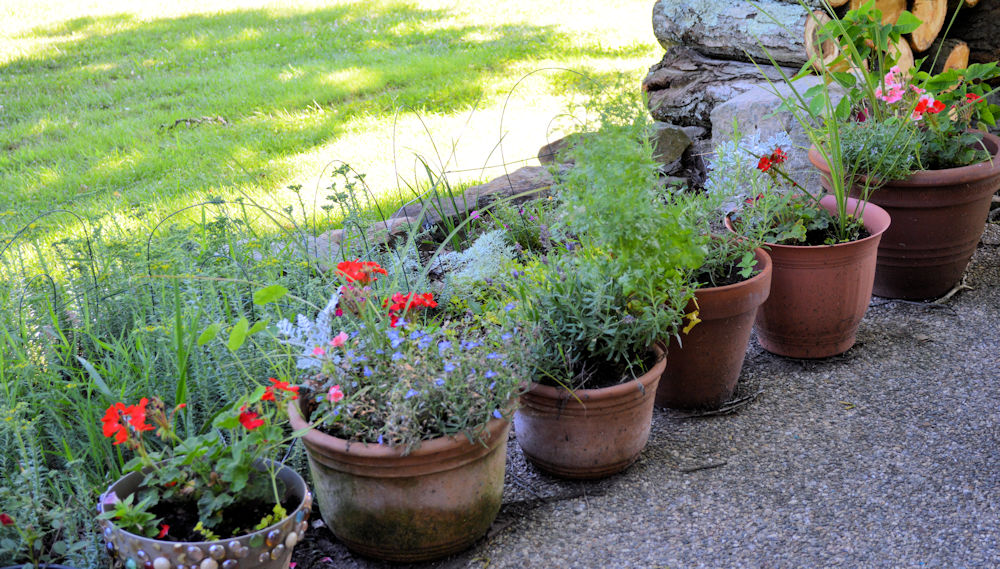
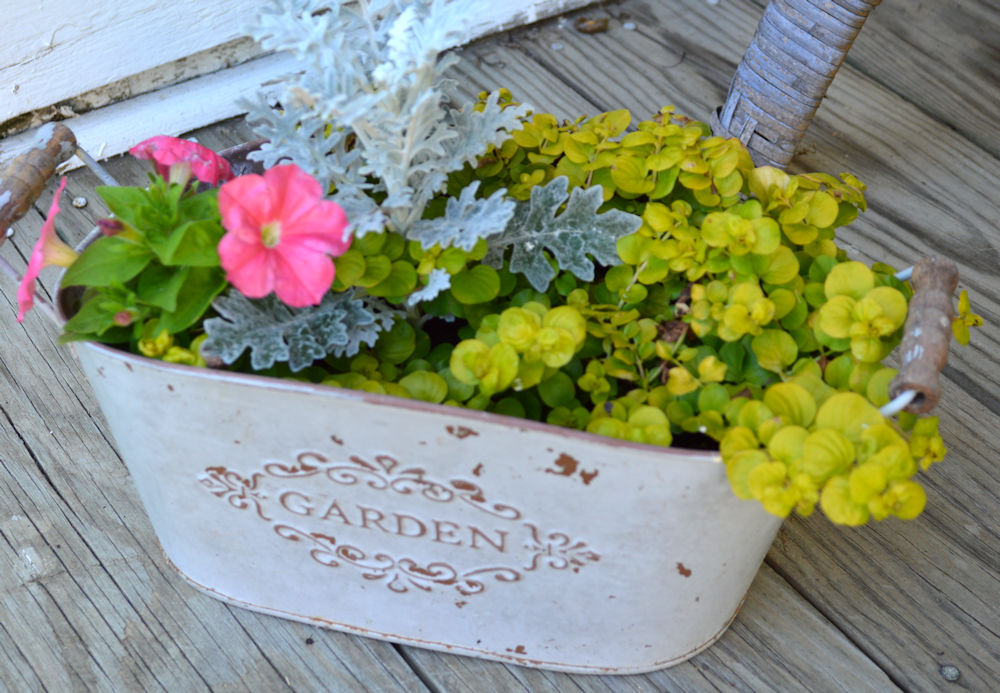
Some patio pots. These are usually in direct sunlight.

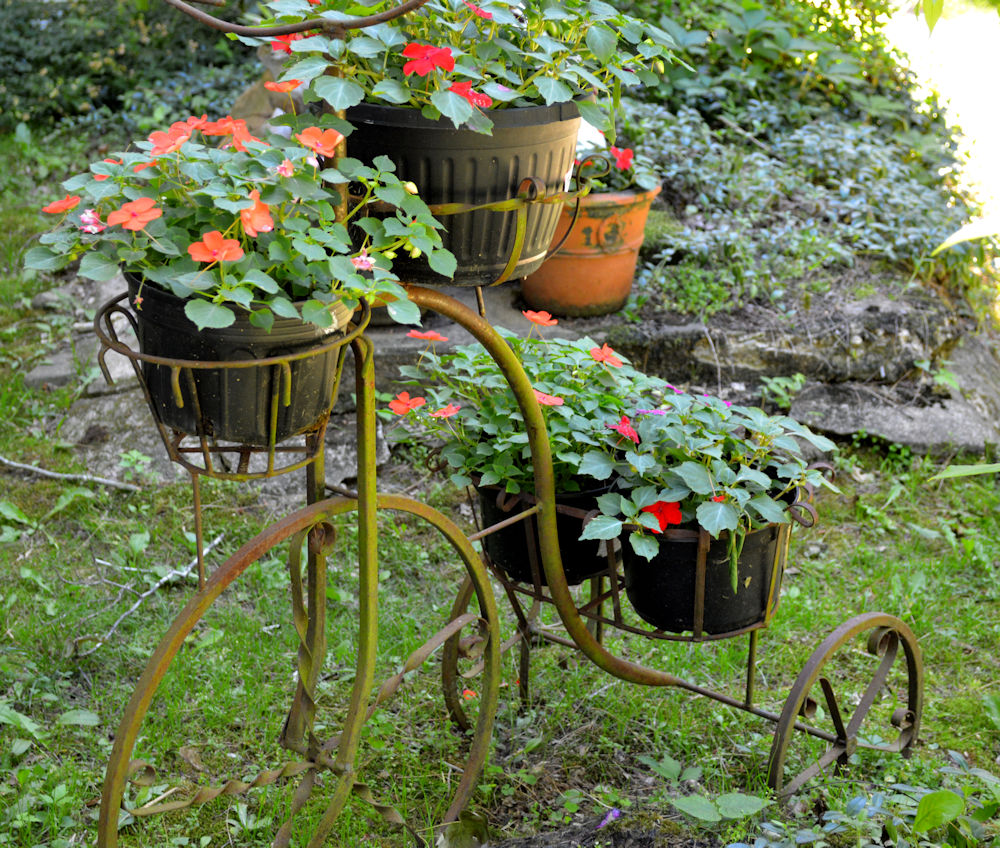
I have several flowerbeds and an herb bed, but I found it easier to maintain flowers in pots.  So, there is an eclectic collection of about 40.  Some flowers for sun, some for shade.
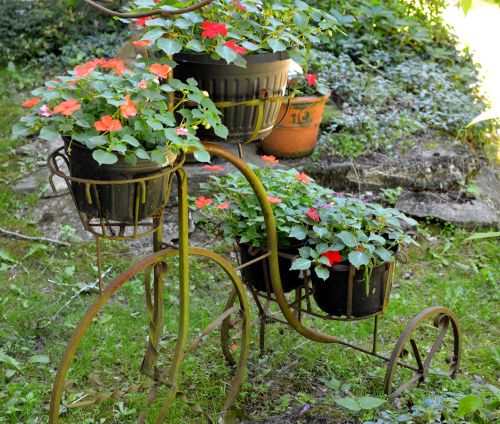
More pots, this time with shade plants.

A little pot on my studio porch. Just because I had extra flowers.

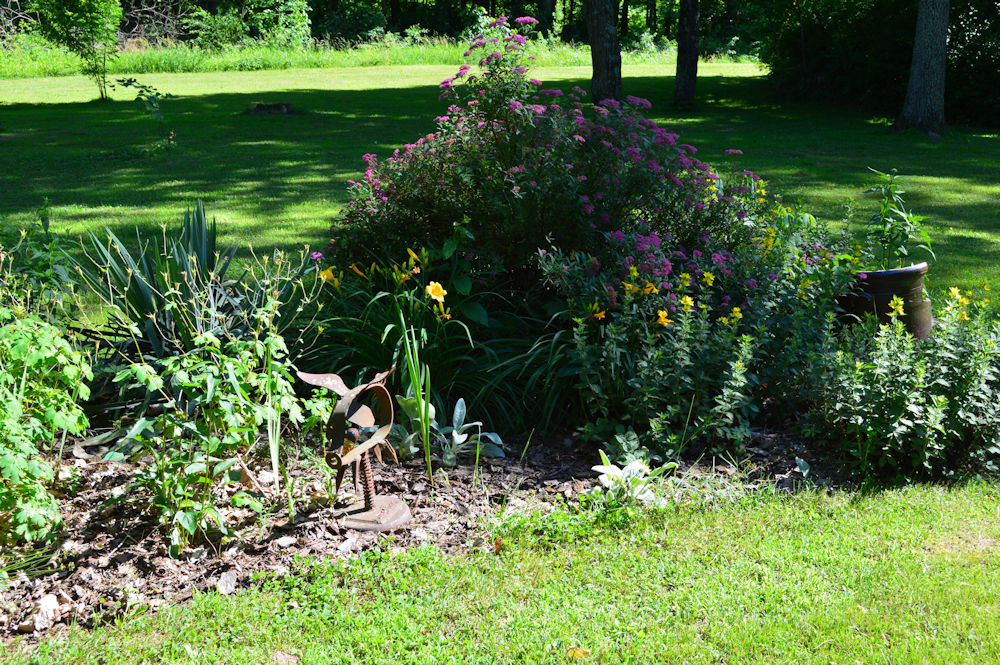
At the far east side of the yard is an old perennial bed.  This time of year you can find weigela, yellow garden loosetrife, lilies, lambs ear, coreopsis and much more.  It’s always something. The columbine is past.  Yet to bloom will be yucca, gladiolas, purple cone flower, and I have forgotten what else. And, I love my favorite flying pig garden sculpture made from old farm implements.  It bounces in the wind, too.

East perennial bed with flying pig.

There is always something new to see in the garden.  I tidy it up once or twice a year but am not obsessed with having every weed pulled and tamed.  There are successes and failures.  Some plants readily reseed themselves.  Some even seem to move! The raspberries will be coming soon.  The day lilies are blooming.  It’s just a pleasure to walk around nearly any time of year.

Flowers always make people better, happier, and more helpful; they are sunshine,  food and medicine for the soul.   –  Luther Burbank
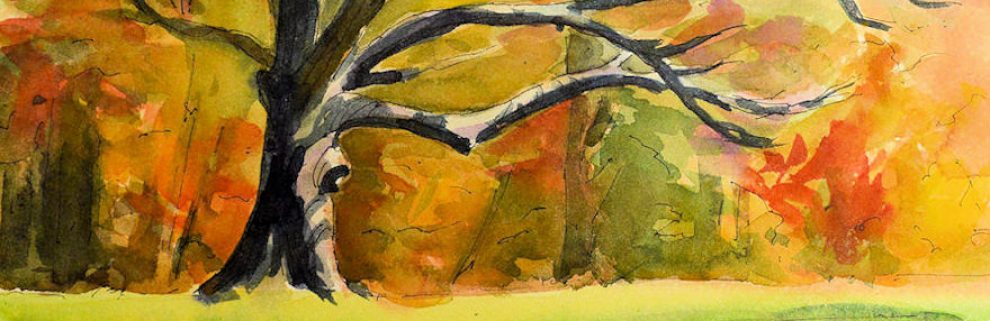
Flowers, flowers and more flowers

Pile of paintings. This a a stack of recent flower paintings, usually four to a sheet. Watercolor, pen and ink. Kit Miracle

May has been the hottest month on record in these parts. I’ve been trying to capture local flowers in watercolor with pen and ink but the heat has pushed everything into high gear.  The flowers are blooming faster than I can paint them.
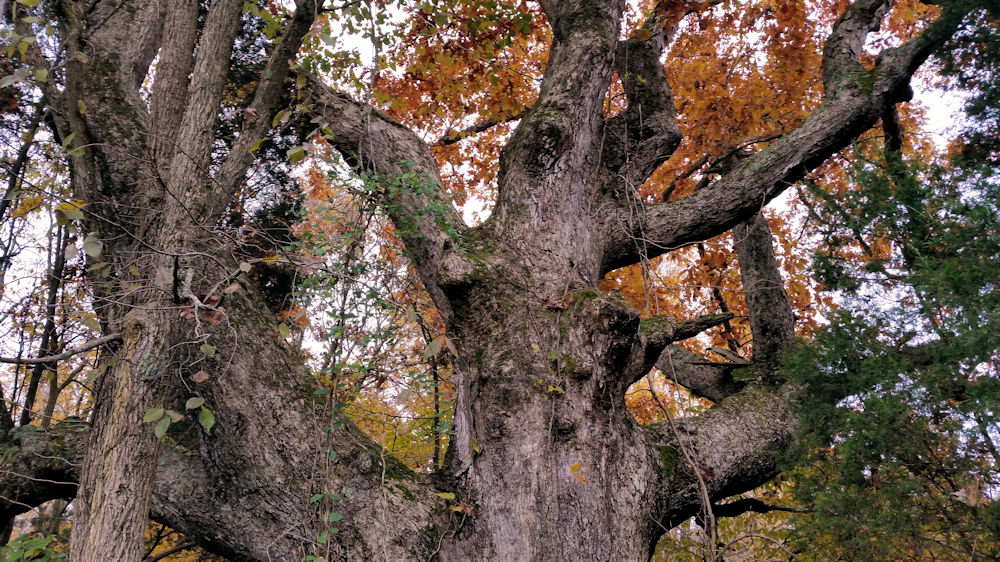
Hurricane Alberto dumped some rain on us but it wasn’t too bad.  Unfortunately, accompanying winds broke off a large limb of a maple tree in the back yard.  More clean up and some firewood.

Persimmon flowers. These waxy, bell-shaped flowers on the persimmon tree will yield wonderful fruit in late summer. Watercolor, pen and ink, 10.5 x 14. Kit Miracle

And the vegetable garden, about 60 x 40 for the main garden, plus the additional spring garden which includes the cold frames, asparagus area, onions and garlic, peas and the squash patch.  I planted this entirely. Yippee.  And it needs hoeing as soon as I can get in there after the mud.

This doesn’t count the nearly forty flower pots, plus flower beds, plus general spring tidying.

And, of course, trimming bushes coming up this week.

Sheesh.

Four flowers. A typical quarter sheet of watercolor paper has been divided into four sections. Here you can see lamb’s ear, weigela, Venus looking glass, and lavender.

I really want to paint something besides flowers.  I keep telling myself, OK, they’re all done.  Then a walk through the yard reveals some more.  Stop, already!  Ok, humpf, I’m over it.

Anyway, here is a whole pile of recent paintings.  It’s been fun if hectic.  I’ve spent some time roaming through my plant books and guides to identify each one but if you see some errors, please let me know.

Thanks for stopping by.

More spring flowers

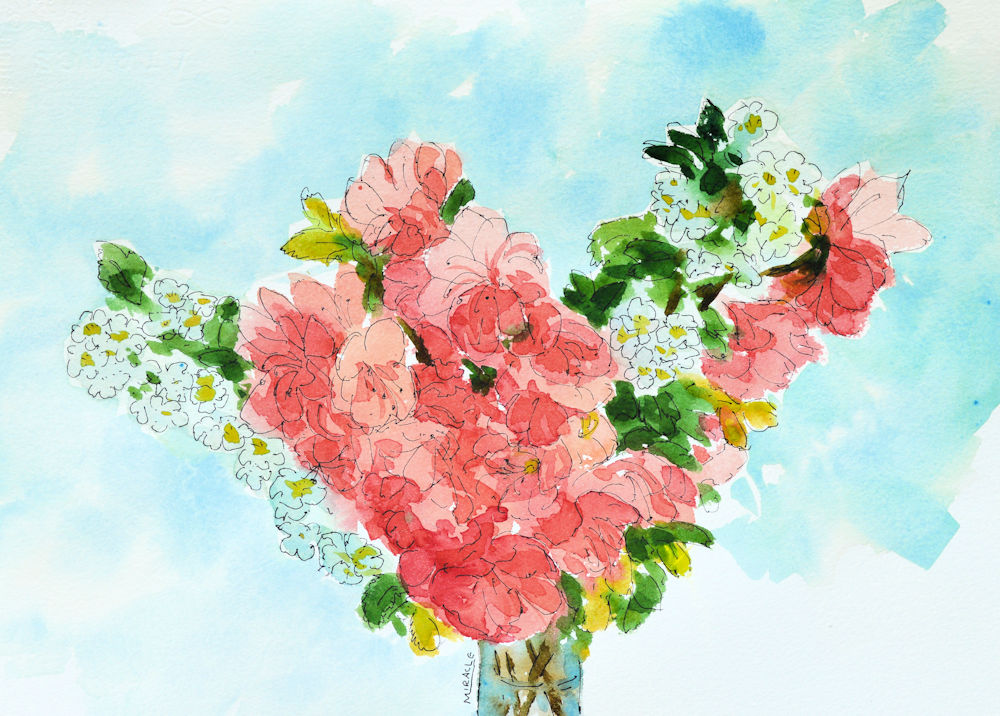
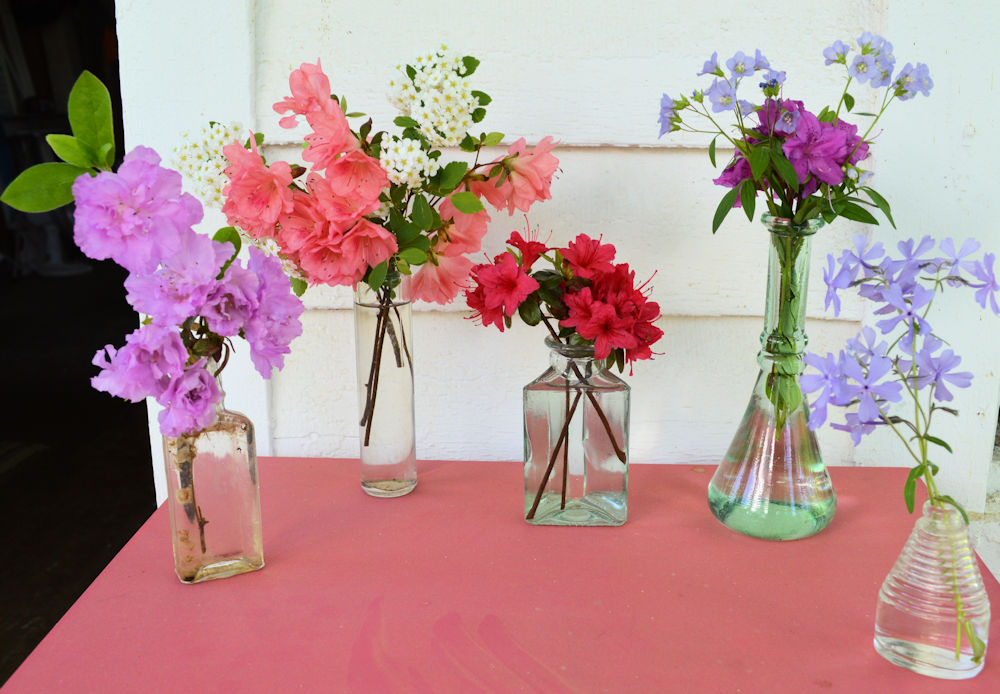
Spring bouquet of azaleas and bridal veil bush, watercolor, pen and ink, 10 x 14, Kit Miracle

The flowers keep coming and I just can’t seem to paint them quickly enough.  The past week I’ve been working exclusively in watercolor with pen and ink. This allows me to loosely capture the beauty of the flowers but add detail with the pen and ink.

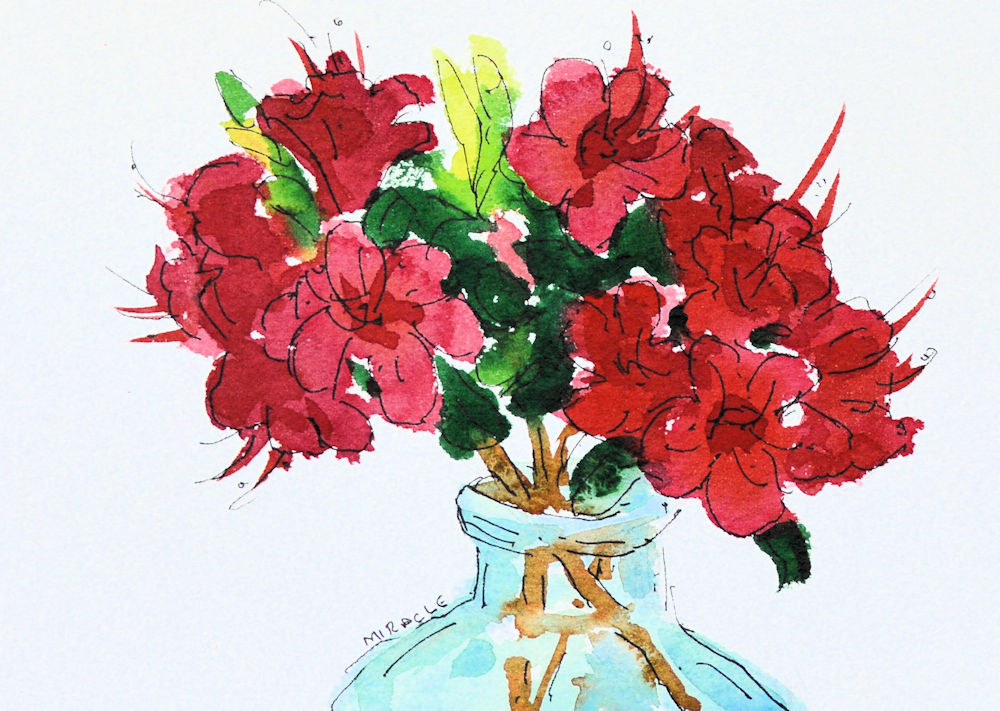
Red Azaleas, watercolor, pen and ink, 4.5 x 6.5, matted to 8 x 10, Kit Miracle

I always sketch the flower arrangement first, then add the watercolor.  When that is completely dried, I add the details with a Platinum pen and carbon ink cartridge.  Sometimes I still use the dip quill with India ink. I can even use a plastic eraser to remove some of the pencil lines without disturbing the painting.

Lavender Azaleas with Ruffled Edges, watercolor, pen and ink, 6.5 x 4.5, matted to 10 x 8, Kit Miracle

These paintings are usually done on quarter sheet watercolor paper, 140 pound, Arches or another quality paper.  They are 10 x 14 inches with a ½ inch border or I divide the paper into four sections.  The smaller paintings are matted in museum grade soft white mats of 8 x 10 inches with a foam core backing.

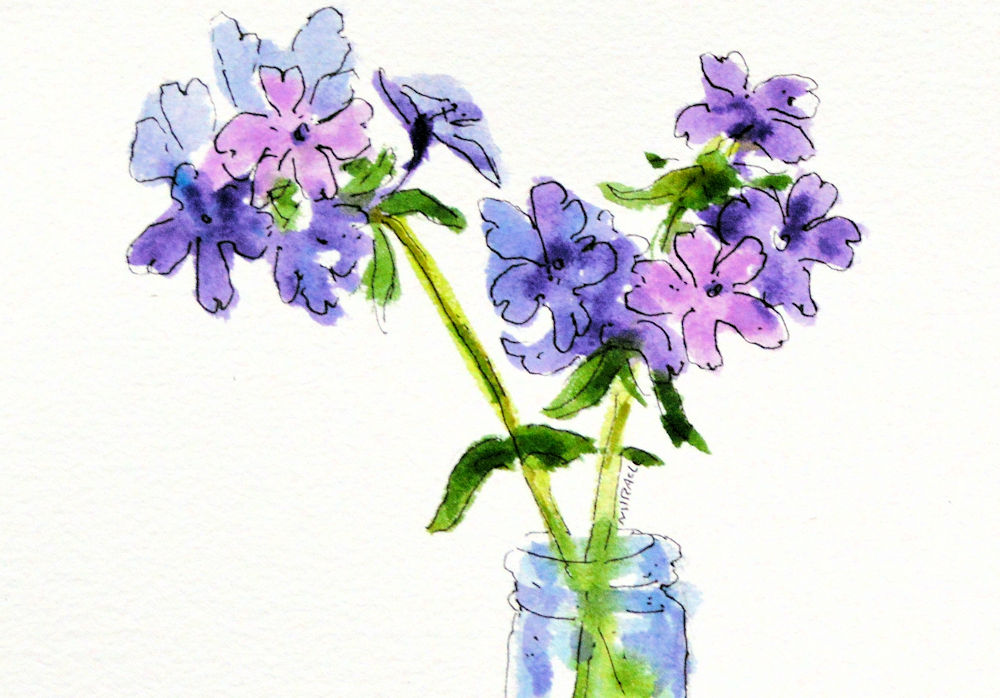
Blue Phlox, watercolor, pen and ink, 4.5 x 6.5, matted to 8 x 10, Kit Miracle

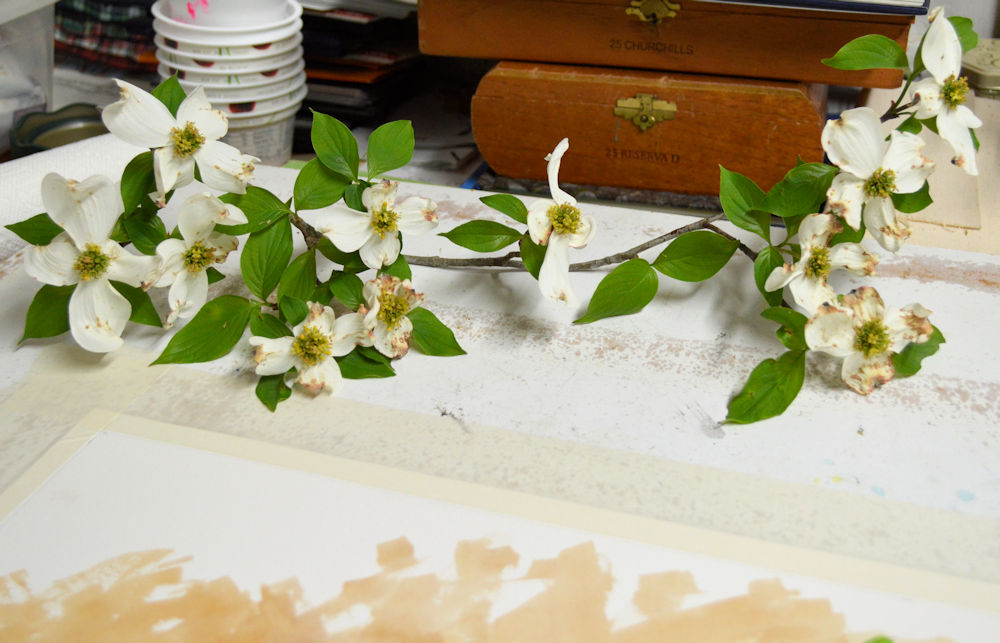
Flowers this week include a branch of dogwood, an arrangement of some lovely salmon-color azaleas with fronds of bridal veil.  Smaller paintings include Greek Valerian, Blue Phlox, more varieties of azaleas and whatever else I find blooming.  The season is often so short that I can’t capture everything I want to paint but I give it a good try.

Branch of Dogwood, watercolor, pen and ink, 10 x 14, Kit Miracle

Branch of dogwood flowers for painting

Spring flowers. This is a selection of flowers that I painted recently. I’ve picked up the little vases over the years at resale shops, and even our farm dump. Everything is useful.

View the details of these paintings on either of my Etsy shops.  KitMiracleArt or My90Acres.

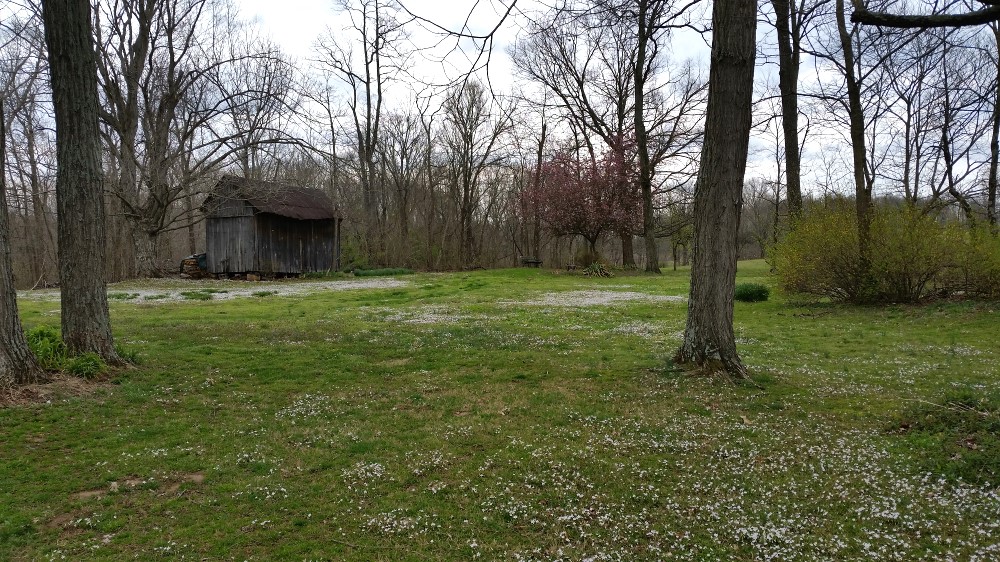
Signs of spring

We are still several weeks away from the official beginning of spring, but the past few days have been unseasonably warm.  Mother Nature seems as eager as the gardeners to get on with the show.

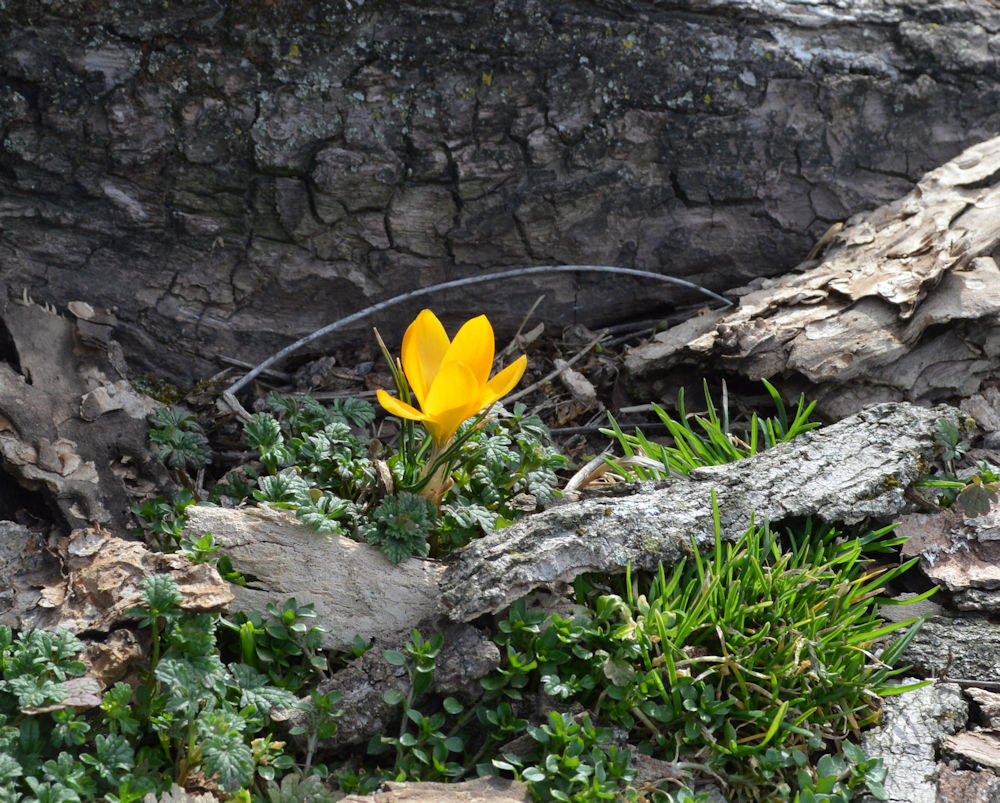
First crocus. It seems as if it’s always the yellow ones which bloom first.

The first crocuses are blooming, always the yellow ones first.  They are sprinkled all over the property, courtesy of my kids and granddaughter.

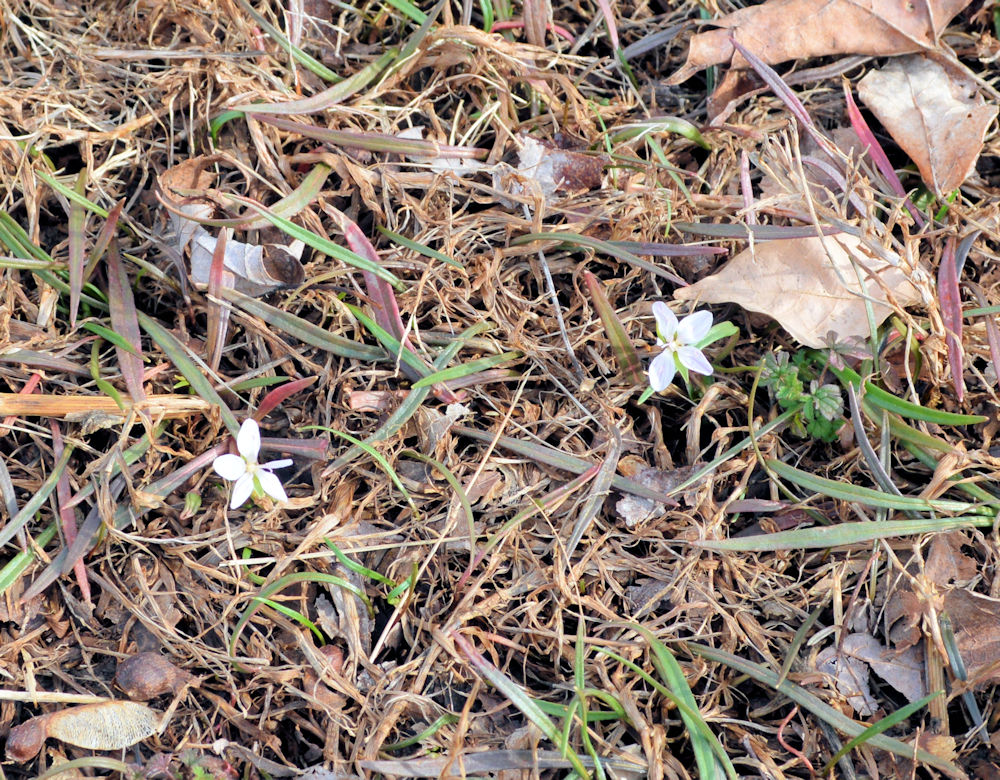
Spring Beauties

Then the first spring beauties have made an appearance.  In a few more weeks, they will carpet the lawn with their dainty white and pink-striped blossoms.

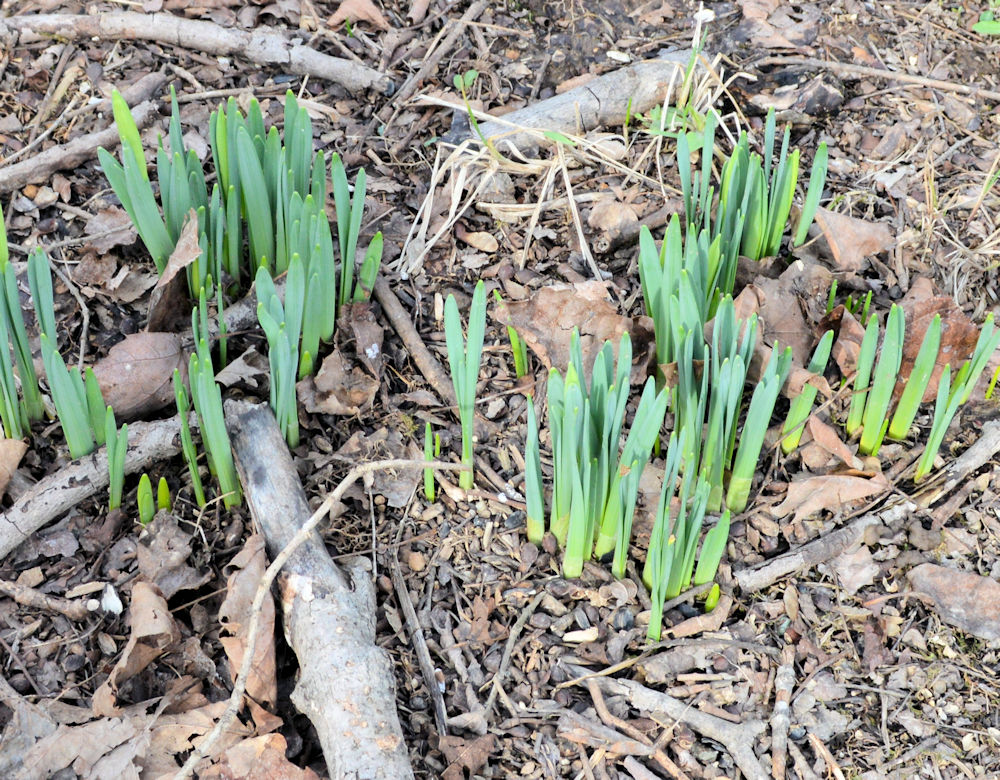
Daffodils and other bulbs are poking up all over the place.  Fortunately, with so many varieties, their blooms are staggered over several weeks.

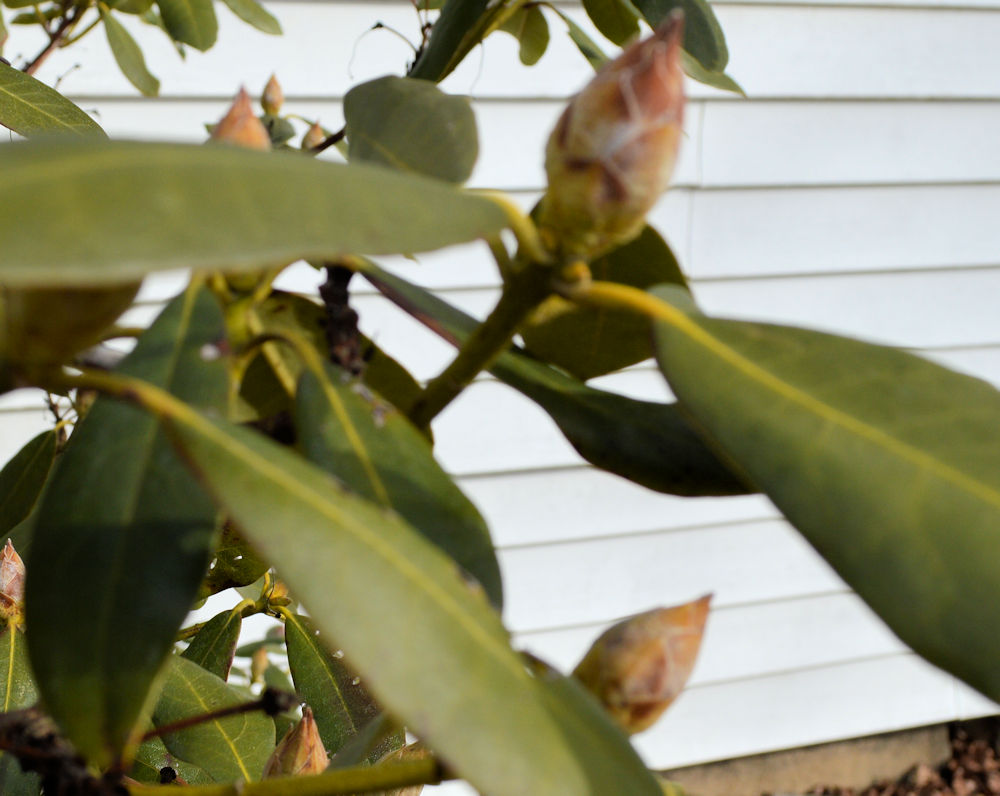
Finally, the rhododendron near the kitchen window is ready to pop.  These large blooms will be a joy to the eyes.

It is such a pleasure to walk around the property, spy on nature, and listen to the chorus of peepers down by the creek.  The warm days may not last but at least we’ve had a promise of spring coming soon.  The garlic is up.  The cold frame has been dug up and replanted with lettuce, spinach and kale.  I’m ready!

A yard full of spring beauties

Cedar bench for the garden

Cedar bench featuring Southern Indiana cedar boards

Cedar trees are indigenous to southern Indiana and many parts of the Midwest.  An evergreen, they add color to the winter landscape.  They often grow on soil where other trees can’t seem to get a foothold, limestone, sandstone, and rocky.

This year my family surprised me with refinishing two cedar benches in the garden.  Although the benches were still serviceable, after 25 years, they needed an update.  This locally cut cedar was selected due to its resistance to insect damage and other wear.  I was told by the guys that even the old cedar boards were still in pretty good shape beneath the surface of lichen and weathered materials.

The iron bench supports were repainted and new boards were planed and sanded for this lovely look.  If you are not familiar with cedar, it has a wonderful smell which will fade in time as will the bright coloring to a silvery grey.

I’m looking forward to spending some time on these benches this coming year (whenever a gardener has time to rest).  They also are a reminder of my mother who owned the original benches so I guess they’re about 40 years old now. I remember many conversations we had on those benches over the years.

Autumn in the country

Most people think of autumn as the time to slow down, but here in the country, we have work to do before we can take it easy.  We’ve had a couple of hard frosts but the weather has actually been pretty balmy in the 50s and 60s.  This really helps extend the growing season here in southern Indiana.

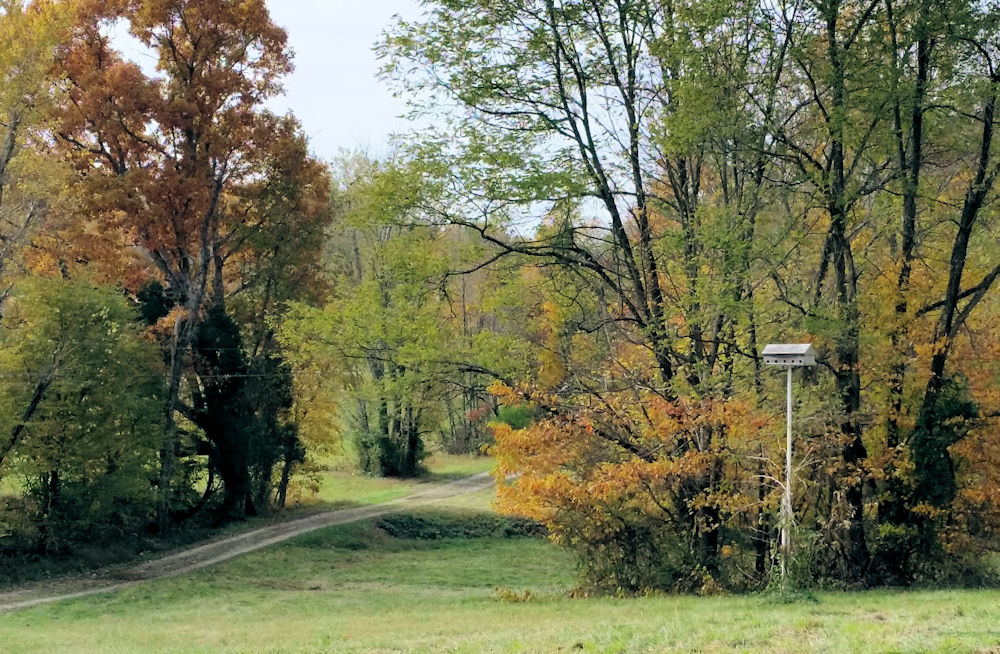
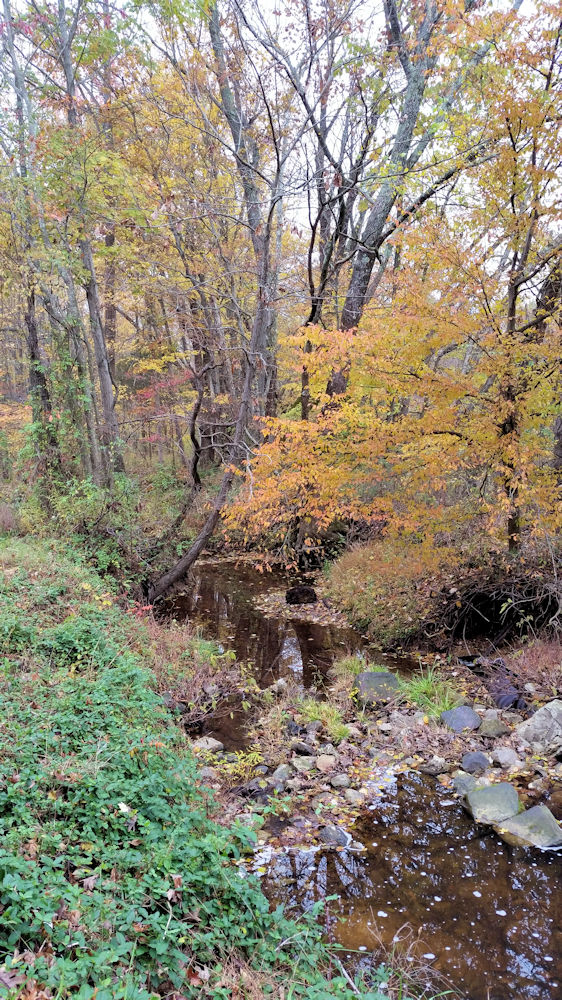
Fall view in the country, looking down to the creek.

One of my favorite things to do is look for the hardy flowers that are still blooming, even after the frost.  I still have some geraniums, alyssum, Sweet William, and even one tiny confused violet.  There is almost always some flower which manages to make an appearance except in deepest winter.

Hardy flowers that survived a hard frost. Alyssum, geranium, sweet William and a tiny violet.

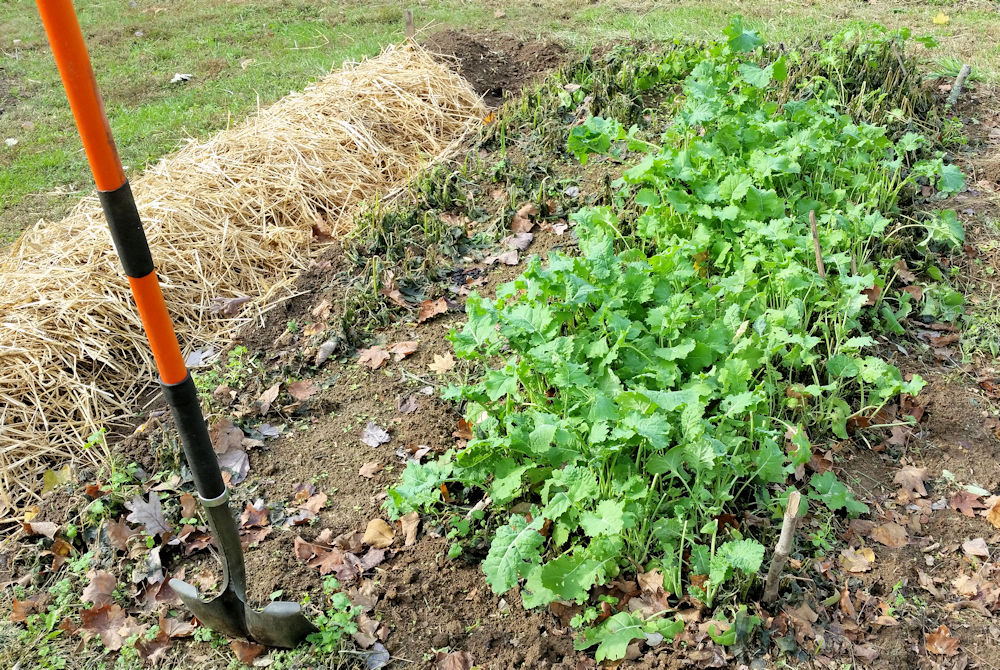
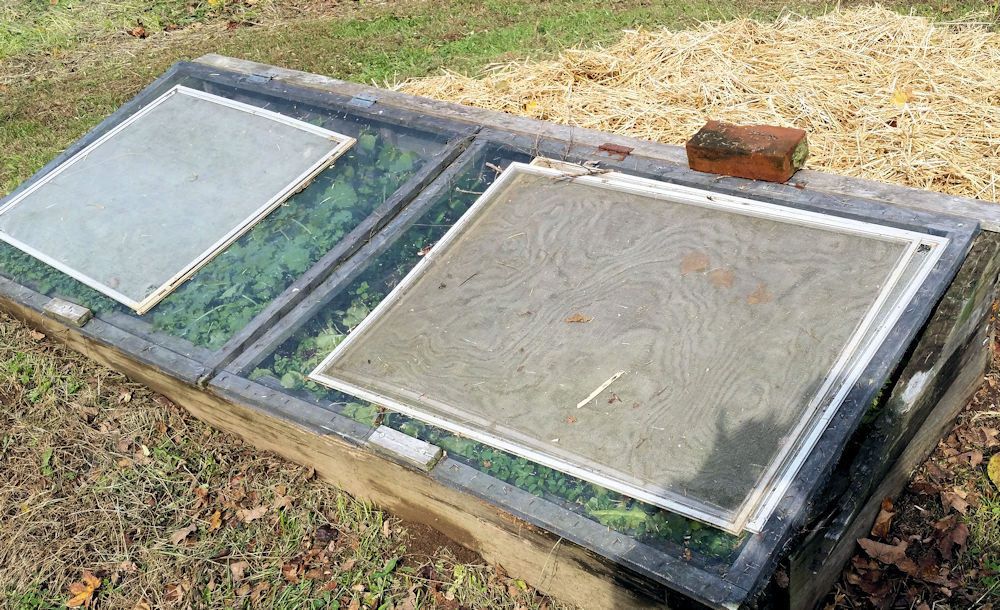
We also like to plant a fall garden.  As you can see by the photos, the frost killed the weeds but the kale is still happily growing.  The cold frame will protect some more kale and lettuce until probably early December.  We’ve got fall peas growing but ….no blooms.  And probably no pollinators if we did have blooms.  The asparagus and garlic have been put to bed under straw.

Garlic bed under the straw and some happy kale. See how well it survived the frost which killed the weeds.

Fall peas look great but no blooms, and probably no pollinators. Note to self: plant earlier next year.

Cold frame with kale and lettuce. Asparagus bed behind under the straw. We will cover the cold frame as the weather gets colder.

My husband has a deer blind in a small grove of locust trees overlooking the bottom field and creek where we often see deer.  I’m not really worried that he’s going to get a deer as he’s only gotten ONE in thirty years.  But….you never know.  And the toll the deer population takes on cars in this area is steep.  Our family alone has hit seven deer over the years.

Deer blind overlooking the creek and lower field.

Our wood pile is growing. Today the guys dragged several logs out of the woods as it’s easier to cut and split them all in one place, plus they handle the wood less than when they cut and split it in the woods. Thanks also to our son who came home for the weekend to help out.  This is hard work!

Cutting firewood on a Saturday morning in November.

The walnuts have been picked up by the boy scouts who turned them in for money at the mill.  What they missed, the squirrels are tucking away.

Fall at the creek. We have several creeks but pass this one every day as we go over it on the drive.

This giant oak tree has history and is one of my favorite trees on the property. I call it The Sentinel as it “guards” the driveway.

And, it’s just a beautiful time to take a walk and enjoy the season while I can.

I hope you enjoyed your visit to our country place.  Feedback is always welcome.

Painting wildflowers

Swamp Mallow – wildflower, watercolor, pen and ink, Kit Miracle

After almost four months into retirement, I’ve been able to devote a lot more time to my creative side.  This means time spent in the studio as well as venturing out for plein air painting.

One thing that I’ve been having fun with this summer is painting wildflowers.  With 90 acres, plus the many streams, country roads, fields and forests in the area, there is plenty of subject matter. In a ten minute walk in almost any direction I can snag a handful of different wildflowers.  And the variety keeps changing throughout the season.

Joe Pye Weed – wildflower, watercolor pen and ink, Kit Miracle

My love for wildflowers was born in college when I took a couple of terms of field botany.  (Please don’t ask me to categorize any plant through Gray’s Botany; I have totally forgotten how.)  But I spent one summer doing an independent study of wildflowers with my amazing professor, Lucky Ward.  We would travel together on dusty back roads, collecting samples for the college museum and to press.  What an experience!

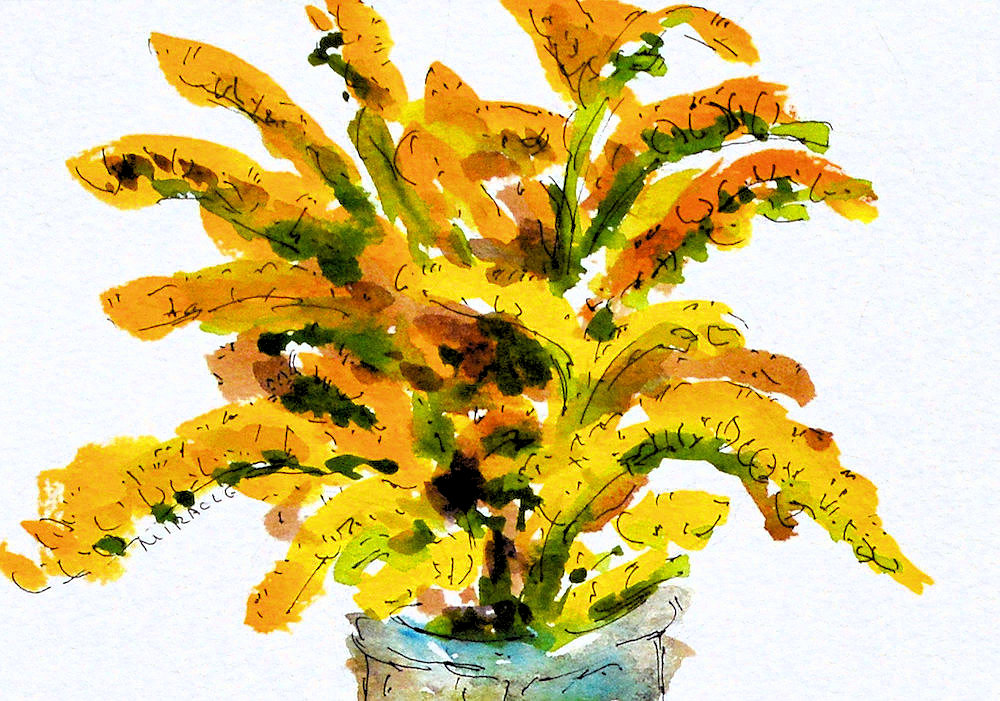
Goldenrod – wildflower, watercolor pen and ink, Kit Miracle

Wildflowers have always remained beloved friends even though they are often overlooked by many, or just considered “weeds.”  Too bad.

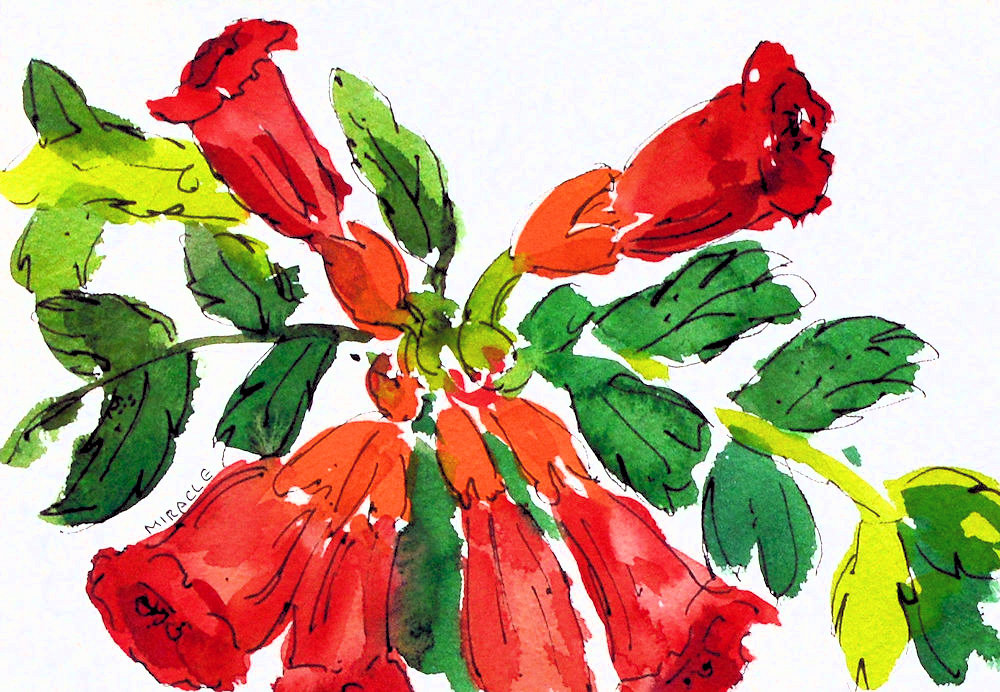
Trumpet vine – wildflower, watercolor, pen and ink, Kit Miracle

So this summer I’ve tackled identifying and painting a lot of local flowers.  These are not botanical drawings but merely simple watercolor with pen and ink sketches.  My aim is to capture the beauty that surrounds us in the small bits of color that we pass so blythely by.

Evening Primrose – wildflower, watercolor pen and ink, Kit Miracle

So, what to do with all these little paintings?  I decided to start an Etsy shop called, of course, My90Acres to sell them.  No sales so far but I’m hopeful.

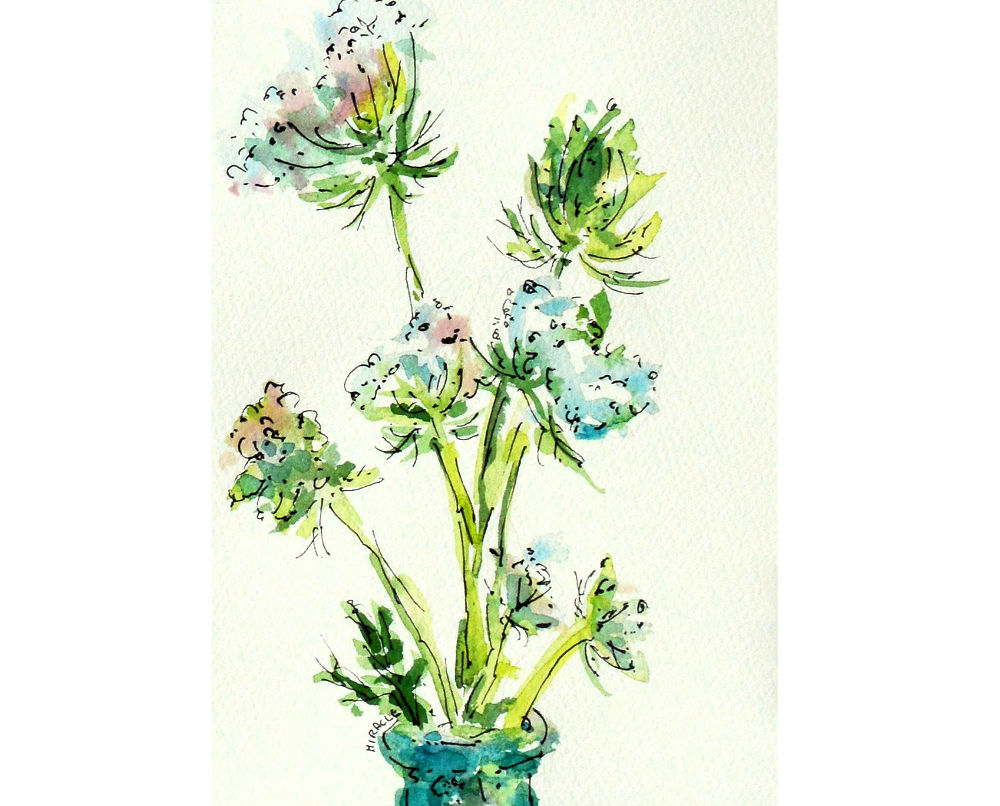
Queen Ann’s Lace, wildflower, watercolor, pen and ink, Kit Miracle

Meanwhile, I’ll still be hiking through the weeds, chiggers and all, to see what is blooming this week.

Red clover or purple clover, watercolor pen and ink, Kit Miracle

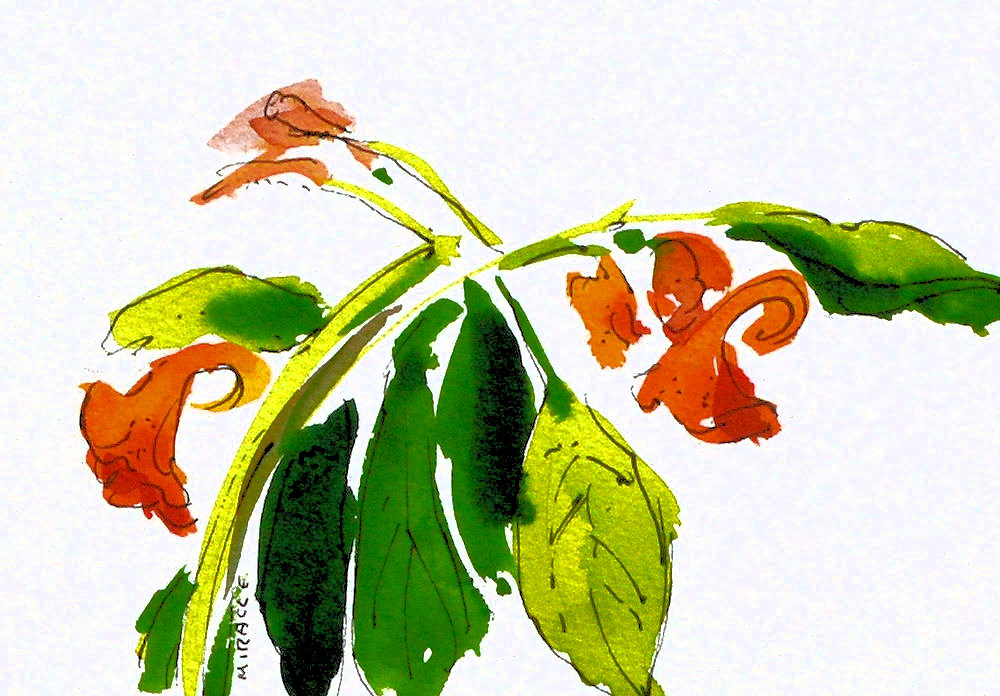
Jewel Weed – wildflower, watercolor pen and ink, Kit Miracle

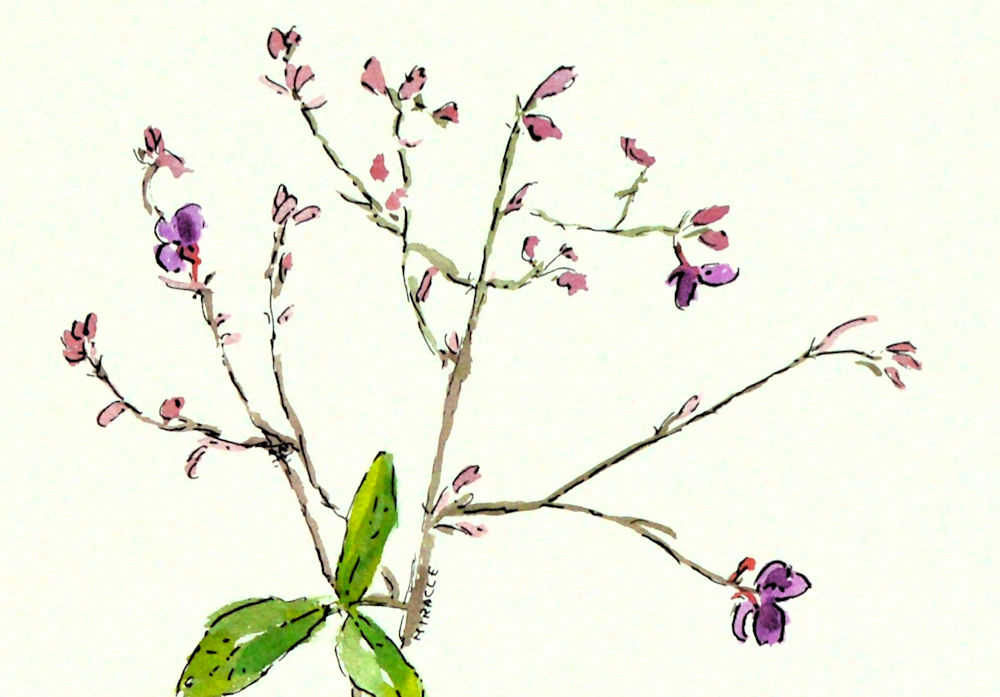
Toadflax – wildflower, watercolor, pen and ink, Kit Miracle

Night visitors and animal thieves

Living in the country, we often have furry visitors, especially at night, and especially when the garden comes in.

This year the raccoons ate ALL the peaches!  Dang!  And they took out the entire second crop of sweet corn.  Fortunately, we were able to put up some from the first planting.

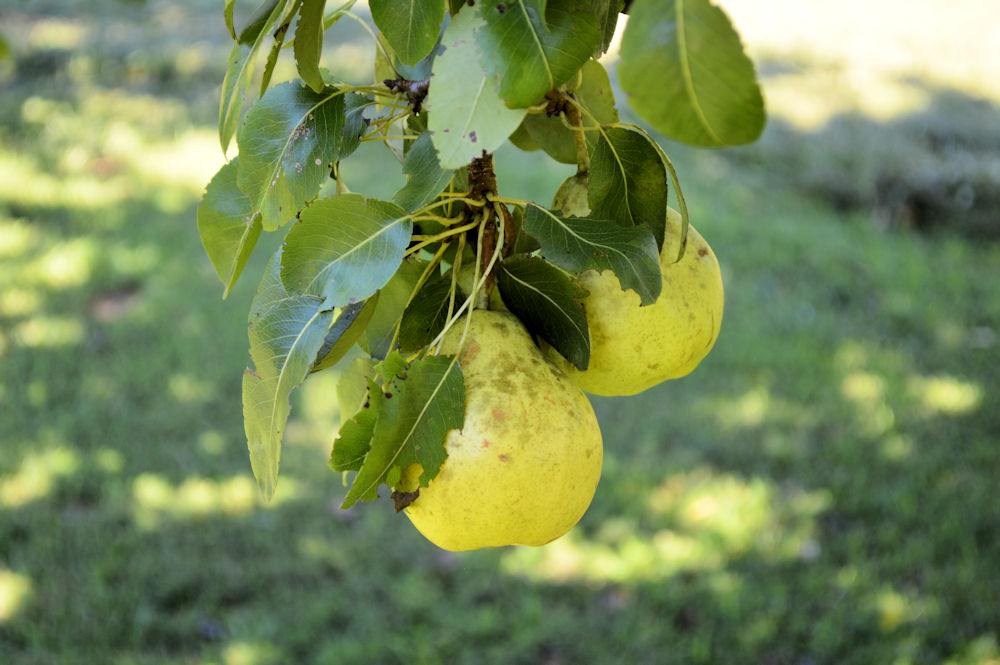
Pears on tree in the orchard.

This year our pear trees are giving us an abundant crop.  The branches are drooping with the heavy fruit.  I put up two buckets of pears this week which will taste pretty good in a cobbler this winter.

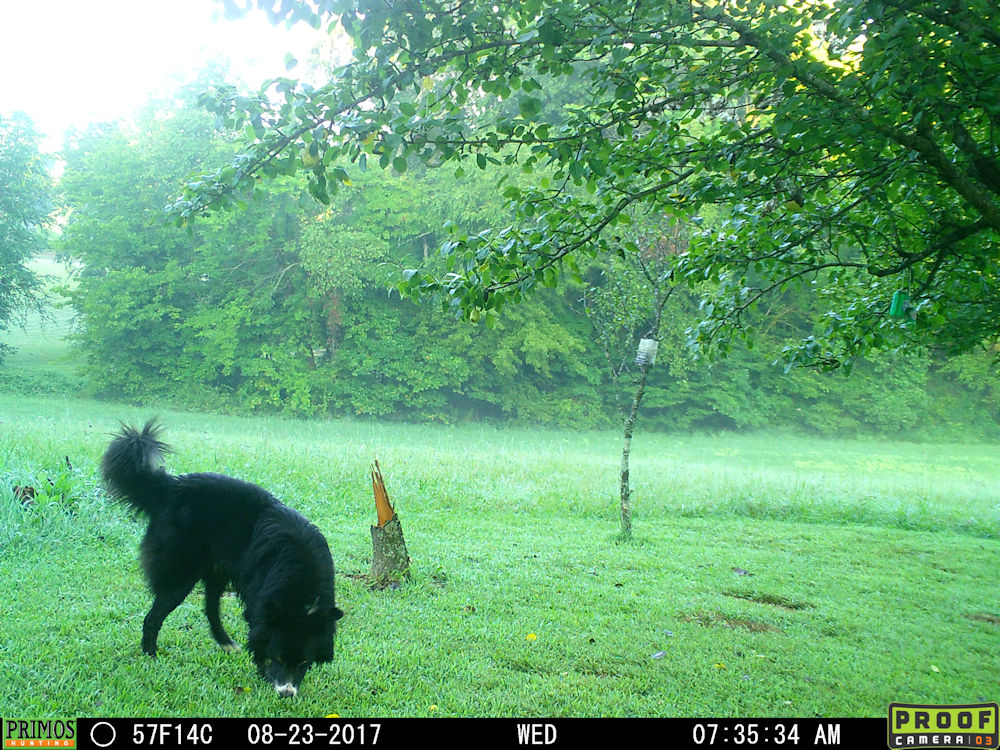
Unfortunately, a lot of other critters like this fruit.  My dog barks at night at the invaders but since he is tied up at night (due to his penchant for visiting the neighbor’s chickens), he can only bark. (And keep us awake.)

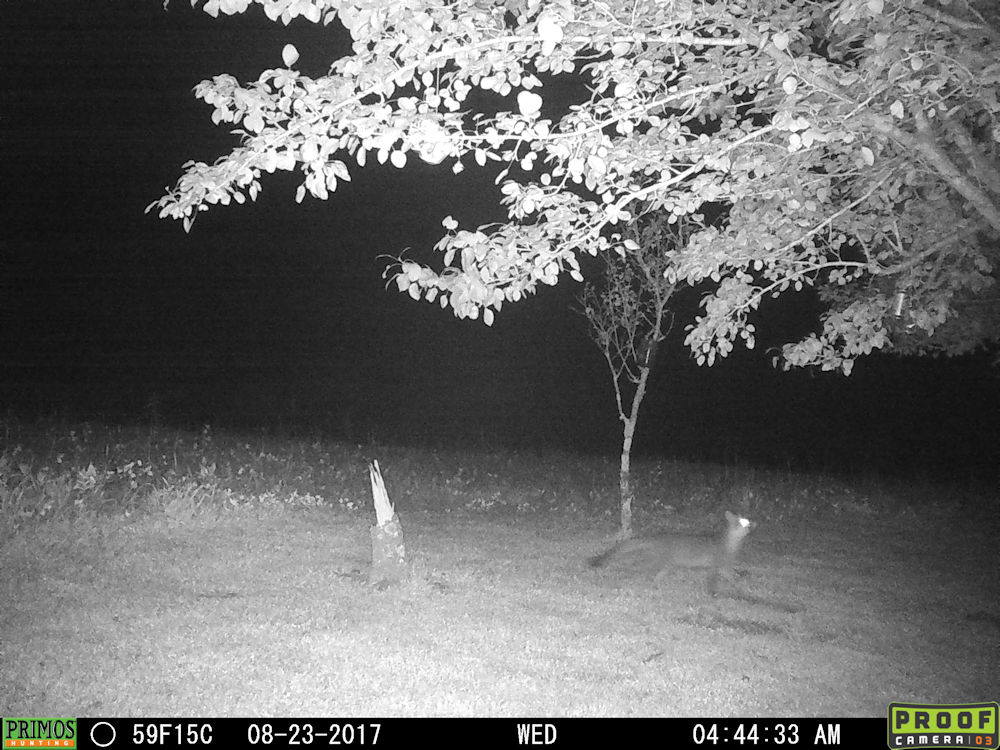
So, I set up the deer cam to see who was grabbing his attention.  I expected to see a lot of raccoons but was surprised at what I did see.

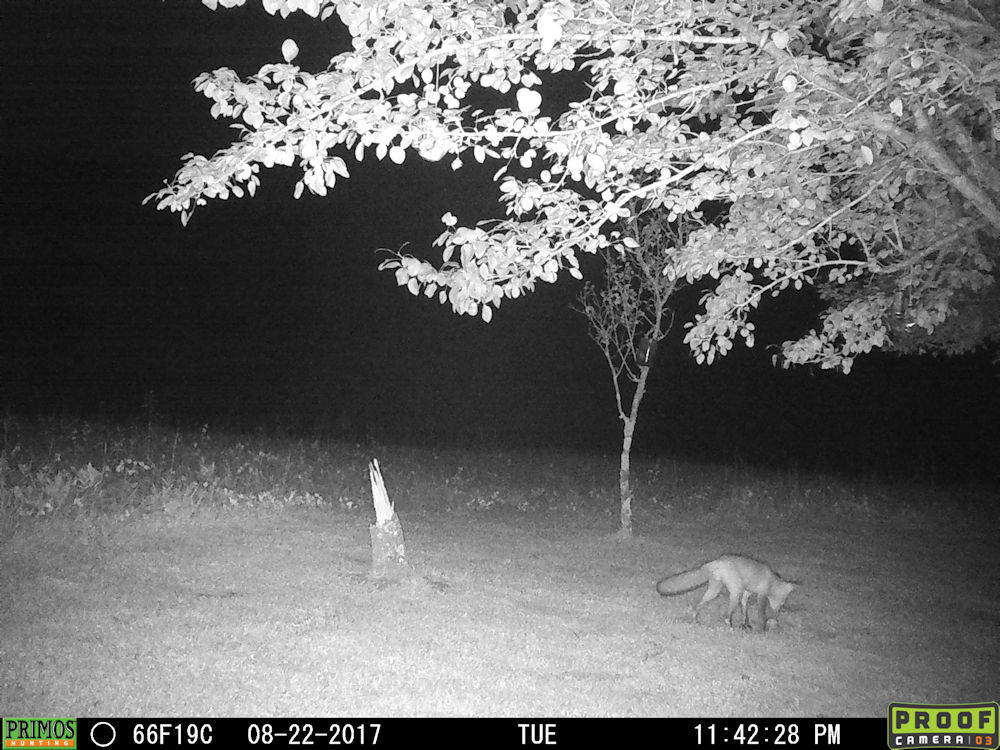
A family of foxes visits often  They eat a lot of windfall but, like the fox in Aesop’s fables, they will try jumping up to grab a low-hanging fruit.

Fox with pear

Fox at night, eyeing low hanging fruit.

Mystery night creature. Probably an owl.

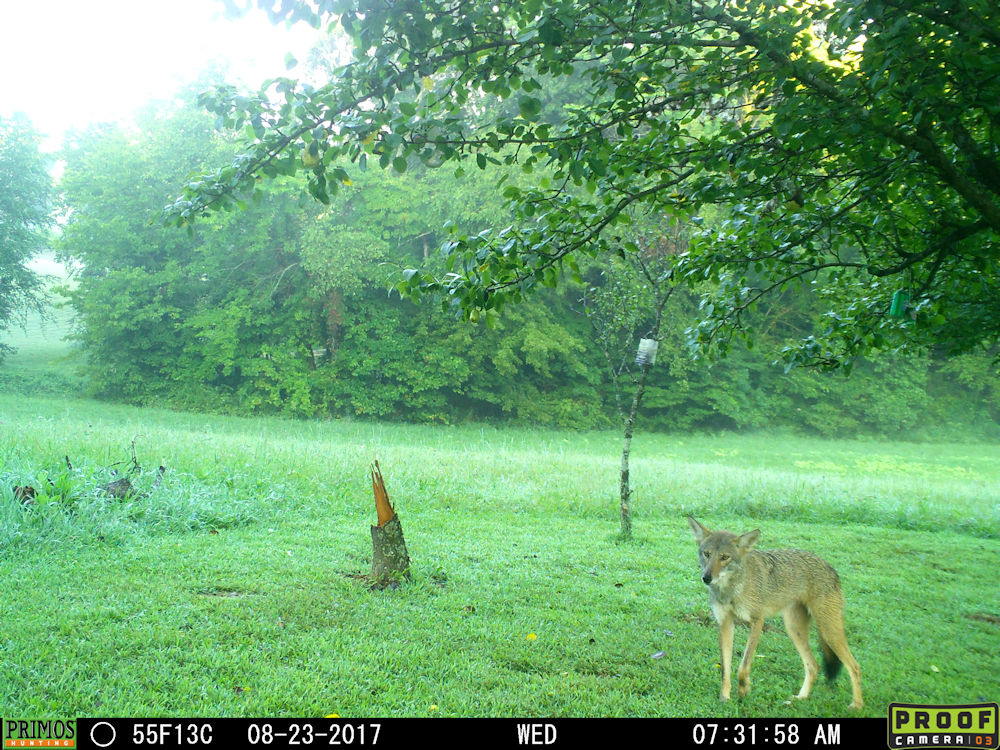
But the real surprise was the coyote who has become a frequent visitor.  I think this is a female based on the size compared to my dog.  Also, she is probably feeding pups as she returns many times, even during the day.

Coyote with pear. Probably taking it back to her pups.

Coyote on Alert

My dog sniffing around after running the coyote off this morning.

In the long run, I don’t really mind sharing.  Just leave something for me.