Appletini – Something Different

It was a busy week here on the farm with company and the big Thanksgiving feast.  The weather has been pretty great, too – all sunshine and balmy temperatures.  In November, this means more outdoor chores, such as, chopping firewood, cleaning gutters, etc.

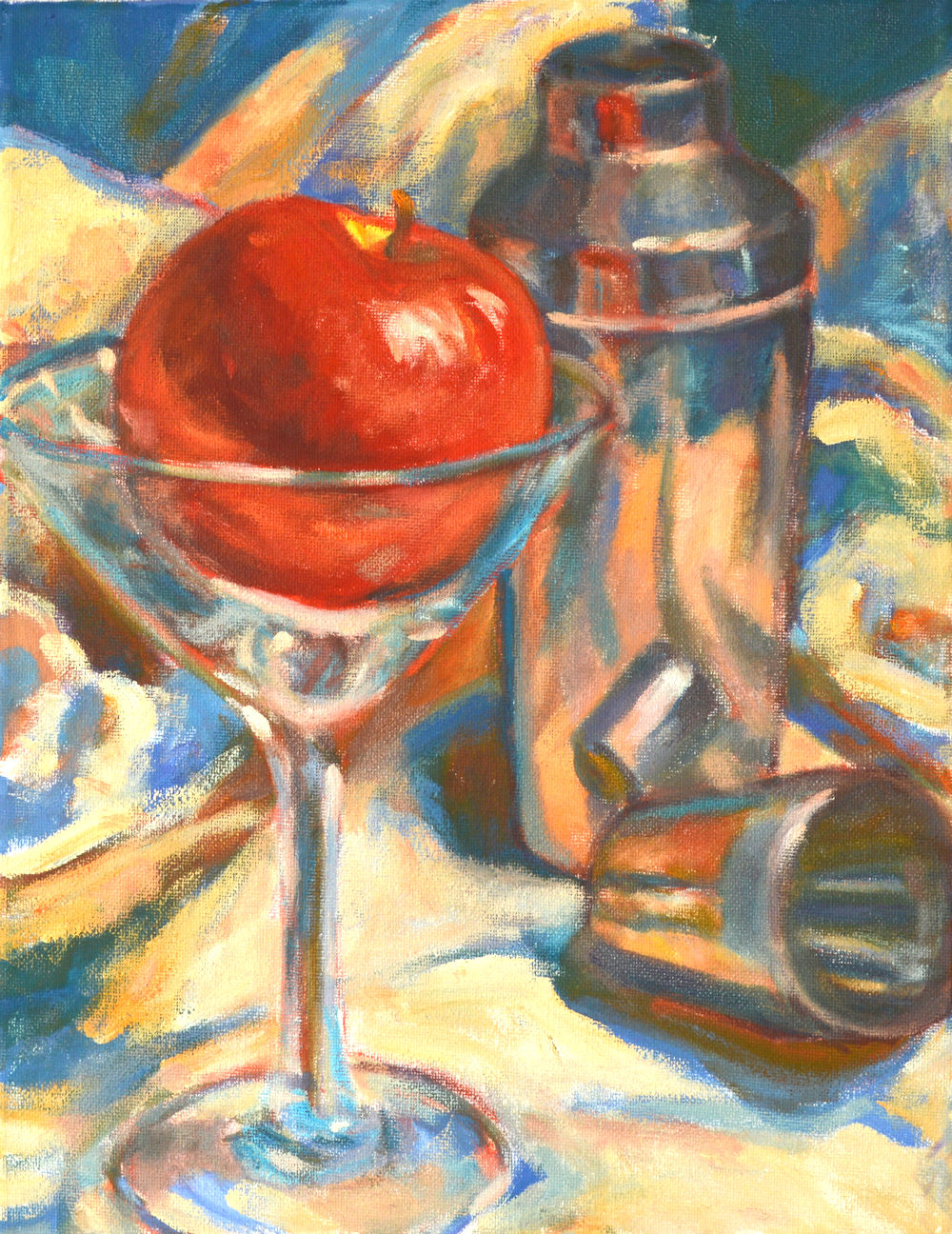
Appletini, oil on canvas, 16 x 12, Kit Miracle

All of these activities mean that I only completed one painting this week.   I call it Appletini since it features a big red apple in a martini glass with a silver shaker behind it.  The reflections were what really attracted me.  This is similar to previous paintings that I’ve posted on here, Apple Jack, and Two Lemons and a Martini Glass.  I don’t know why but I like placing objects in unusual situations.  Props courtesy of Goodwill thrift shop.

I’m not quite sure if I’m finished with the painting but I probably am.  What do you think?

Of course, available on my Etsy shop and can be shipped in time for the holidays.

Good Framing Makes A Difference

Times Square at Night, professional framing, Kit Miracle

Recently I posted about how to frame your artwork on a budget.  This post is about how professional framing and presentation can bring out the best in your artwork.

This is also a follow up to a post I made in May about something different, a watercolor and India ink painting I created of Times Square at Night.  An acquaintance saw the post and was thrilled.  She and her husband had lived in the Theatre district near Times Square for nearly 30 years before moving to New Jersey.  She bought the painting as a surprise for her husband’s birthday.

When I mailed it to her, I told her that I had planned on framing it with a white mat and black frame.  This is what she and her framer came up with.  SO much better than anything I had imagined.  Professional framing really brings out the colors of the painting while displaying it to its best.

So, framing on a budget or professional framing, you choose.

Studies in Red – Oil Paintings with Heart

I’ve always liked red paintings.  When I did art fairs for many years, they seemed to be very popular with my patrons, too.  Everyone has room for a red painting to brighten up that special spot.

The four paintings that I completed this week are predominantly red or at least in the red/orange family.

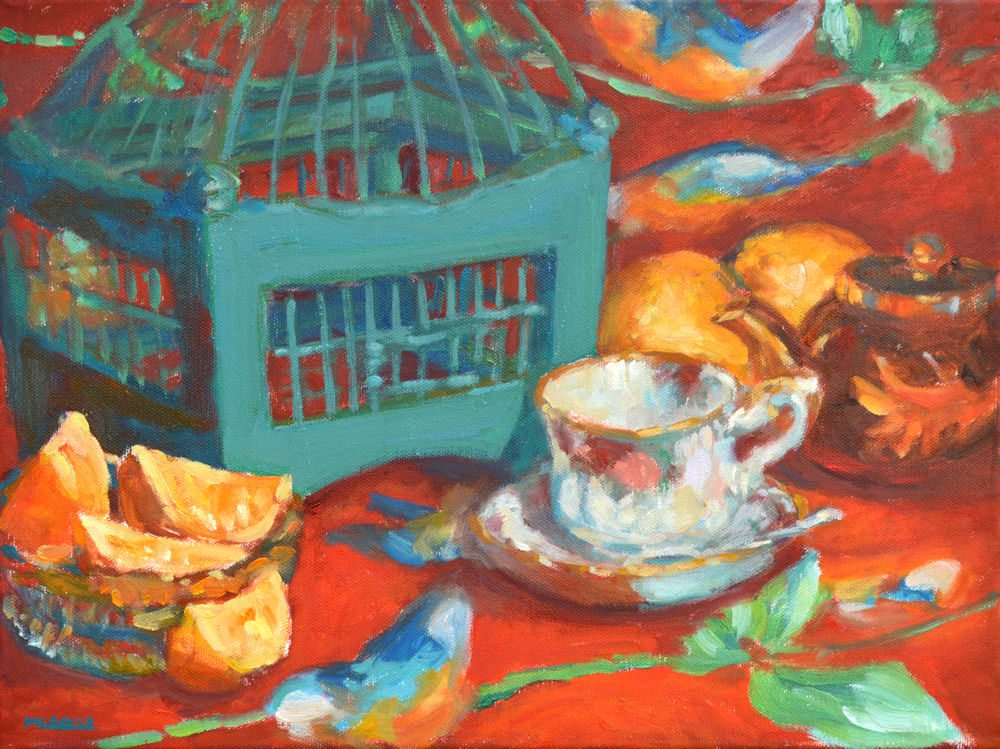
The Birdcage, oil on canvas. 12 x 16, Kit Miracle

The first one, The Birdcage, features the antique birdcage that I bought at a flea market earlier this summer.  I paired it with some bright red fabric printed with beautiful little birds.  Then I decided to do a tea theme with a teacup and small teapot, along with some luscious lemons.  Although the painting is a little busy, especially after the simplicity of the others that I’ve been working on lately, I think it works.  Boy, that birdcage was difficult to paint!  The other challenge was to depict the birds on the fabric without letting them take over the composition.

The Conversation, oil painting, 10 x 10, Kit Miracle

The second painting I did this week is called The Conversation.  I can just imagine two friends having a lovely talk in the afternoon sunshine.  It looks as if they just left, doesn’t it?

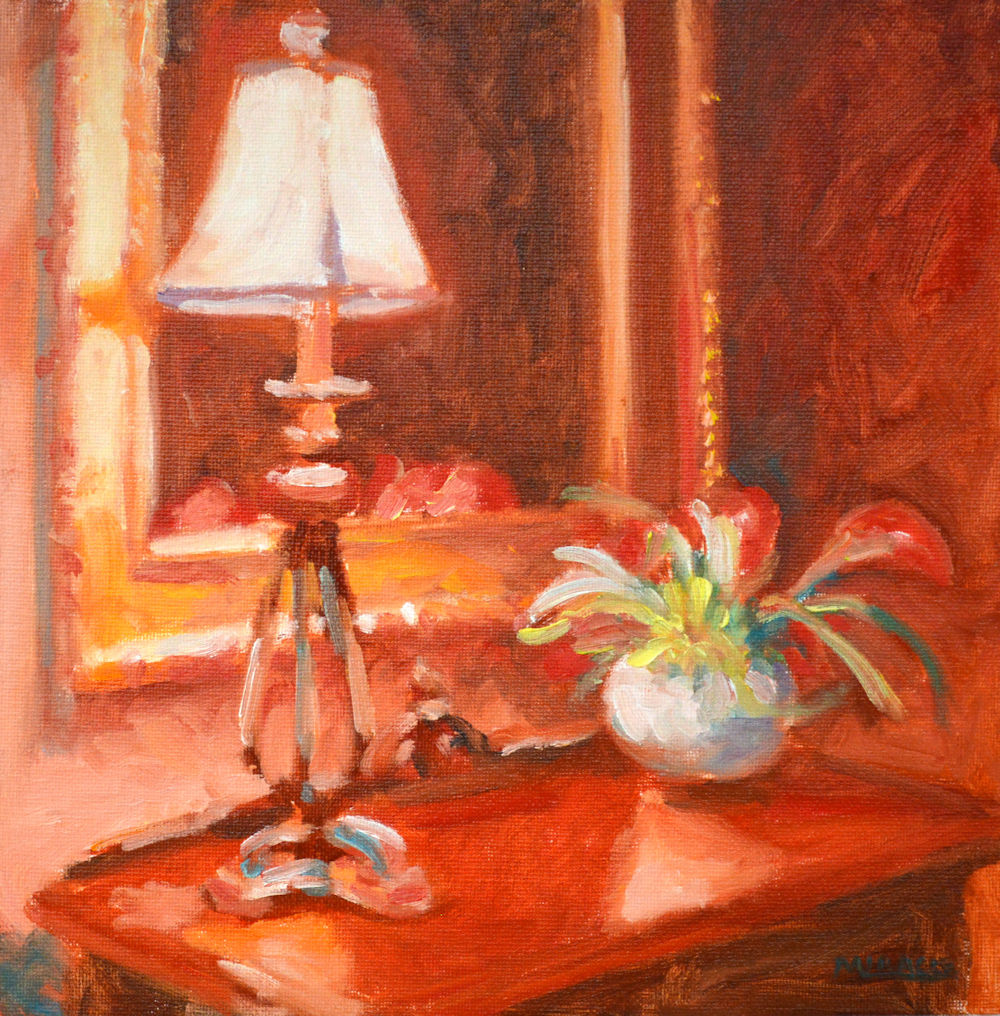
Lamplight, oil painting, 10 x 10, Kit Miracle

Then I painted this bright interior painting called Lamplight.  This depicts an interior scene, perhaps an entry hall, with a lamp and a simple bouquet of red flowers.  The gold frame of the mirror helps connect the objects on the table.

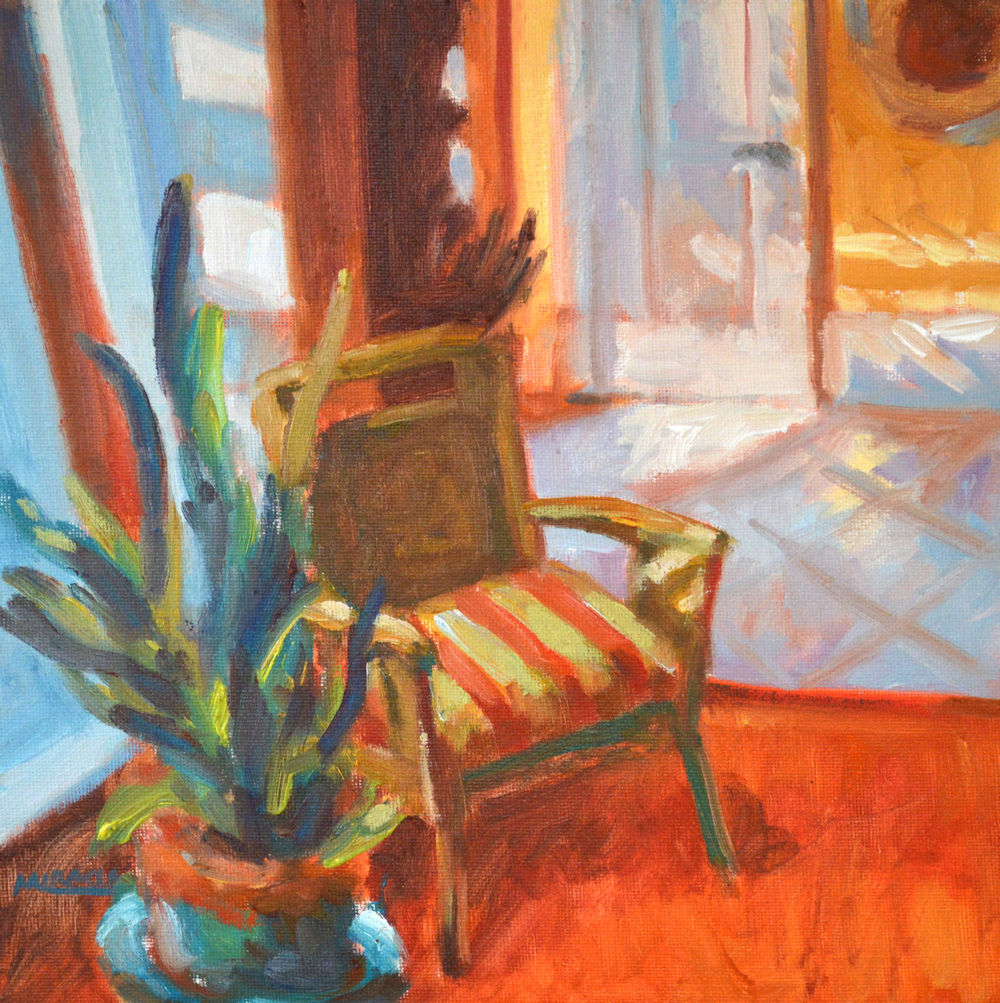
A Sunny Corner, oil painting, 10 x 10, Kit Miracle

My final painting this week I call The Sunny Corner.  I’ve always loved the play of sunlight and shadows on interior walls and floors.  The effects are often fleeting but beautiful, nonetheless.  The chair just invites the viewer to take a rest and enjoy the sunshine.

Visit my Etsy shop, KitMiracleArt, to see many more painting details.

Cesar Santos, artist extraordinaire

Another favorite contemporary artist that I like is Cesar Santos, one of the most versatile young living artists.  I love his videos on You Tube.  This one is about a drawing he did which matches any “master”  I’ve seen.  This Cuban American is an inspiration to us all.  His videos are fresh and informative. Check him out.

Here is a link to his website.  http://www.santocesar.com/

Onions and Garlic, a step-by-step demonstration

Onions and Garlic, 12 x 16, oil on canvas, final- Kit Miracle

I’ve been painting a lot of still lifes lately.  This one was inspired when my husband came home recently with a bag of big, beautiful garlic bulbs.  I quickly grabbed them before he could put them in a sauce or plant them in the garden.  Then I went “shopping” through the house and refrigerator, and even my prop closet for the rest of the items I needed for a still life.  This one reminds me of something by Cezanne or Renoir.  The impressionists were known for beautiful paintings featuring simple household items.

If you would like to see a demo of this painting step-by-step, click here for the demo page.  The painting is for sale on my Etsy shop, KitMiracleArt.  Paint has to dry though!

Shari Blaukopf, Canadian artist

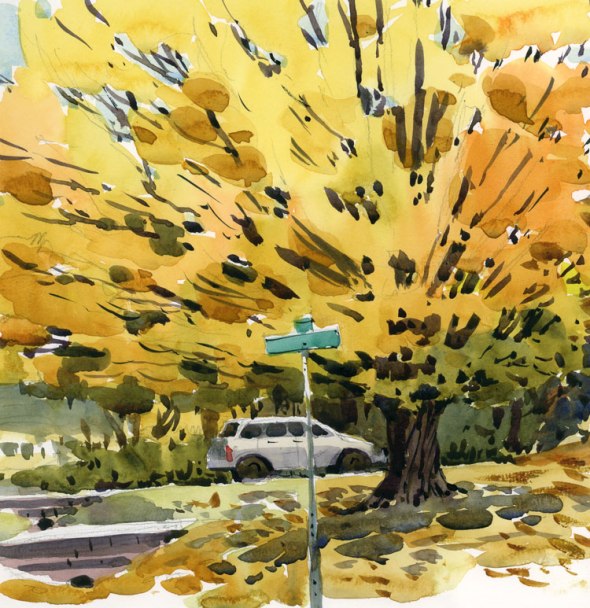
A big tree which Blaukopf paints each autumn.

Another artist that I follow online is Shari Blaukopf, an artist living in Montreal, Canada.  I first encountered her work though Urban Sketchers, a world-wide group of artists who primarily paint outdoors, or in plein air.

One of the courses which Blaukopf teaches on Craftsy.

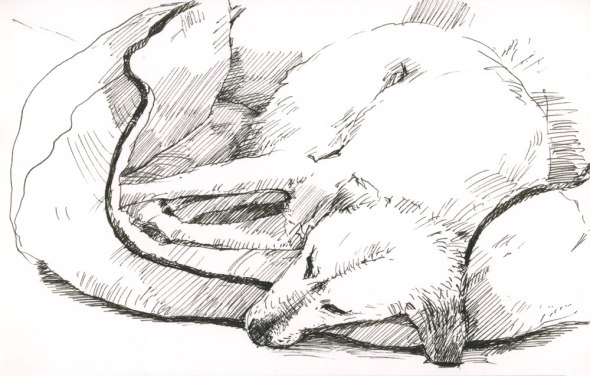
I admire Shari’s work of loosely painted watercolors with pen and ink, or sometimes with pencil overlay. Her usual topic is street scenes, but she also records human figures in various situations, subways, restaurants, etc.  And her dog Alice  She can find beauty in some of the most unusual places.

Shari Blaukopf, sketch of her dog Alice

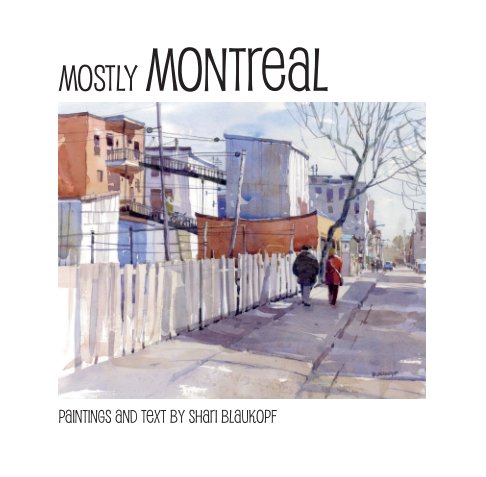
Cover for the book by Shari Blaukopf

Shari teaches in Montreal.  She also conducts classes on Craftsy and has written more than one book.  She makes it look so easy.  Check her out at her blog https://shariblaukopf.com/ or her website at……http://www.blaukopfwatercolours.com/

Autumn in the country

Most people think of autumn as the time to slow down, but here in the country, we have work to do before we can take it easy.  We’ve had a couple of hard frosts but the weather has actually been pretty balmy in the 50s and 60s.  This really helps extend the growing season here in southern Indiana.

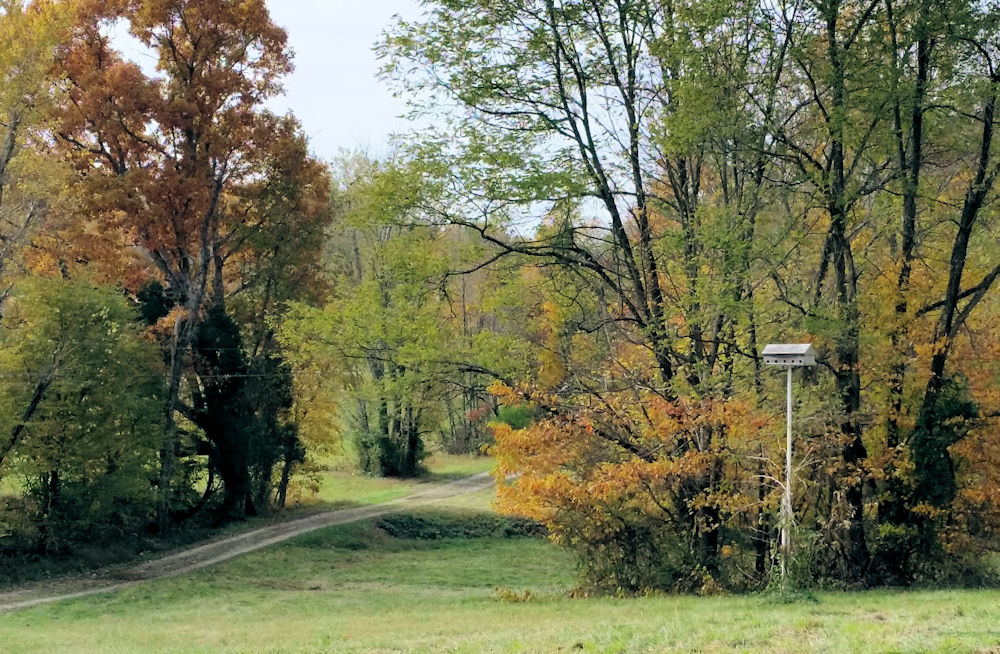
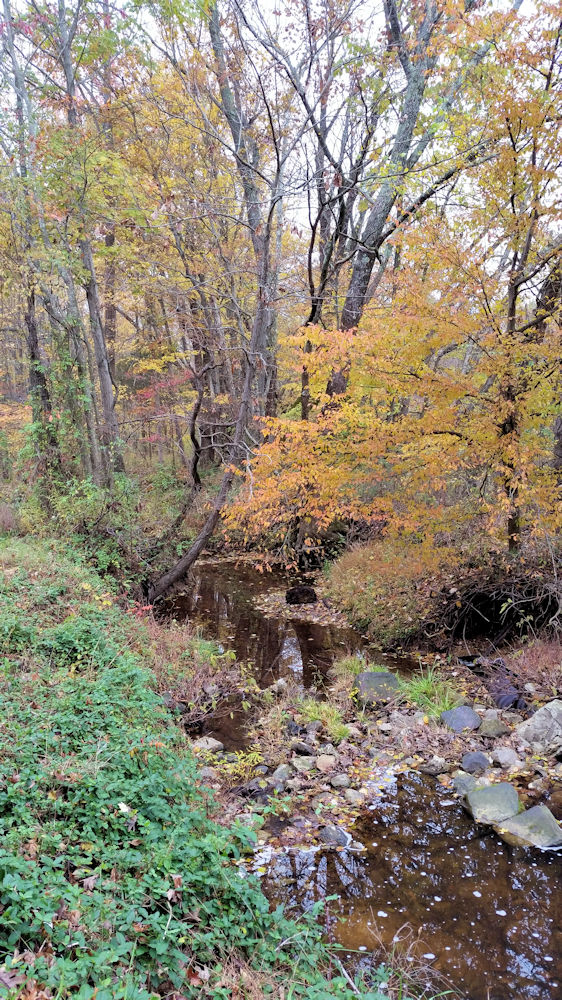
Fall view in the country, looking down to the creek.

One of my favorite things to do is look for the hardy flowers that are still blooming, even after the frost.  I still have some geraniums, alyssum, Sweet William, and even one tiny confused violet.  There is almost always some flower which manages to make an appearance except in deepest winter.

Hardy flowers that survived a hard frost. Alyssum, geranium, sweet William and a tiny violet.

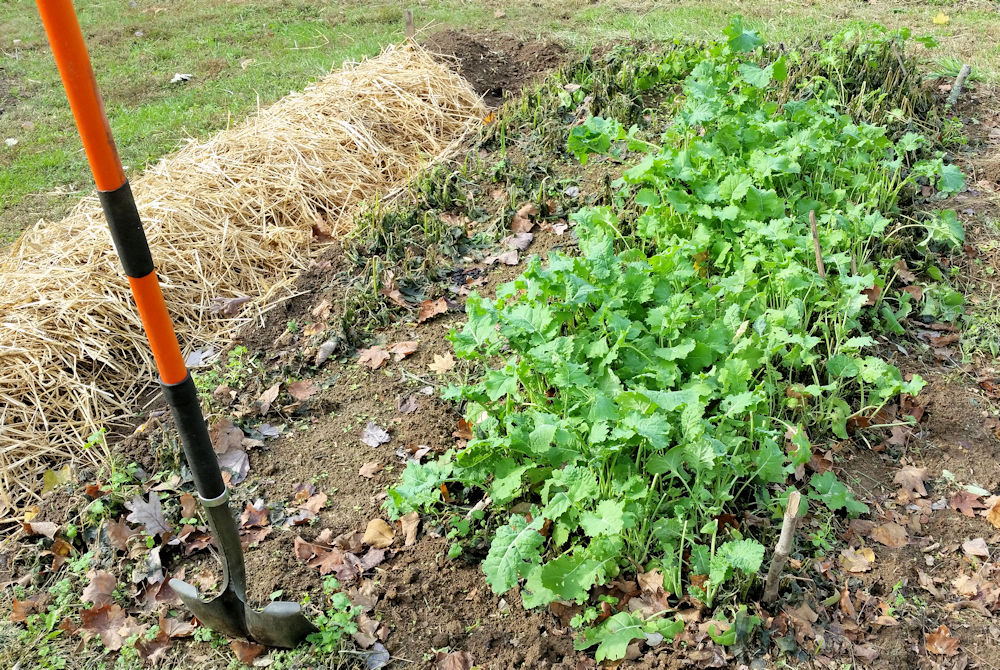
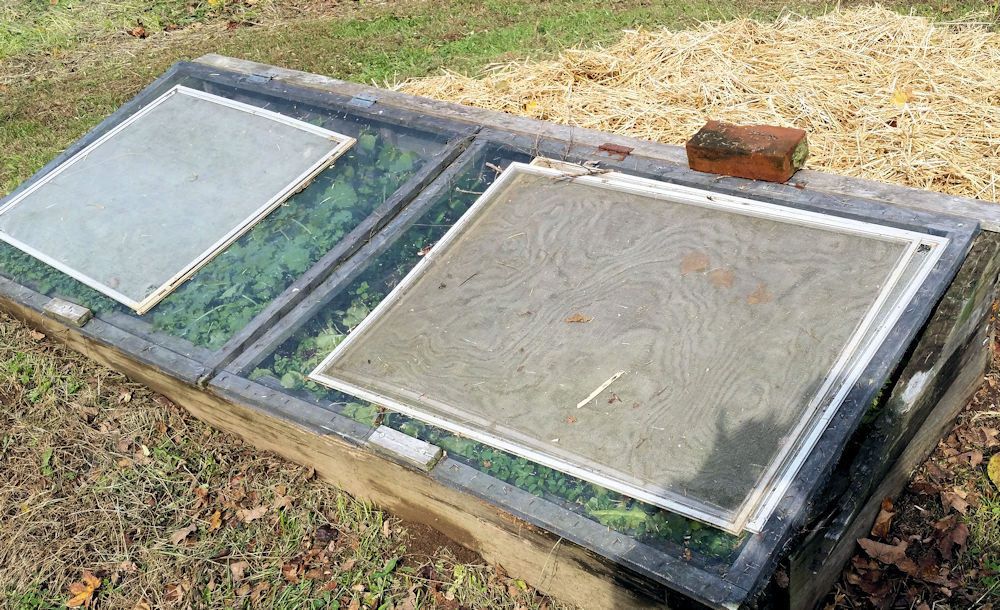
We also like to plant a fall garden.  As you can see by the photos, the frost killed the weeds but the kale is still happily growing.  The cold frame will protect some more kale and lettuce until probably early December.  We’ve got fall peas growing but ….no blooms.  And probably no pollinators if we did have blooms.  The asparagus and garlic have been put to bed under straw.

Garlic bed under the straw and some happy kale. See how well it survived the frost which killed the weeds.

Fall peas look great but no blooms, and probably no pollinators. Note to self: plant earlier next year.

Cold frame with kale and lettuce. Asparagus bed behind under the straw. We will cover the cold frame as the weather gets colder.

My husband has a deer blind in a small grove of locust trees overlooking the bottom field and creek where we often see deer.  I’m not really worried that he’s going to get a deer as he’s only gotten ONE in thirty years.  But….you never know.  And the toll the deer population takes on cars in this area is steep.  Our family alone has hit seven deer over the years.

Deer blind overlooking the creek and lower field.

Our wood pile is growing. Today the guys dragged several logs out of the woods as it’s easier to cut and split them all in one place, plus they handle the wood less than when they cut and split it in the woods. Thanks also to our son who came home for the weekend to help out.  This is hard work!

Cutting firewood on a Saturday morning in November.

The walnuts have been picked up by the boy scouts who turned them in for money at the mill.  What they missed, the squirrels are tucking away.

Fall at the creek. We have several creeks but pass this one every day as we go over it on the drive.

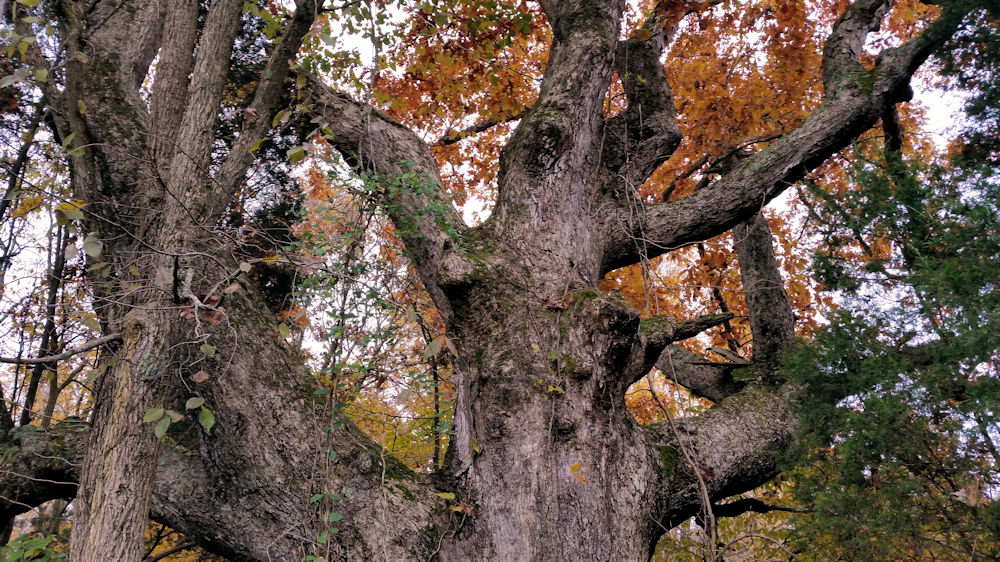
This giant oak tree has history and is one of my favorite trees on the property. I call it The Sentinel as it “guards” the driveway.

And, it’s just a beautiful time to take a walk and enjoy the season while I can.

I hope you enjoyed your visit to our country place.  Feedback is always welcome.

How to save money by using standard size canvases and frames

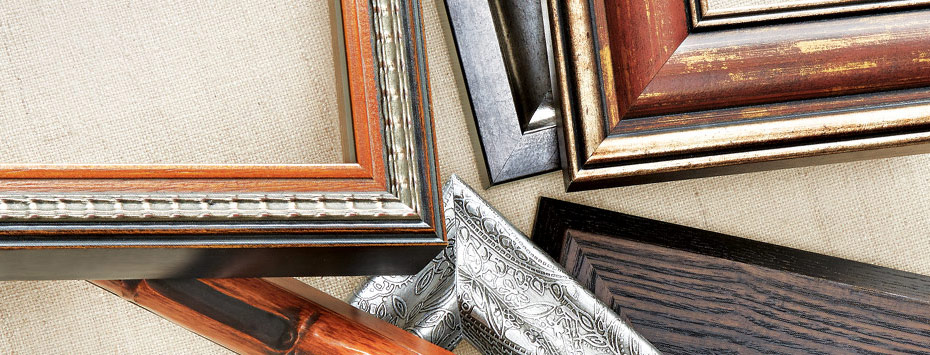
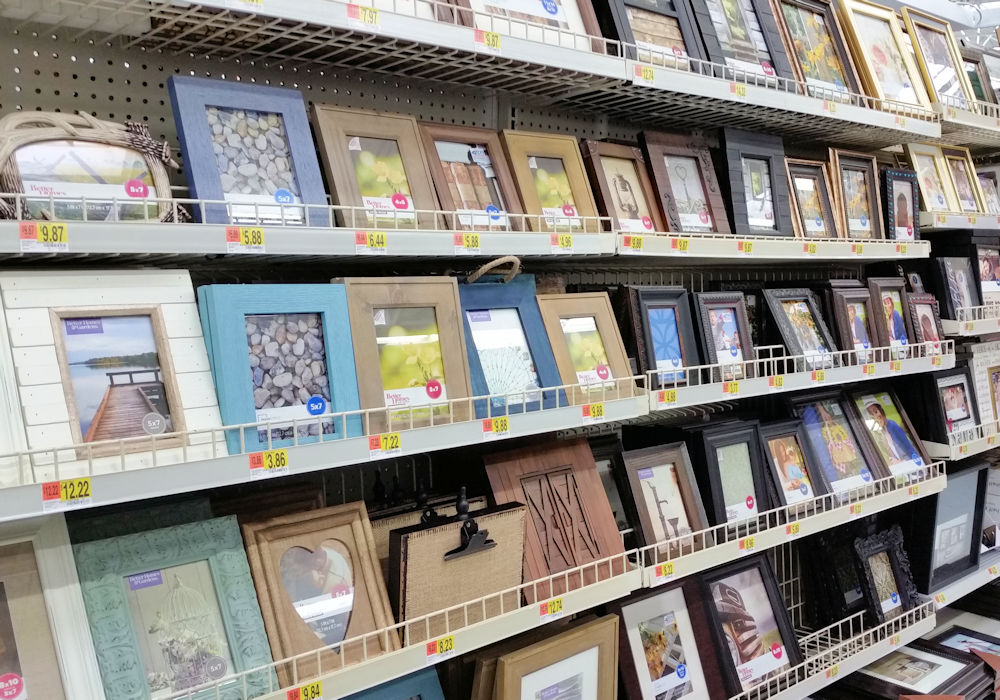
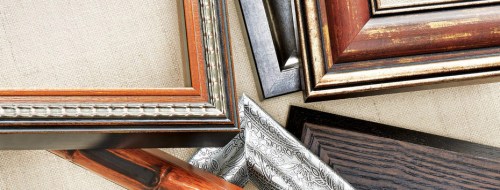
A selection of frames from Michaels. There are MANY MANY to choose from.

I am often asked, “You mention standard sizes in your painting and framing, but what does that mean exactly?”

Good question.

For many centuries, artists have been unrestricted to the size of their wood panels, paper or canvases, so their wonderful creations could be all over the place with regard to size.  This is fine for creativity, but it gets expensive to frame paintings.  The reason is that unusual sizes call for custom frames, thus the expense.  Yes, one gets many more options, but if you’re on a budget, you may wish to stick with artwork which conforms to standard sizes.

Canvas sizes and frame sizes.

In my work, I buy boxes of canvases and canvas panels (wood or heavy cardboard covered with canvas), and even use custom wood panels cut to standard sizes.  This saves me money by purchasing in quantity which, in turn, I can pass along the savings to my customers.  Yes, I still will stretch linen or cotton canvas on stretcher bars if I want a certain size which is not readily available, but that is my choice and is usually for larger paintings.
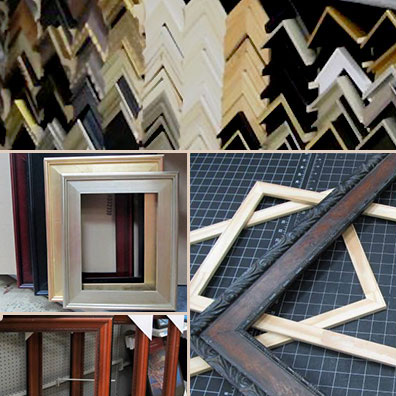
Since watercolors (and other works on paper) require a mat to separate the painting from the glass, I am cognizant of of the sizes of ready-made mats and frames.  For instance, most of the watercolor/pen and ink paintings on my My90Acres Etsy shop are 4 x 5 inches, which I mat to 8 x 10.  All the mats are museum-grade rag mats in a soft white color which I purchase in bulk directly from the manufacturer.  This allows the buyer to purchase an 8 x 10 frame and have the painting hung in minutes.  Many of the larger watercolor paintings on my KitMiracleArt Etsy shop will also fit standard frames with mats (my bigger works don’t come with mats).  Where the store-bought mat says that it will fit an 11 x 14 inch painting or photo, the mat opening is usually cut to 10.5 by 13.5 inches but you can measure them in the store.
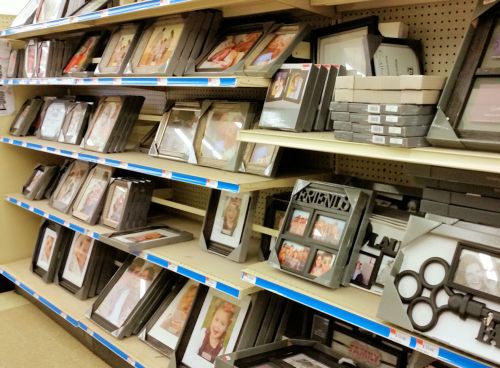
A selection of frames from the big box store. Some come with mats and some without. You can also toss the glass if you don’t need it.


So where can you buy frames and mats to save money?

There are many wonderful stores online where you can buy frames and mats of standard sizes.  Some of my favorites are:  PictureFrames.com, Jerry’s Artarama, Dick Blick, and even Amazon.  Some websites even allow you to upload a photo to try it out in the frame you are considering. Also, oil paintings are not usually framed under glass.
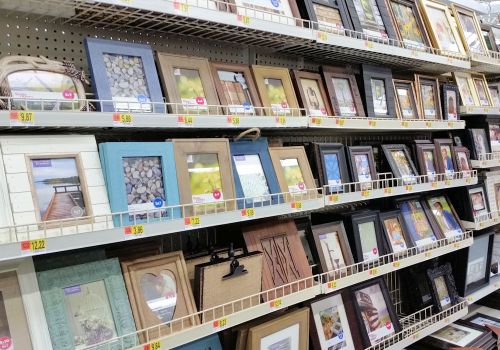
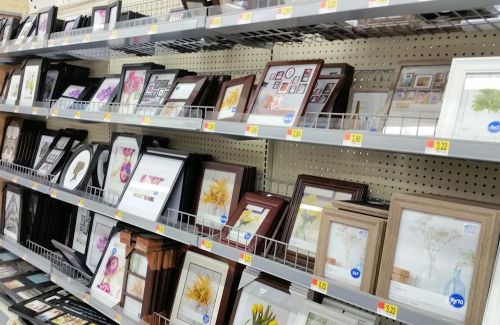
If you prefer to see the frames in person, there are plenty of stores which can meet your needs.  Michaels and Target come to mind.  Many of the big box stores have a good selection of ready made frames, with or without mats. I have even been known to buy a frame with a cheap print in it and throw away the print!  Hey, whatever works.

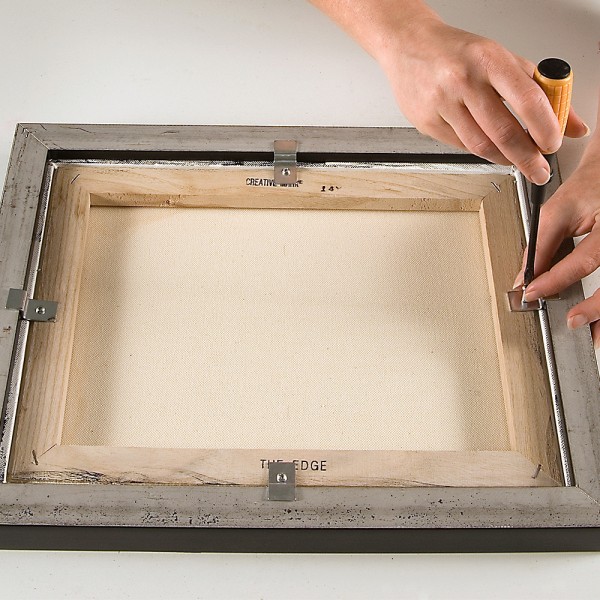
One word of caution if you are framing a painting on canvas, is to consider the depth of the frame, i.e., the rabbet.  A thicker canvas will require a frame with a thicker depth.  You will probably need some special clips to keep the canvas in the frame, but many of these are sold with the frame or can be added for a very small charge.
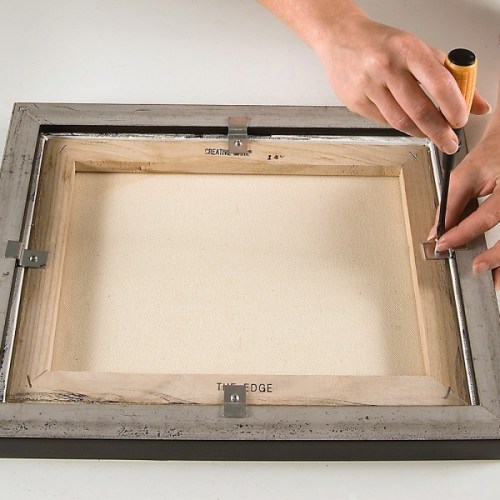
Attaching a canvas into a frame with canvas clips. These come in various sizes depending upon the depth of the frame.

Surprises

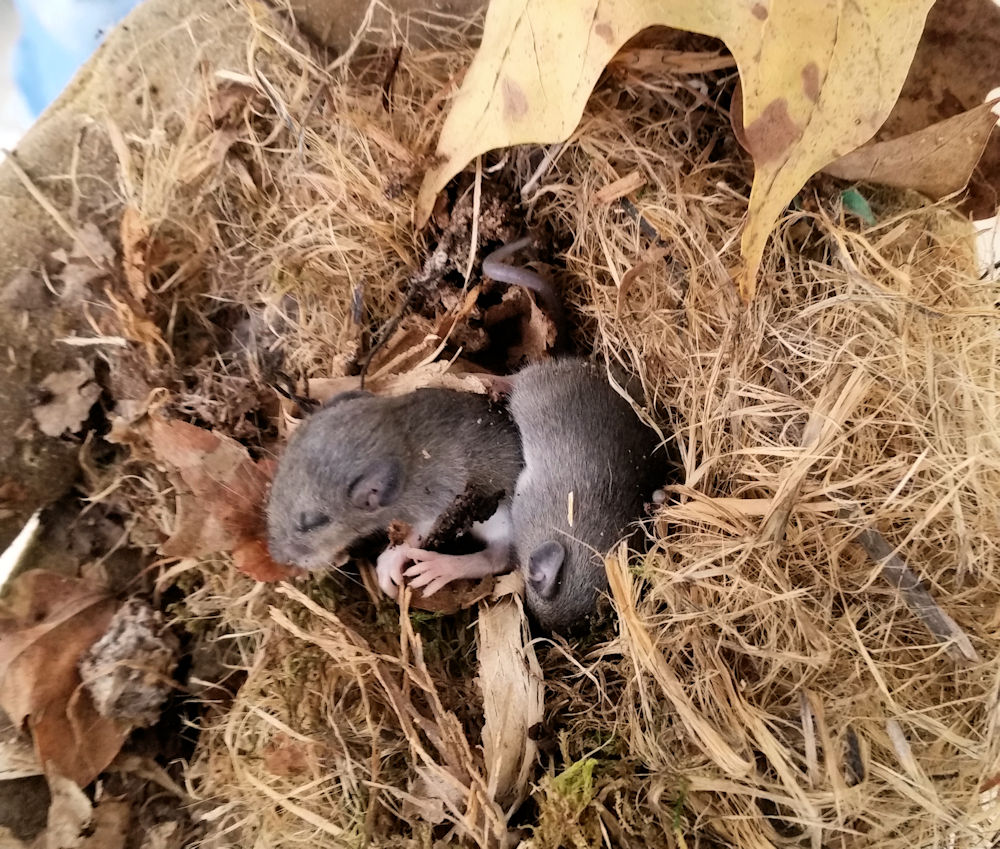
A nest of baby mice found while splitting firewood.

Life in the country often means some hard physical labor, always trying to keep up with the garden and chores.  But sometimes there are surprises.  Yesterday morning we were splitting firewood and found this soft nest of sweet baby mice.  Look at their tiny toes and ears.  Unfortunately, mice are a constant problem in the country but today, we gently set the nest behind the woodpile.  Maybe mama will find them.

Reading other blogs

I always enjoy reading other blogs.  Some I check daily, some are just weekly.  Many are about or by other artists.  It always makes the artist seem so approachable when I read what they have to say in their own words.  Plus, there is so much to learn!

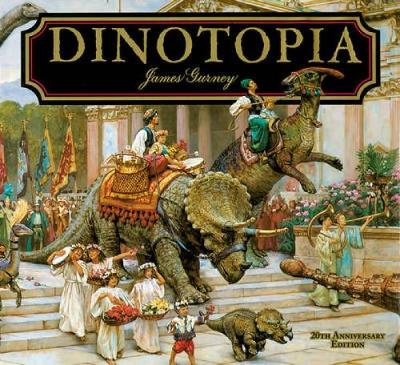
Dinotopia by James Gurney

One of my favorite artists and blogger is James Gurney.  He is the author of the famous Dinotopia series of books.  His own artwork is wonderful.  He works in plein air much of the time but not always.  His plein air paintings are usually done in smallish art notebooks (5 x 8) and are usually in gouache.

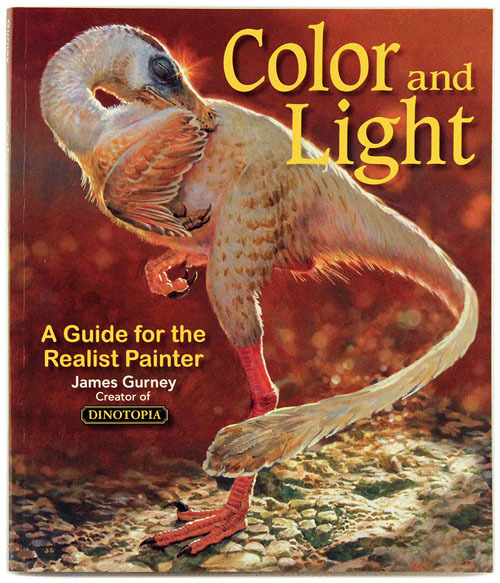
Color and Light by James Gurney

I was first introduced to his work through his book Color and Light.  Later I ordered a used copy of his drawing book The Artist’s Guide to Sketching where he and his college roommate, Thomas Kinkade, bummed across America in the 80s.  Wow!  What company!  They also both worked at a movie studio for a time doing background cells for space animations.  And, he’s just seems to be a really nice person.

The Artist’s Guide to Sketching by James Gurney and Thomas Kinkade

Gurney also includes videos of his work, reviews favorite books, museum exhibits and many other artists.  Certainly work checking out.

http://gurneyjourney.blogspot.com/

http://jamesgurney.com/site/