Category Archives: art

Capturing the Moment

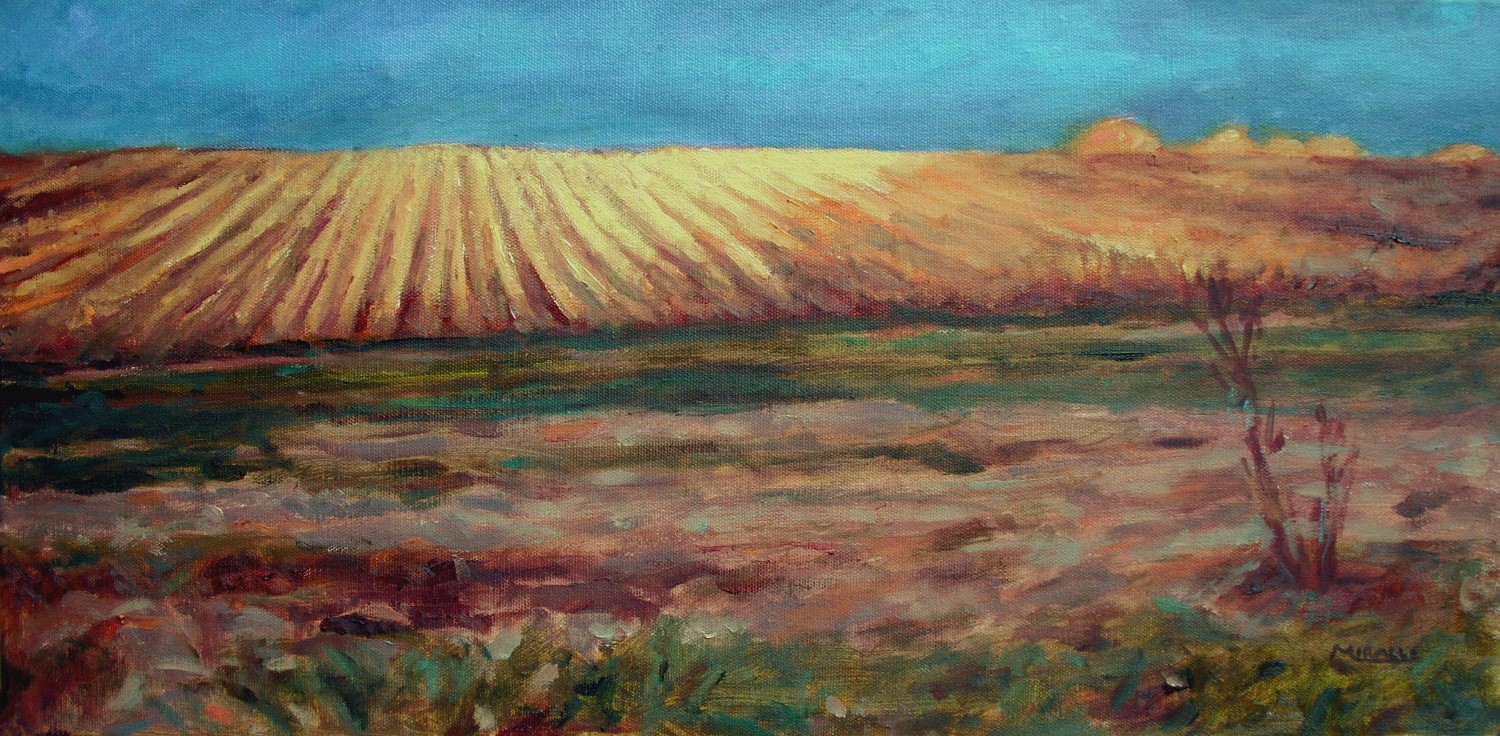
After the Harvest 300dpi

After the Harvest, oil on canvas, 12 x 24, Kit Miracle

I do not ever text and drive and rarely speak on the phone while I’m driving, but I am guilty of another distraction.  I am frequently guilty of taking photos out the window as I drive.  Sometimes there is just one fleeting moment – a ray of light, a cloud formation, whatever – that I must capture.  The photos are usually not very good but they capture enough of the effect to jog my memory and be translated into paintings in the studio.

This is from a photo I took on my road (sparsely traveled) that I took last November.  It grabs the early morning light on the cornfield after the harvest.  I was attracted to the contrast of the golden cornfield, the patterns of the rows, the cast shadow of the valley and the darkening sky.  Rain is on the way.

Sunflowers in blue bowl

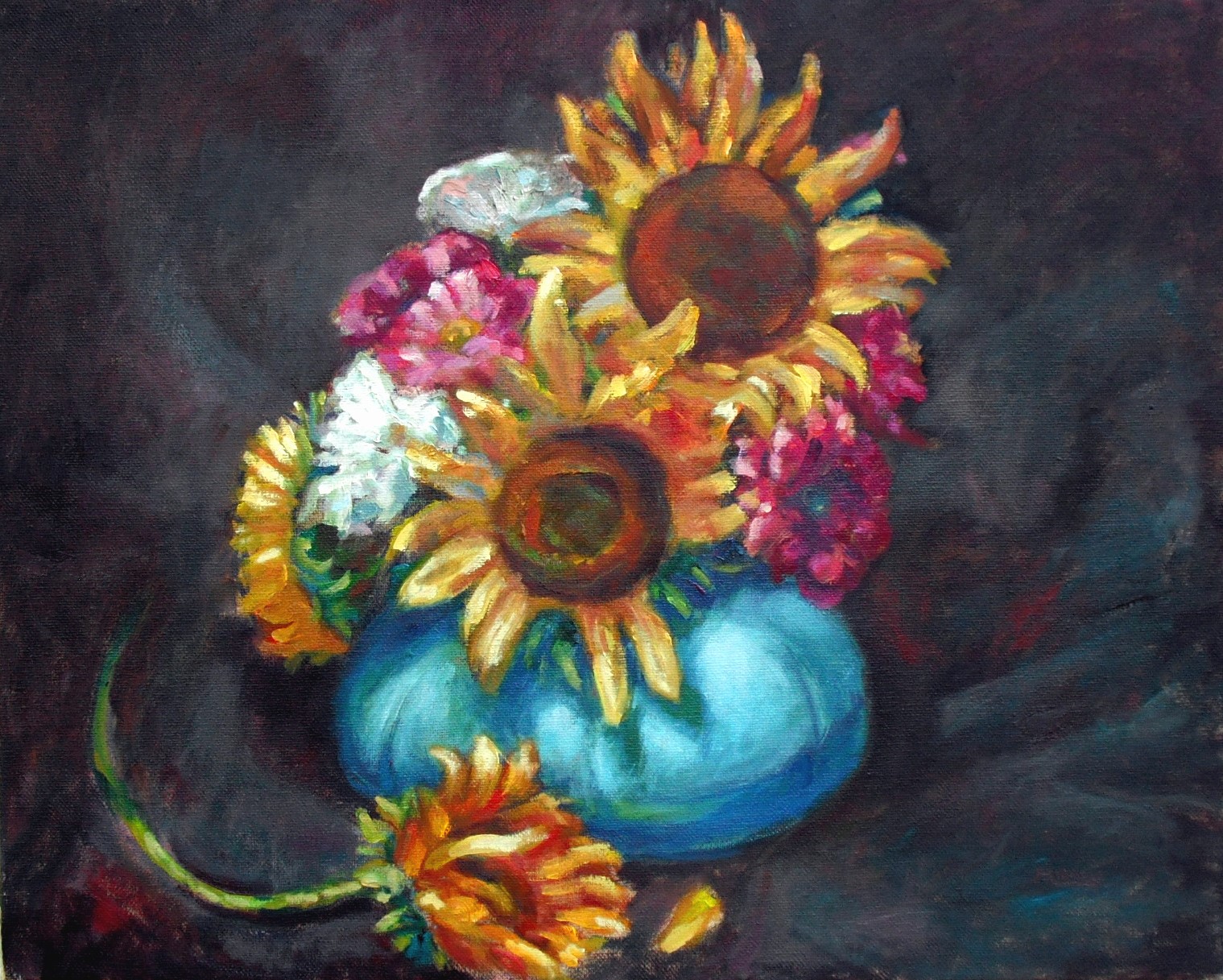
Sunflowers in blue bowl, 16 x 20, oil on canvas, Kit Miracle

Sunflowers in blue bowl, 16 x 20, oil on canvas, Kit Miracle

This is another example of a slow painting.  If you’ve followed my blog, you know that I like to paint en plein air.  The challenge of turning out a speedy painting in a couple of hours is fun.  However, some of my best work is when I create a studio painting which may take weeks or more.

This blue bowl of sunflower and zinnias presented its own challenges.  If you’ve ever painted live sunflowers, then you know that they keep up their rhythm of turning towards the sun.  This means every time you return to the studio, the darn flowers have rearranged themselves!

This is an oil on a toned canvas.  I spent about a week and a half on this painting.  I don’t know if the painting is actually done but I’m finished working on it.  The flowers were in pretty sad shape by the time I finished. I like the careful attention to detail but it is a real trick to not overwork a painting.  It should look effortless for best effect.  In my opinion.

Sometimes you’ve just got to paint

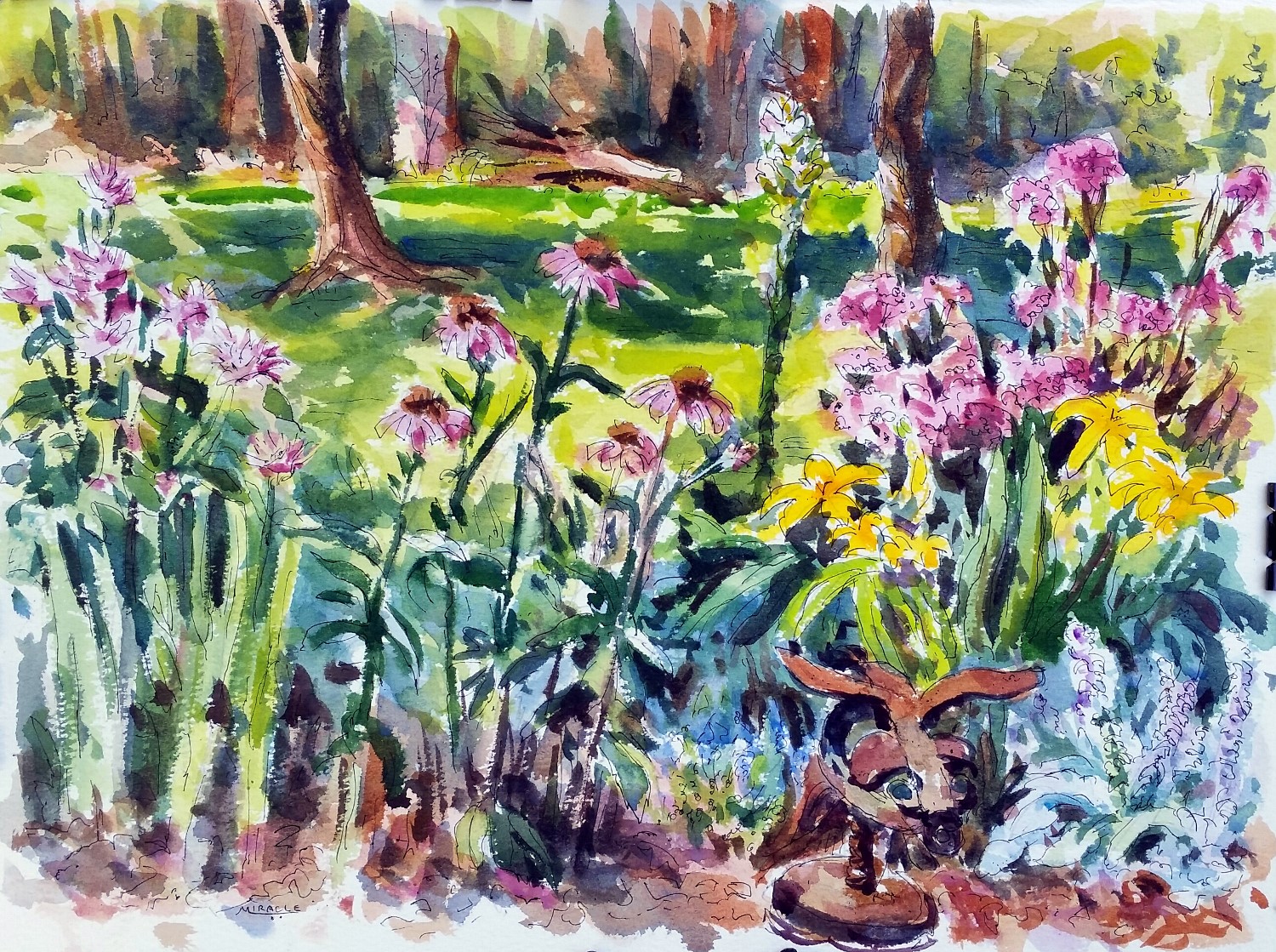
When pigs fly. Watercolor / pen and ink, 12 x 16. Kit Miracle

When pigs fly. Watercolor / pen and ink, 12 x 16. Kit Miracle

We’ve all heard the  admonishment that you need to create art every day.  But…life gets in the way.  Jobs, family, gardening, etc.  Sometimes I find all my  have-t0′s overwhelming my urge to create.  This weekend I just had to paint.

Yesterday, before I could get overly involved in the rest of the home tasks, I trucked my painting gear out to the front yard and painted this flowerbed which has been calling me for weeks.  It seems to be a symphony of purples, mauves, and yellows this time of year.  The heat was oppressive.  The humidity was drenching.  But I had a great time.

For you gardeners out there, you’re looking at purple cone flower, bee balm, weigela, daylilies, lambs ear, and a giant yucca.  The flying pig is a bit difficult to make out but he’s one of my favorite yard statues, as he bounces on his spring in a strong breeze.  Symbol of not-quite-lost causes.

Giant Moth Mullen Watercolor/ pen and ink, 16 x 12 Kit Miracle

Giant Moth Mullen Watercolor/ pen and ink, 16 x 12 Kit Miracle

Then, this morning I decided to capture this weed, Giant Moth Mullen.  It is already 5 feet tall and will probably top 6 or 7 feet.  It has fuzzy leaves, similar to lambs ear and the most interesting curly-type leaves and stalk.  It will eventually have a tall spike of yellow flowers which in turn, will produce seeds that the goldfinches love.  Probably how it came to be growing near my cellar door.  Majestic!

BTW, I was inspired by a blog challenge by James Gurney, who held a recent competition of people who paint weeds.  This painting is not entered as it is past date, but I thought it was a perfect subject.

Self-Portrait with Still Life


Self-portrait with still life (2)

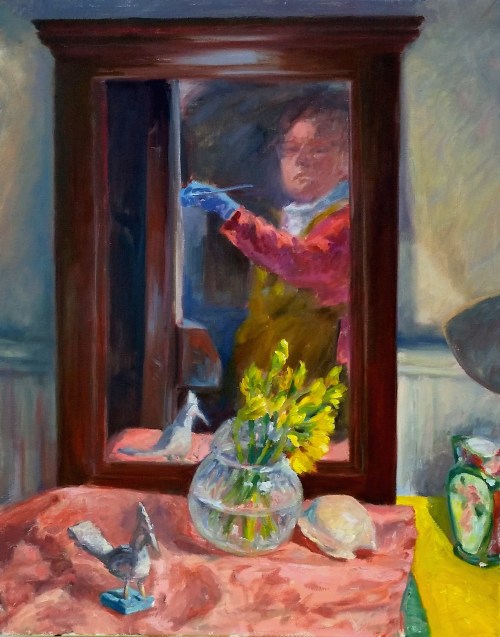
Self-Portrait with Still Life, 24 x 30, oil on canvas, Kit Miracle

Most artists create a self-portrait every few years so I painted this one last month.  I had recently purchased this old mirror and thought it would be interesting to set it up as a still life.  My portrait isn’t really the first thing the viewer notices (I hope).  The challenges with this painting is that there are two light sources: one on the still life in the foreground and one me as I paint.  An additional challenge was to prevent other light sources so I had to black out the windows.  This meant I was literally painting in the dark.  Check out the step-by-step view of the painting process at this link. Self-portrait with Still Life – step by step

Gardening with Scottie

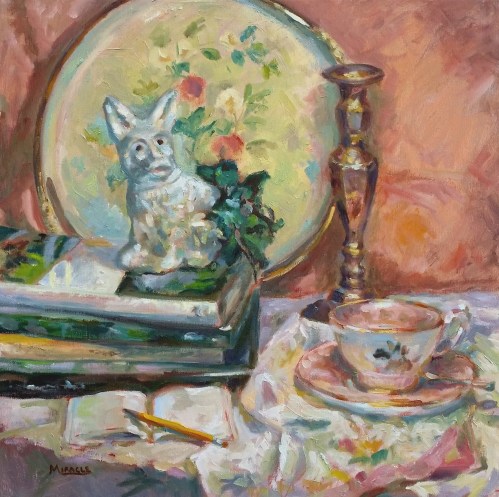
Gardening with Scottie, 20 x 20, oil on canvas, Kit Miracle

Gardening with Scottie, 20 x 20, oil on canvas, Kit Miracle

I recently completed this winter still life painting.  That is, when it’s cold outside, I usually paint inside.  The theme for this painting is planning my spring garden.  There were many challenges, especially all the circles and ellipticals as well as that dang ceramic dog.  I’m not sure I’m done with this yet as I keep tweaking it every time I walk past it in my studio.  Check out the demo for Gardening with Scottie.

Challenge Painting

HikinginCrawfordCounty30x30oiloncanvas

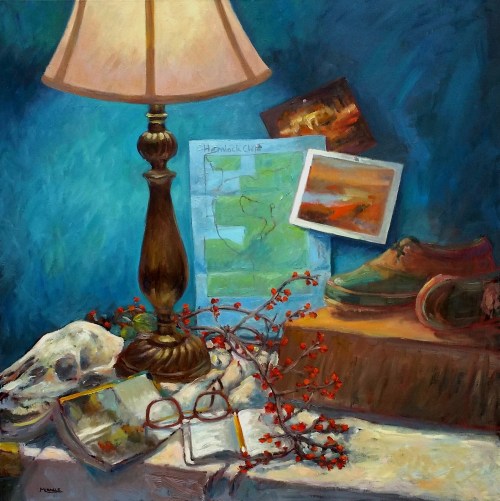
Hiking in Crawford County, 30 x 30, oil on canvas, Kit Miracle

Last year I decided to participate in a challenge art competition.  This was a local county exhibit with the county plus the eight surrounding counties.  The requirements were:  a box, fabric, a living or formerly living thing, a map and something representing my county.

This is the painting I finally came up with.  The box is the L.L.Bean shoe box.  Fabric background and tablecloth.  A deer skull and some bittersweet.  A map of a local park.  And some postcards of local scenes.  It sounds simple but it actually took me an entire day to set up the still life.

Many of the entrants created collage or 3-D sculptures.  Only two of us did paintings.  I was shooting for something that met the conditions of the challenge and also created a good painting.  Adding the lamp to the still life created its own special challenges as I had to paint much of the painting in a nearly dark studio.  I repainted that lamp four times and I’m still not totally happy with it but the judge really liked the way it seemed to glow on the canvas.  I won second place so I guess it was a success.  What do you think?

Cropping subject for landscape painting

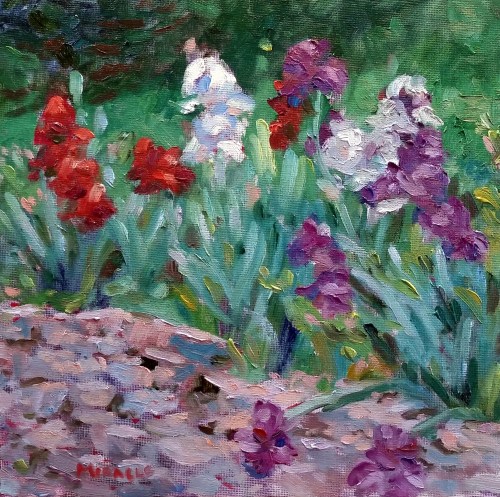
Kit Miracle, Irises, 10 x 10 oil

Kit Miracle, Irises, 10 x 10 oil

I was in my studio last Saturday evening and wanted to paint but I didn’t want to start something big.  So I went through some photos I had downloaded from my camera earlier this year.  I came across a scene of some irises in a backyard.  This is near where I park when I visit the library.  Lesson here:  always be prepared for a good photo op.

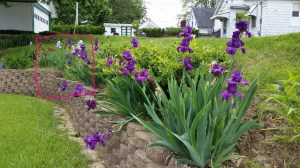
Street photo of irises in a backyard showing the part I cropped for the painting.

Street photo of irises in a backyard showing the part I cropped for the painting.

The variety of irises pictured here is beautiful.  At first I was going to do a long horizontal but reminded myself that I wanted to do something quick.  Hummm…. think smaller.  I pulled out a small prepared canvas, only 10 x 10.  Then I looked for a square composition in the canvas.  OK, so you’re really not supposed to paint to the canvas size but the other way around…but who cares?  It’s my painting and I’ll do what I want.  The composition wouldn’t have been the most apparent but I really think it turned out well.  This took about two hours to paint with a final touch up on Sunday.  What are your thoughts?

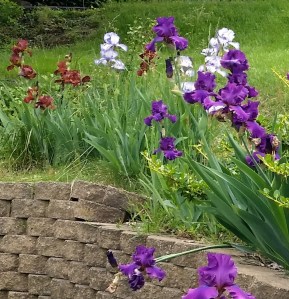
Cropped part of irises street photo

Cropped part of irises street photo

Plein Air Painting In the Neighborhood

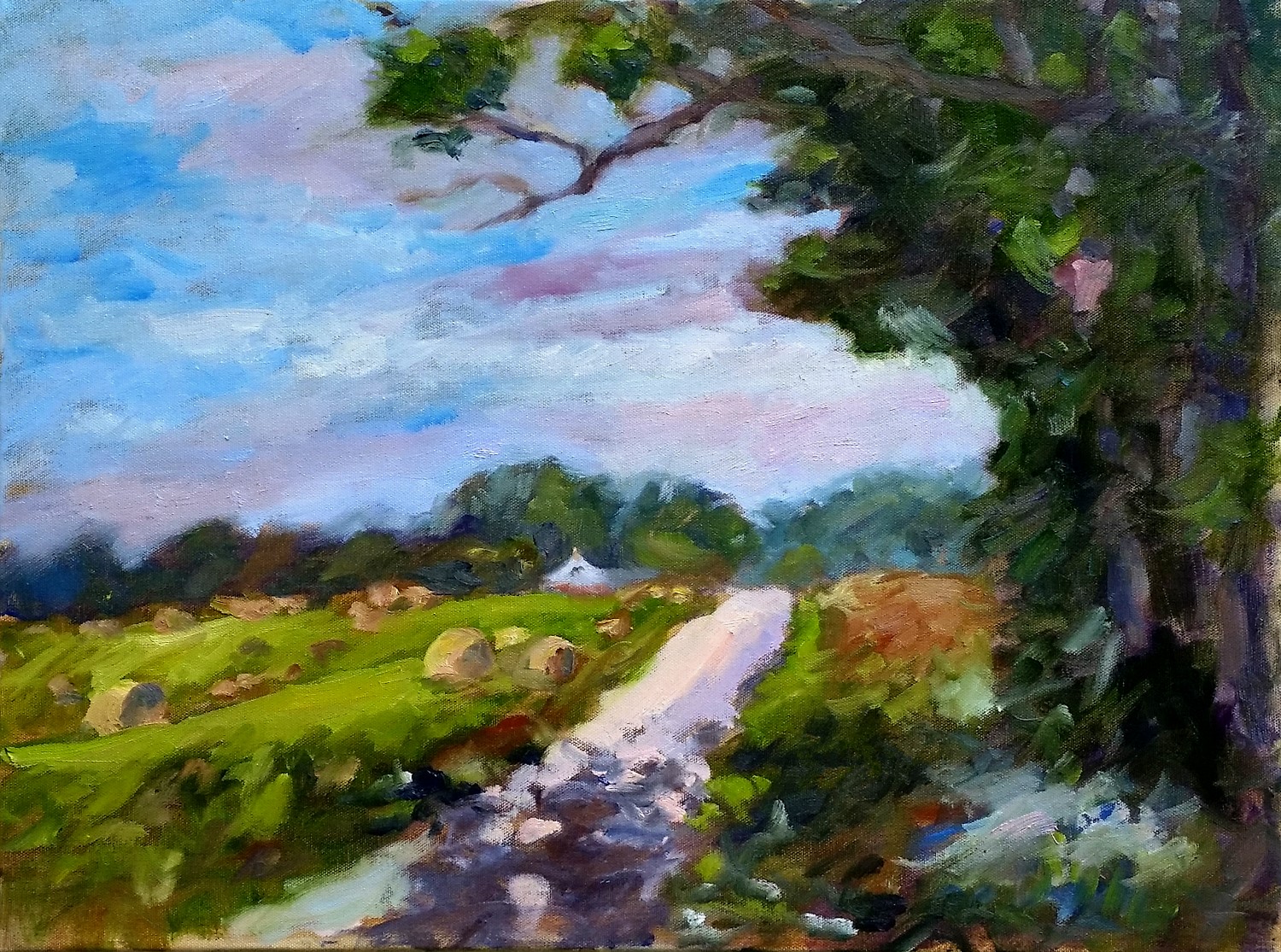
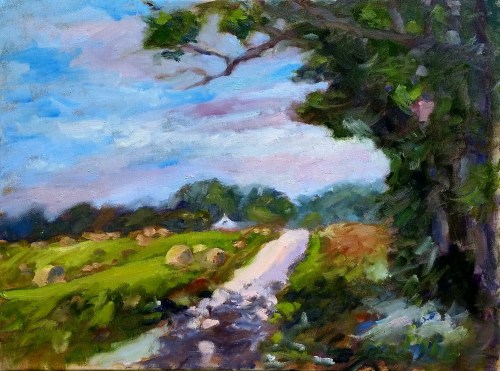
Mentor Road, Birdseye, Indiana, oil on canvas, 18 x 24, Kit Miracle

Mentor Road, Birdseye, Indiana, oil on canvas, 18 x 24, Kit Miracle

Writers are often advised to paint what you know.  I believe that this advice holds true for artists, too.  You know your own neighborhood best, the most attractive features, the back roads, and the best seasons to view the scenery.

My neighborhood, as the title of my blog implies, is a rural one.  This time of year the farmers are baling hay.  Those big round bales often remind me of the wonderful haystacks of Monet, and their rotund forms litter the fields until they’re tidied away in neat rows.

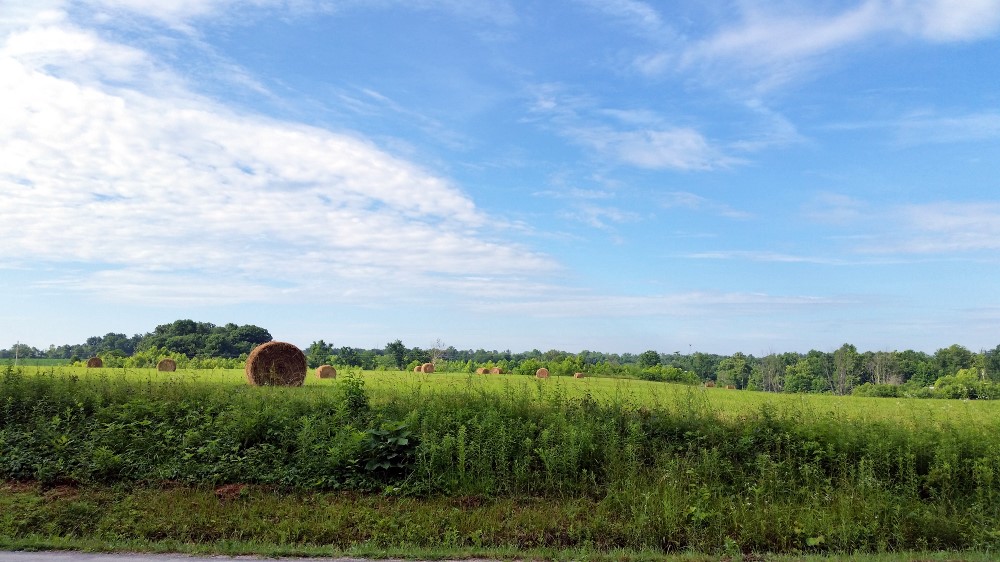
A couple of days ago, I rode around the neighborhood looking for likely painting spots, especially with an eye to catching some hay bales still lying in the field. Other criteria for me are where can I park and will I need permission to go onto someone’s property.  Most people are very gracious about allowing  artists to venture on their land but it’s always best to ask if you can.

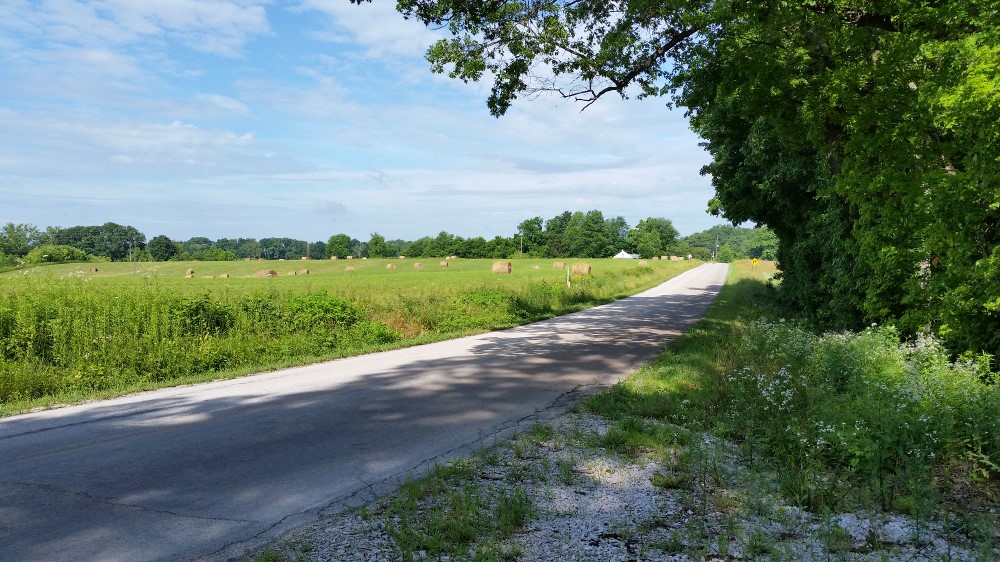
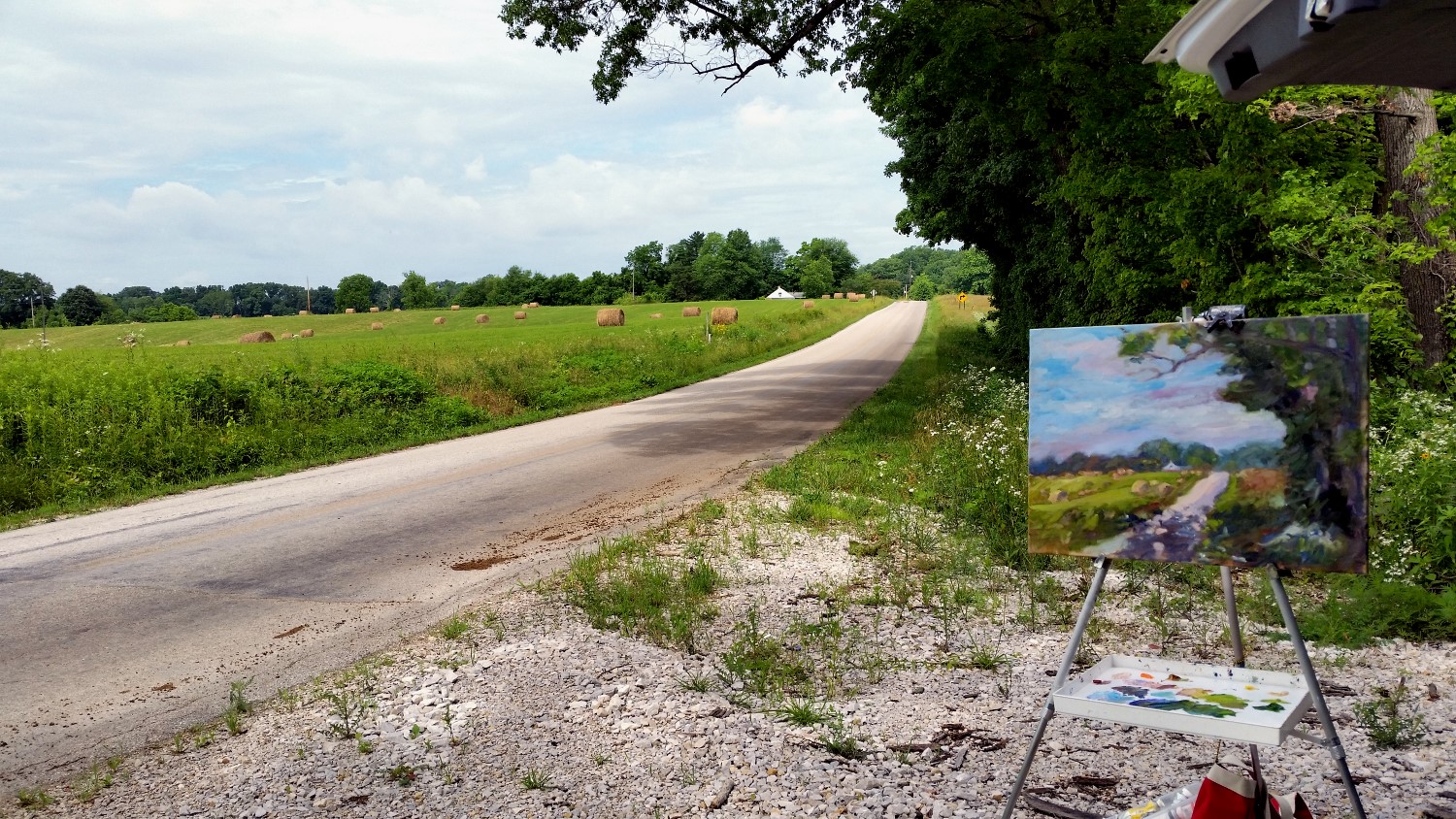
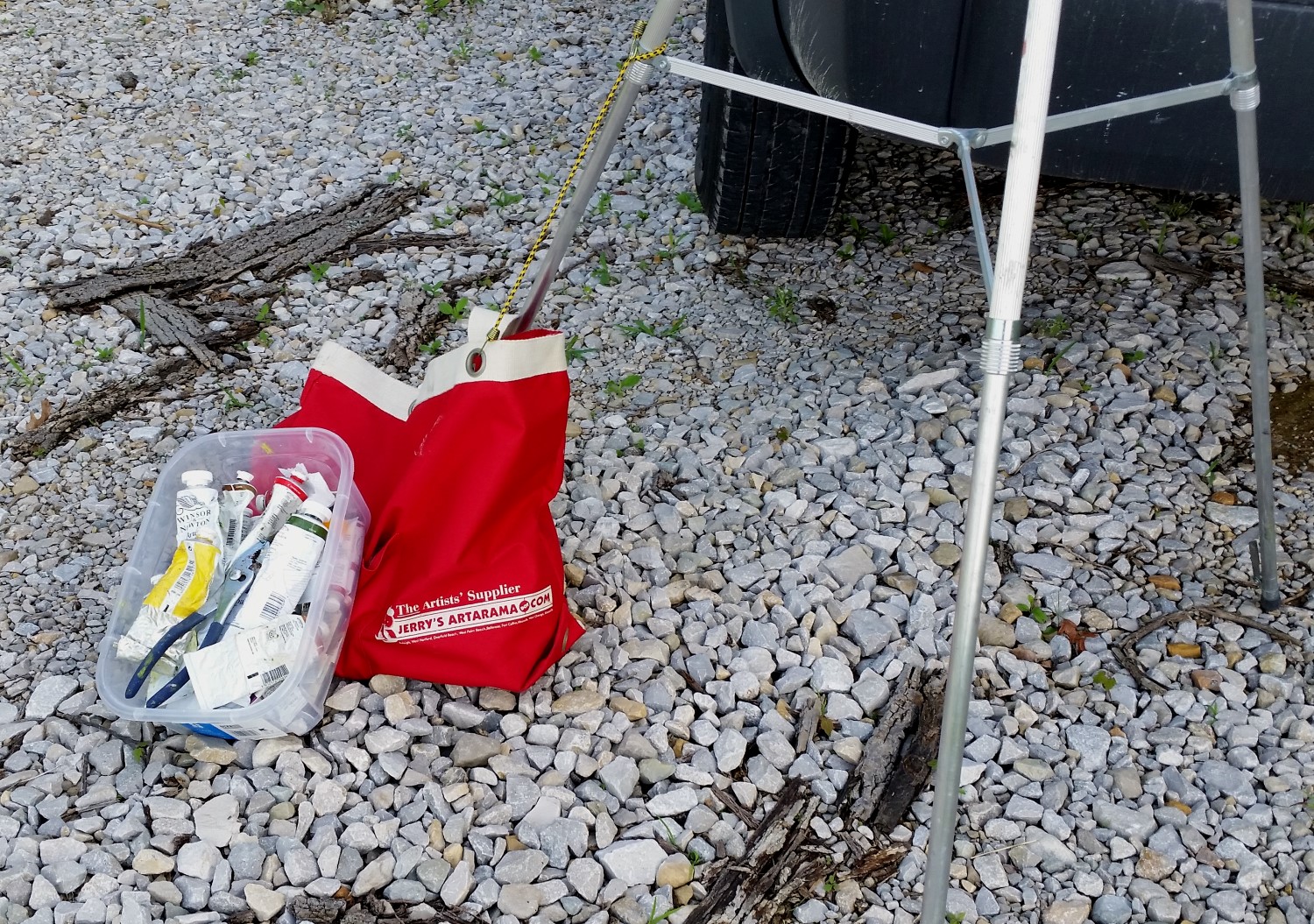
Today I returned to a likely spot.  Actually, I had intended to climb into the field but found that I liked the view from the road better, especially with the roof of a house showing which added an interesting focal point.  The painting went well and I came away with a pretty complete piece.  Some challenges were the wind so I had to improvise a weight for my portable easel.  Also, the flies were ferociously biting me.  Glad to have brought bug spray which is always in my travel bag.  And finally, I am positive that the manure spreader which passed my position three times, intentionally spilled a bit on the curve on which I was painting. Really!

Anyway, here is the final product and a few preliminaries.  It was painted on a toned canvas, 18 x 24, and took about two hours.  Feedback is always appreciated.
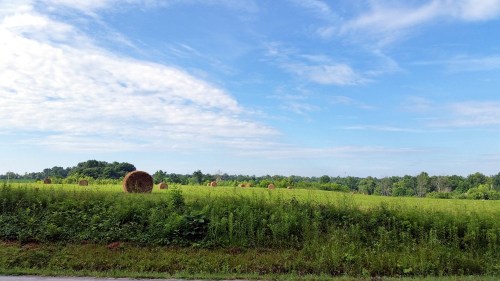
Hay bales, one potential view
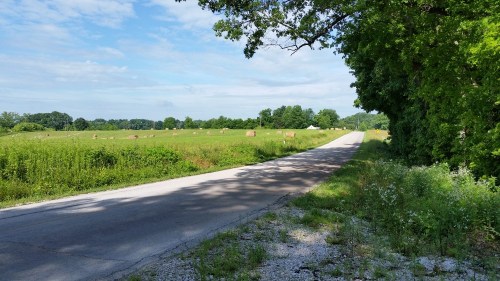
Hay bales, one potential view

Final view chosen.  Loved the overhanging tree, the shadows and the contrasts.
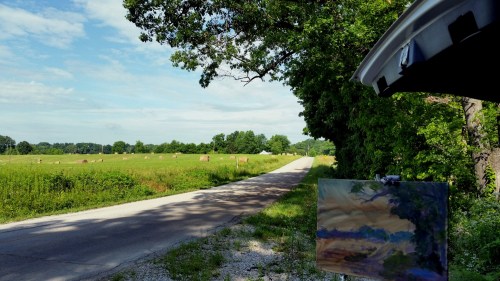
Final view chosen. Loved the overhanging tree, the shadows and the contrasts.

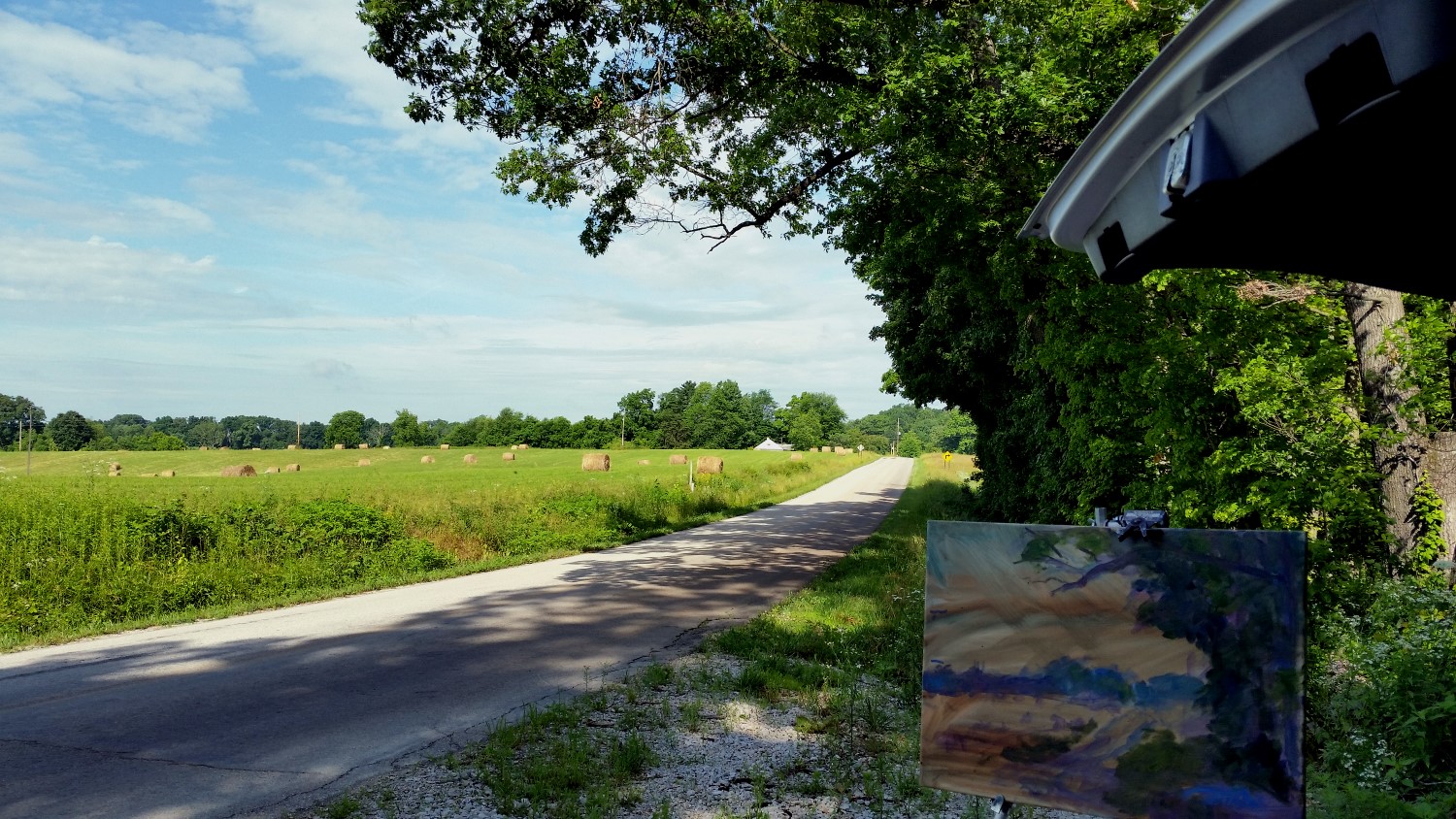
First laying in on toned canvas
First laying in on toned canvas

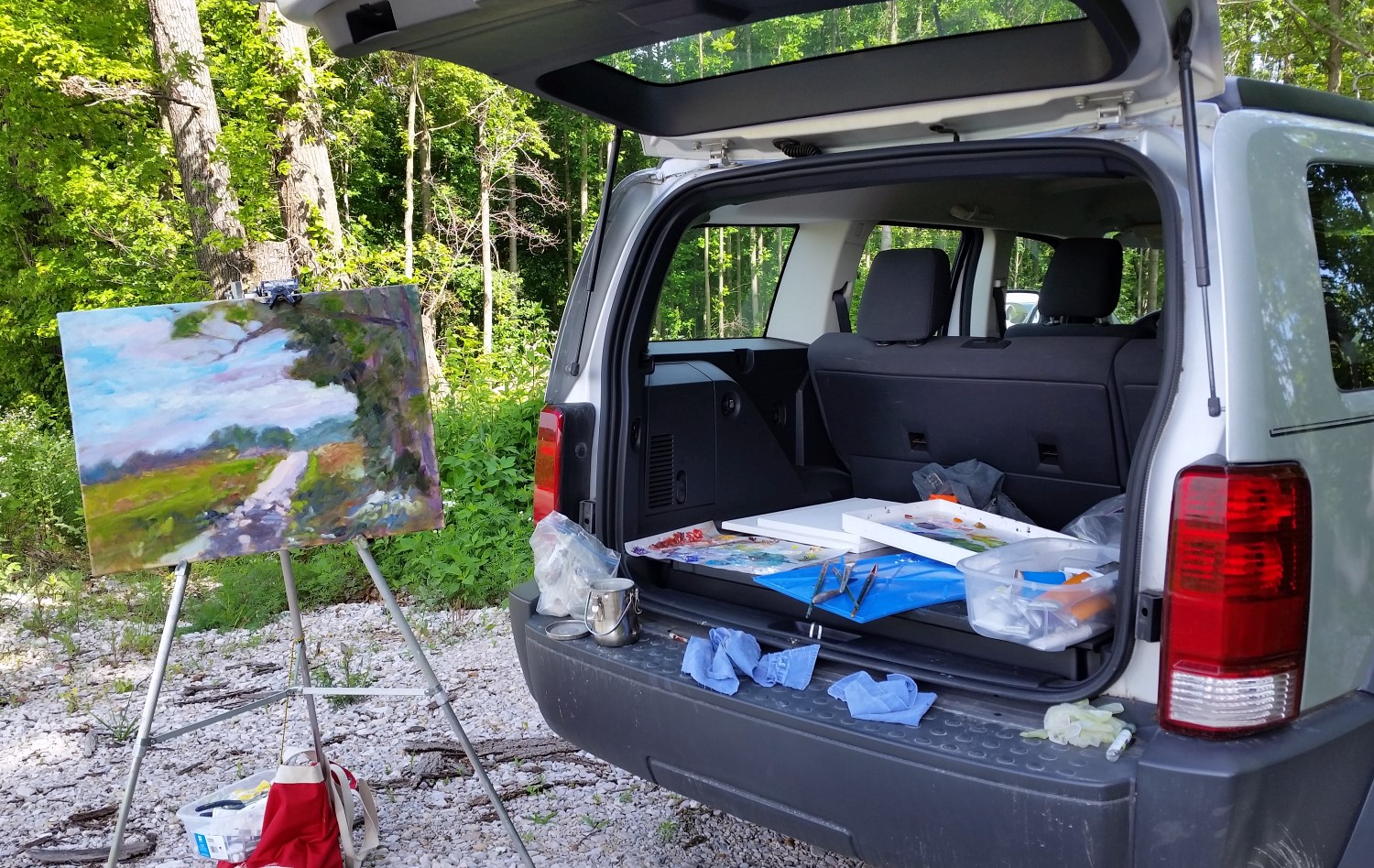
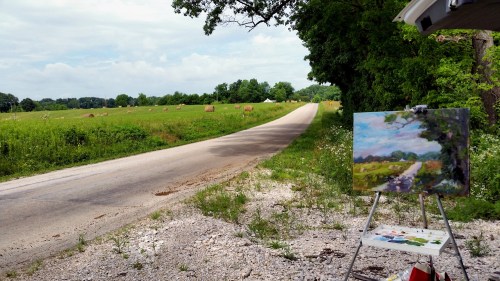
Final painting with scene behind.  About two hours.

Final painting with scene behind. About two hours.

Improvised weight to hold my portable easel in the breeze.
Improvised weight to hold my portable easel in the breeze.

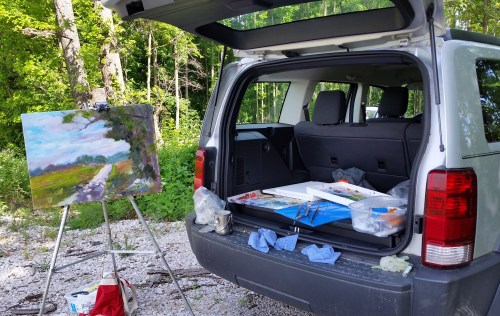
Car studio.  Easier than packing everything and a lot roomier.
Car studio. Easier than packing everything and a lot roomier.
The value of temporary art

I spent today, Mother’s Day, gardening.  Last weekend I planted our considerable vegetable garden with the help of my granddaughter.  Today, I concentrated on flowerbeds, planters and hanging baskets.  The humidity was equal to the temperature so it was a hot, sticky day here in southern Indiana.

As I was dividing some ferns for the hanging baskets, it suddenly struck me how fugitive all my efforts were.  Why am I doing this? I asked myself.  Just because I love the results.  I felt as if I were channeling my mother and both grandmothers, who were all great gardeners.  A nice sentiment on Mother’s Day.

This led along a winding path of thinking about temporary art.  Many artists have made their reputations with creating artwork which isn’t meant to last.  Being the practical person that I am, I have always been a little skeptical.  But just as Christo’s art events to swathe bridges and canyons in fabric, and Gonzales-Torez’s piles of candy in museums are temporary art, so is planting flowers.  We do it for the sheer enjoyment and beauty.

My flowers will bring me great joy this summer until they are gone with the frosty fall.  That’s enough.  Isn’t it?

Plein air painting with acrylics

First of all I will admit that I am not an expert in acrylic painting.  Yes, I’ve painted watercolors for over 30 years and have tackled oil painting for about ten years.  But I’m pretty new to acrylic painting.

I got into acrylics painting artwork last year when I had some commissions which needed to be completed quickly.  Mainly I was looking for something durable but which dries more quickly than oils.  And after my last foray at a multi-day plein air event last month where I seemed to get Titanium white all over everything, I thought acrylics might be a good idea to try.

I have a beautiful little pochade box which I purchased last year but have never used so this was to be my designated acrylic box.  (For now.)  I loaded it up yesterday morning and drove out to a place down the road that I’ve been eyeing for a future painting site.  It was so peaceful and I arrived just before the sun arose.  I will say that the hardest part was attaching the quick release to my tripod, but after several attempts, I finally got it.  Not too thrilled as it wiggled a bit but otherwise it worked.  Then I unfortunately sat on my only plastic water container and smashed it.  Humph!  Artist ingenuity jumped up and I cut the bottom off a bottle of water.  Worked perfectly.

The next test was the new mini Stay Wet palette that I added too much water to the sponge.  The paper palette wrinkled a bit but I could work with it.  Lesson here:  try new equipment at home before you hit the road.

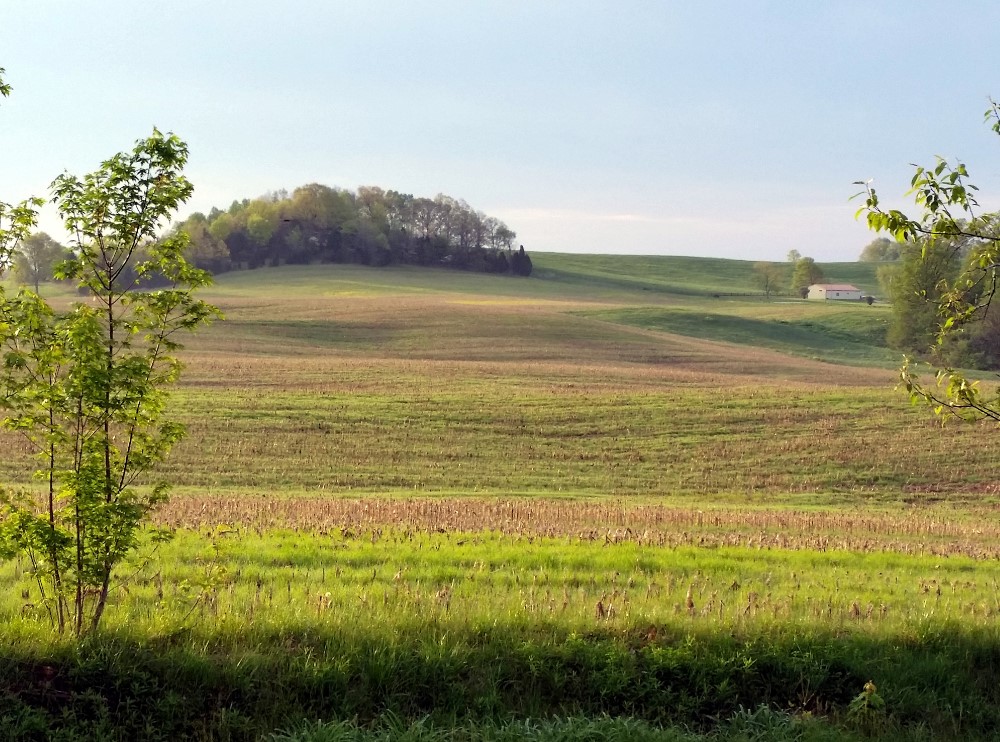
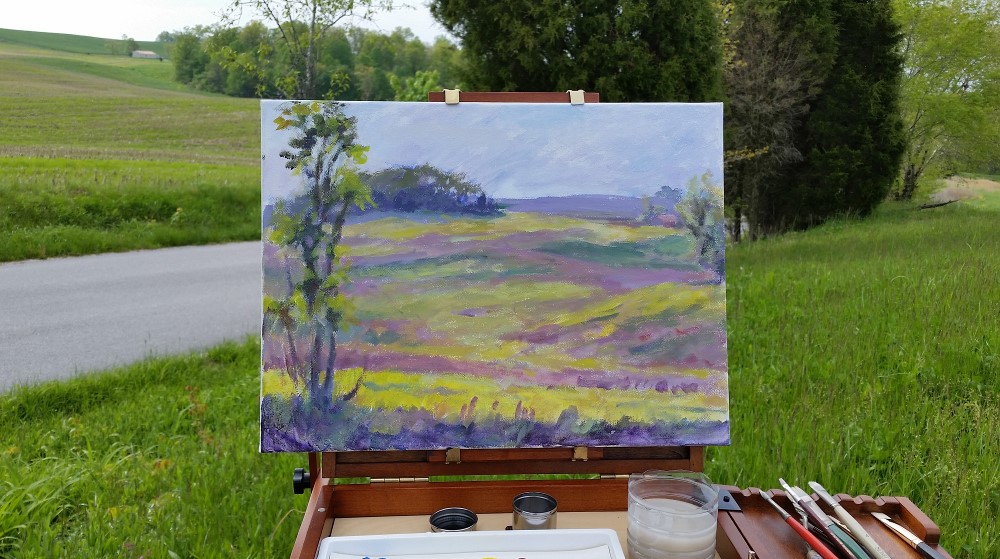
Here’s a photo of the beautiful rolling fields that I was trying to capture.  I find that I really only have two hours to make a go of a painting before I lose the light but this was enough.A sunny early morning photo 1000

And here’s a photo of the field painting at the time I packed up.A sunny early morning photo - 2-1000

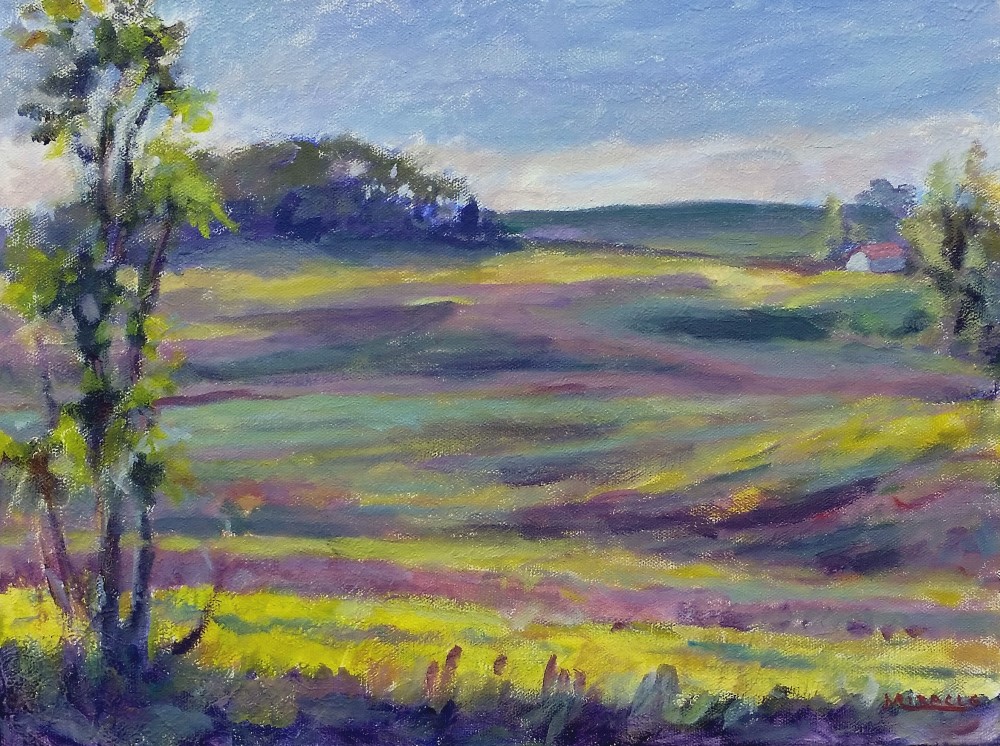
When I got back home, I wasn’t quite satisfied with the colors or composition of the painting so decided to work on it some more.  You can see where I lowered the clouds to emphasize the dawn.  Then I pushed back some hills and brought forth some of the sunny highlights. A sunny early morning painting2-1000 I’m not totally satisfied with the overall painting but I usually have to live with them for a while.  It doesn’t seem to have the personality of the scene I was trying to capture but barring that, isn’t too bad.  What do you think?  Which one do you like best.

So, lessons learned from my first acrylic plein air painting adventure.

  1. Test out new equipment first before you take it into the field.
  2. Be adaptable.
  3. Acrylics are nice in that they dry much quicker than oils but are more opaque than watercolors.
  4. And….don’t sit on your water container!