Category Archives: oil painting

Plein air painting from memory and from life

I have a beautiful drive to work every day, through the gently rolling hills of southern Indiana.  This is a valley that I frequently pass which changes throughout the seasons.  About a week ago, I was so taken with the freshly washed sky after a rain and the glancing sunlight through the valley, that I had to paint it when I got home.  This is totally from memory and was painted primarily with palette knife.

Kyana Bottoms from memory, oil on canvas, 12 x 16, Kit Miracle

Kyana Bottoms from memory, oil on canvas, 12 x 16, Kit Miracle

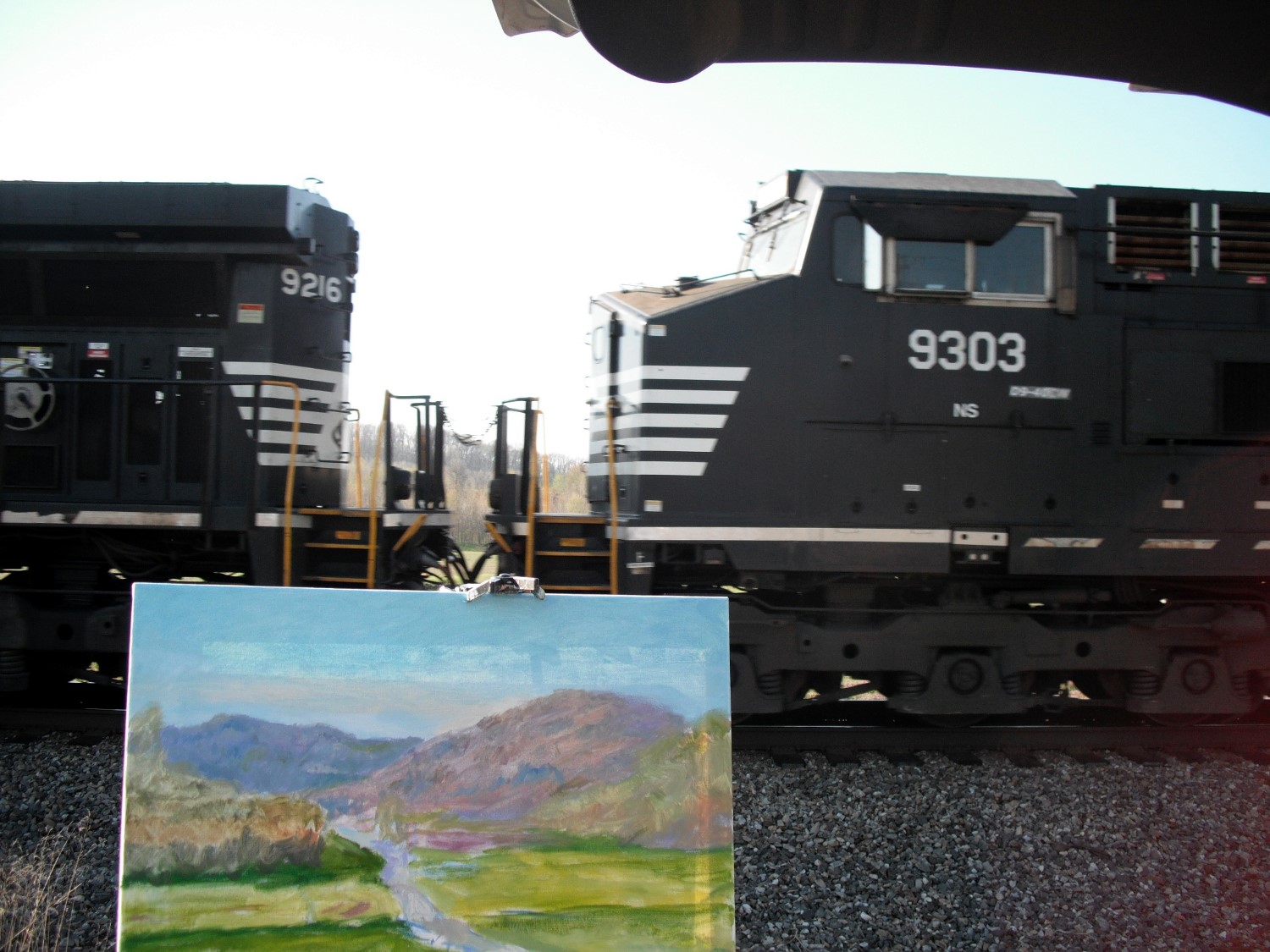
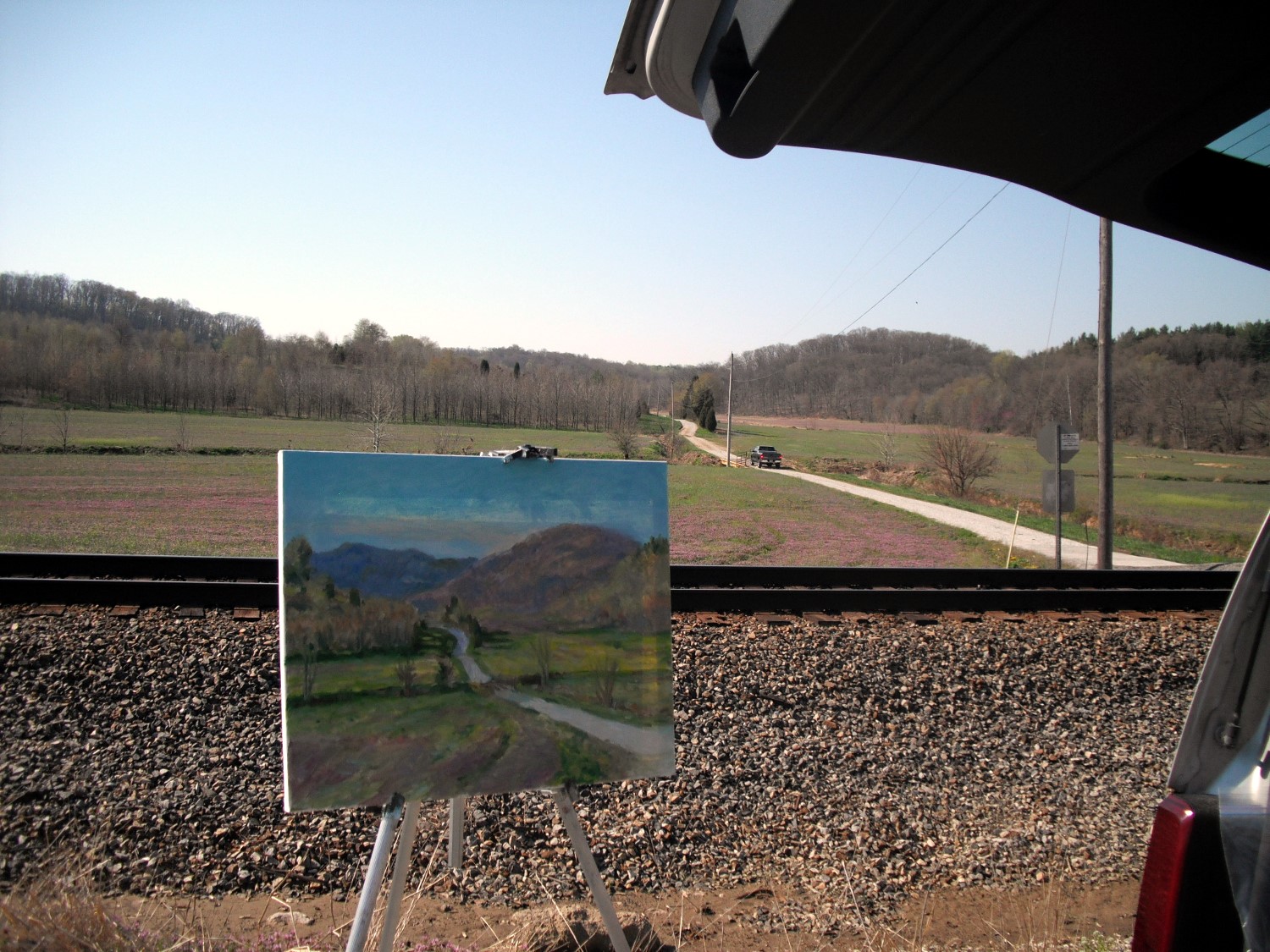
Then this past weekend, I went out early on Saturday morning to paint it from life.  Due to the severe winter, I haven’t been out plein air painting much this winter so I was aching to get outdoors.  Plein air painting poses its own challenges – weather, changing sunlight, where to park.  In this case the people who live back the lane stopped on their way out to town that morning, then later on their way back in.  Also, as you can see, I was really close to the train tracks.  And just when I was concentrating, I heard this noise behind me.  Some neighbor had spotted me from her house but I hadn’t heard her drive up due to the earphones I was wearing to cancel out the traffic noise.  I worked a couple of hours and then finished it up in the studio.
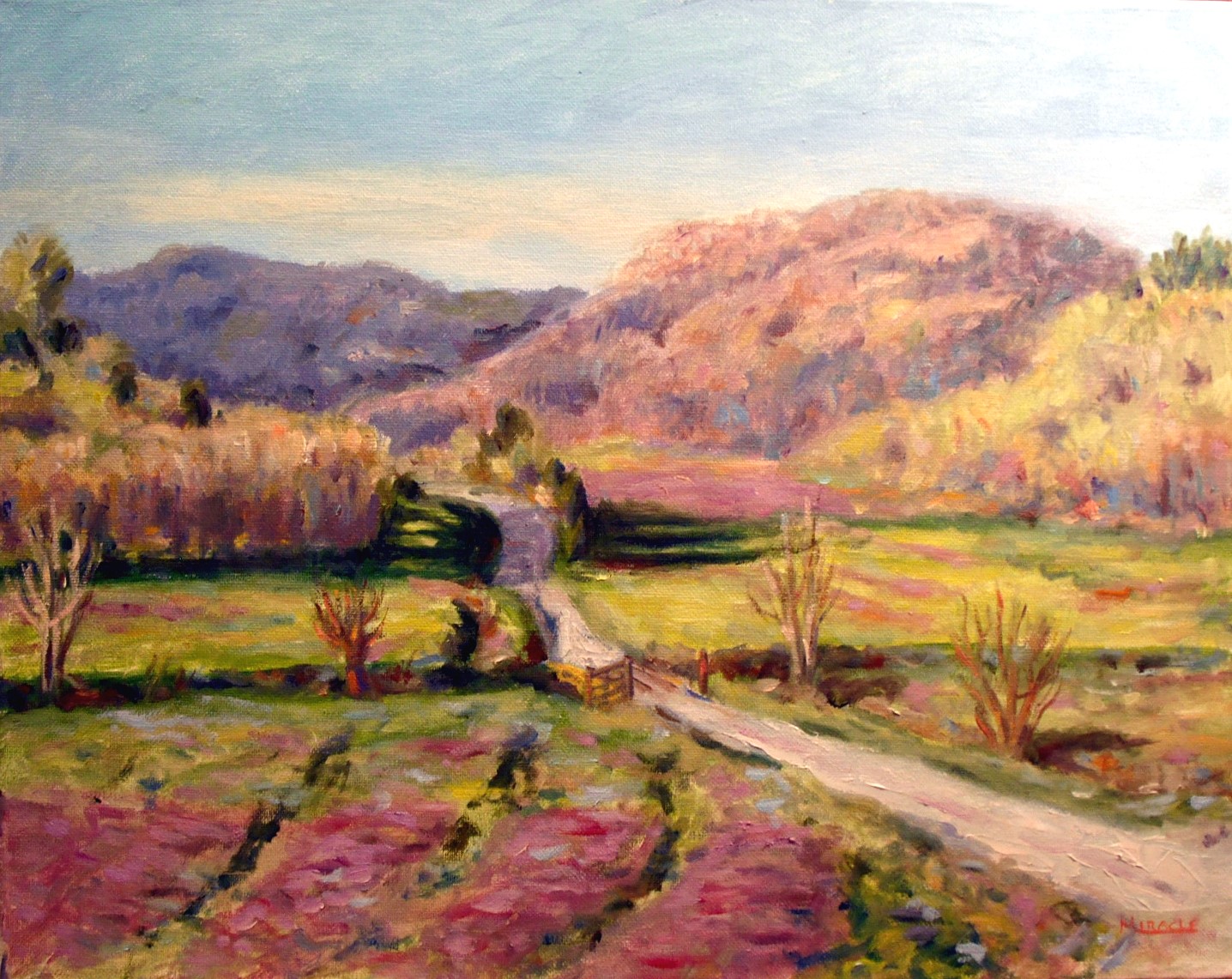
Kyana Bottoms, final, 16 x 20, oil on canvas, Kit Miracle

Kyana Bottoms, final, 16 x 20, oil on canvas, Kit Miracle

So…which do you like best?  The painting from memory or the one that was done on site?

More of the steps below…including the train!

The valley as it looked early in the morning.
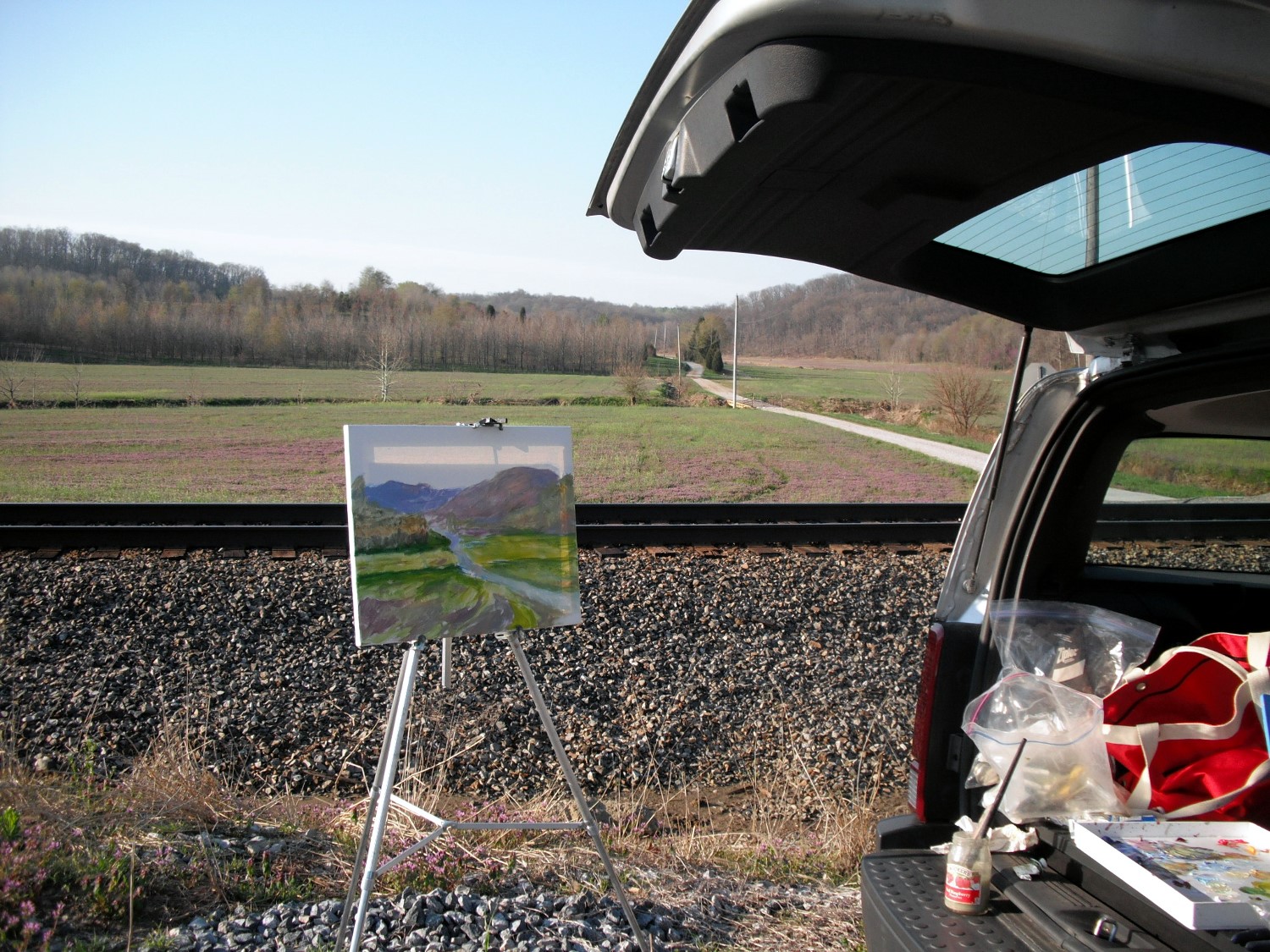
The valley as it looked early in the morning.

Working out of the back of my car, initial washes.
Working out of the back of my car, initial washes.

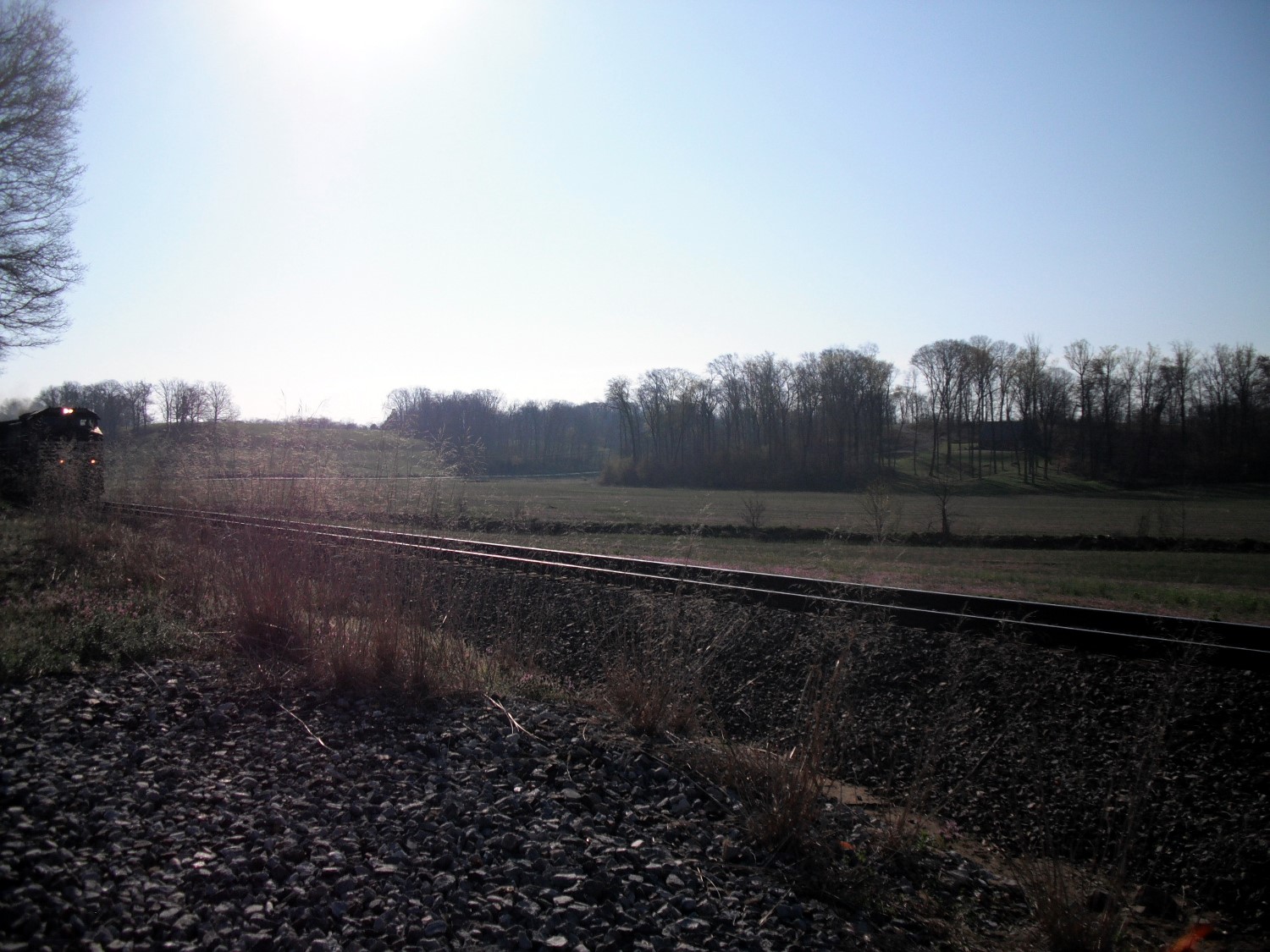
Uh oh, here comes the train!
Uh oh, here comes the train!

And THIS is how close I was to it!
And THIS is how close I was to it!

Last painting step before I packed up for the morning,  The light had changed too much.
Last painting step before I packed up for the morning, The light had changed too much.

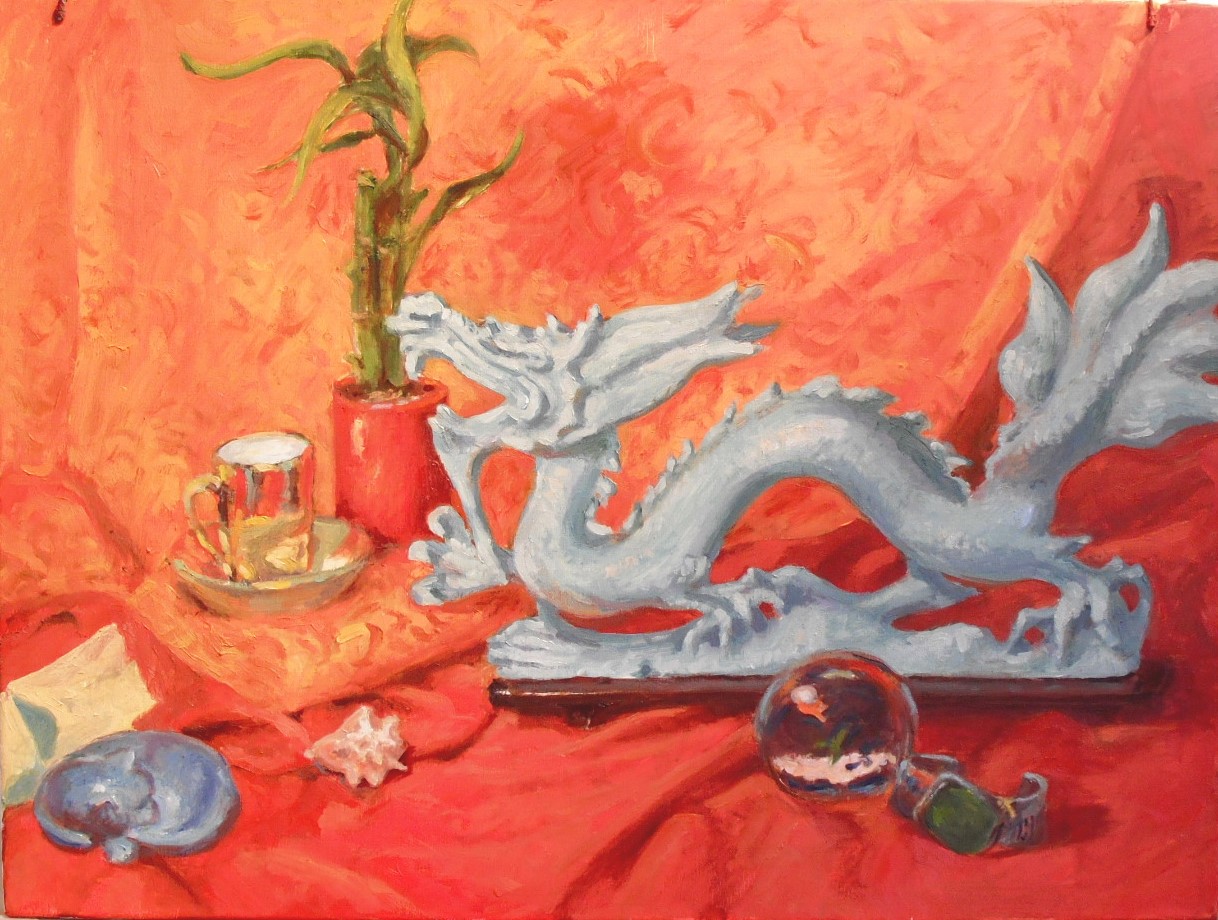
Lucky Red 3


Lucky Red 3 - final, oil on canvas, 18 x 24, Kit Miracle

Lucky Red 3 – final, oil on canvas, 18 x 24, Kit Miracle

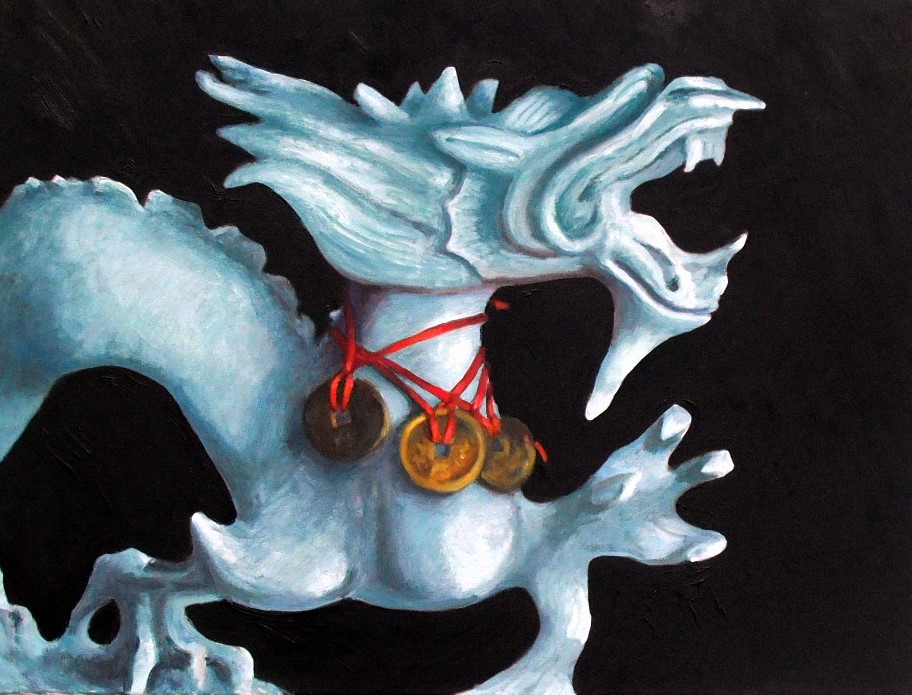
This is the third in the Lucky Red series.  Another jade dragon but not the same one that I posted last time.  For some reason, this one took a lot longer.  Not quite sure why. There is a fine line between painting every detail of the jade or emphasizing the shape of the dragon.  I was having a little more trouble with conveying the sinuousness of the dragon than previously.  There also weren’t as many distracting details but total focus on the dragon shape.  Check out the link for the step-by-step links.  https://my90acres.com/artwork/lucky-red-3-step-by-step/

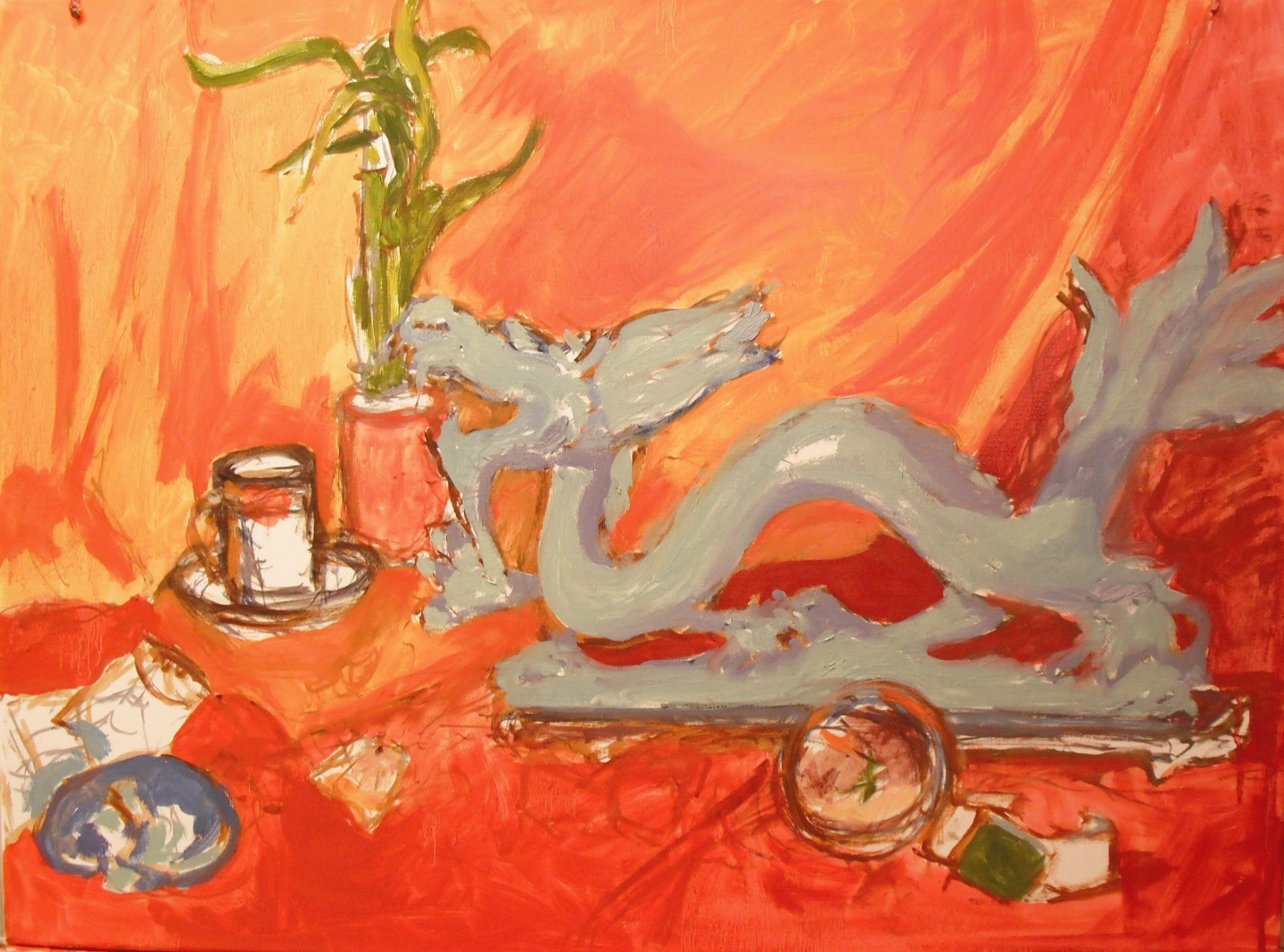
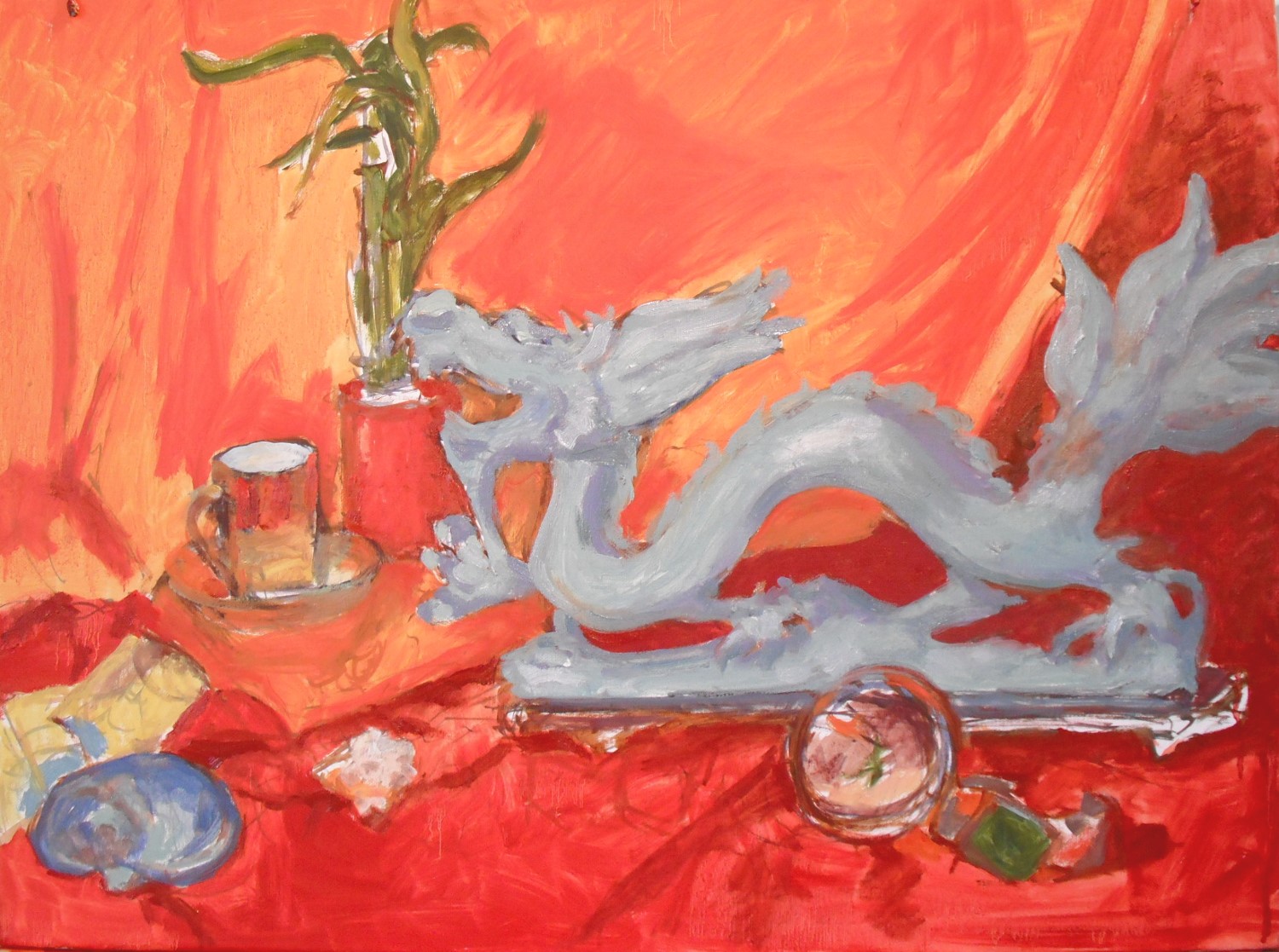
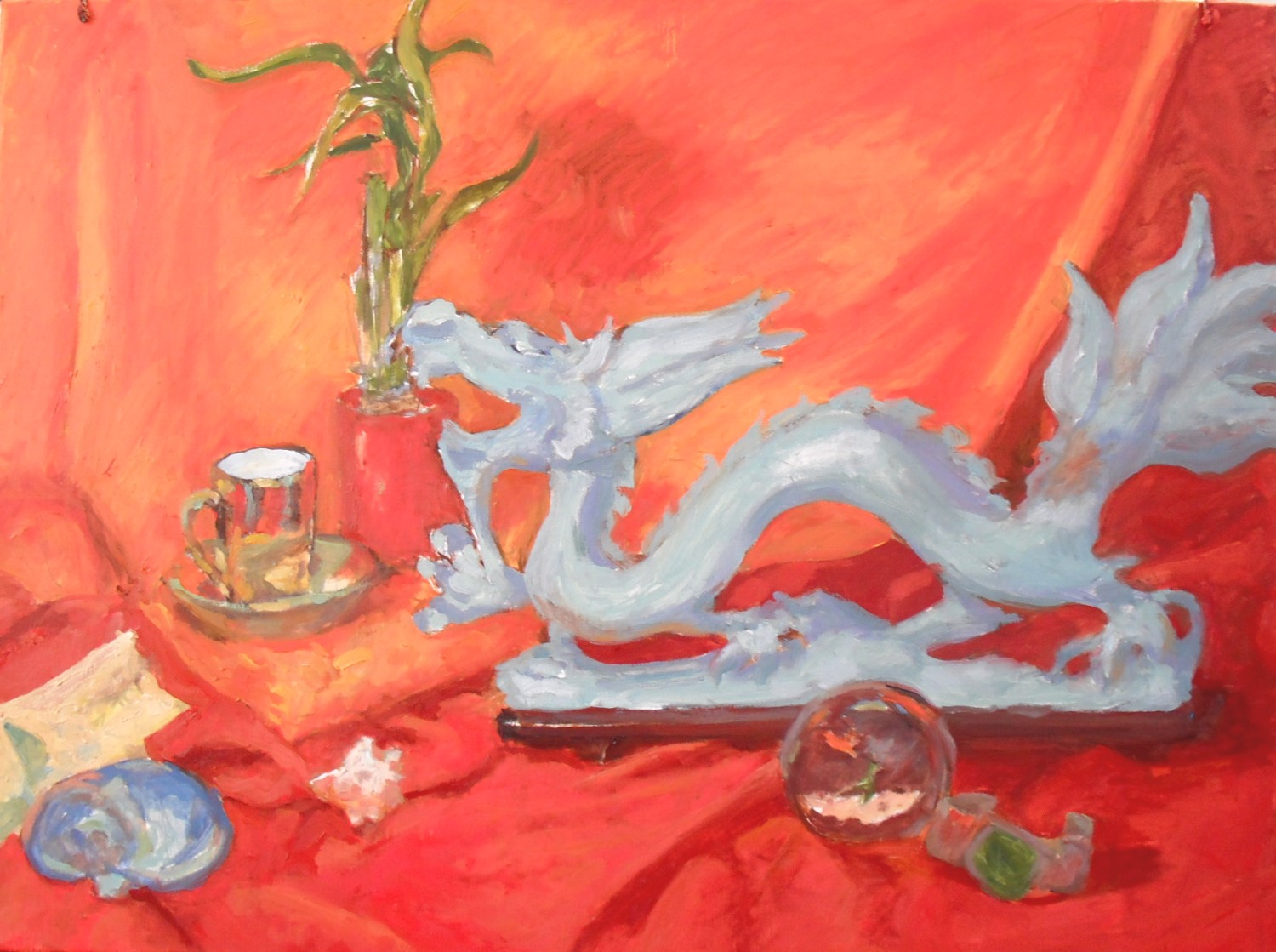
Lucky Red 2

Lucky Red 2 - final.  18 x 24, oil on canvas, Kit Miracle

Lucky Red 2 – final. 18 x 24, oil on canvas, Kit Miracle

In keeping with the red and good luck symbols, I created this still life after the first one.  There are a couple of common elements to Lucky Red the first, such as, the bamboo plant and the small fish glass paperweight.

Here you see a large jade dragon signifying the year of the Dragon and a jade/silver/gold bracelet with the I-Ch’ing symbolizing Ta Yu or number 14.  Unfortunately the bracelet wasn’t so lucky as it was damaged in a bike wreck.  Humph!  I also have a sleeping cat from Provence suggesting my name – and the cat sleeps with one eye open.  The gold cup is from my mother and the tea is Yogi brand (Detox).  I always like to incorporate a sense of humor or irony in my work if I can do it very subtly.  The seashell doesn’t represent anything in particular; I just like it.  And the red cloths for the background – one a kind of orangey-red batik and the other a medium dark red.

Lucky Red 2 - initial still life set up.  Notice the peach gel to diffuse the light.

Lucky Red 2 – initial still life set up. Notice the peach gel to diffuse the light.

Lucky Red 2, initial drawing on the canvas

Lucky Red 2, initial drawing on the canvas

Lucky Red 2 - first washes

Lucky Red 2 – first washes

Lucky Red 2 - more blocking in major colors

Lucky Red 2 – more blocking in major colors

Lucky Red 2 - adding more colors

Lucky Red 2 – adding more colors

Lucky Red 2 - step 6, adding more details, color corrections

Lucky Red 2 – step 6, adding more details, color corrections

Lucky Red 2 - adding more details.  This is the 85% mark when all that is left is to tweak the details.

Lucky Red 2 – adding more details. This is the 85% mark when all that is left is to tweak the details.

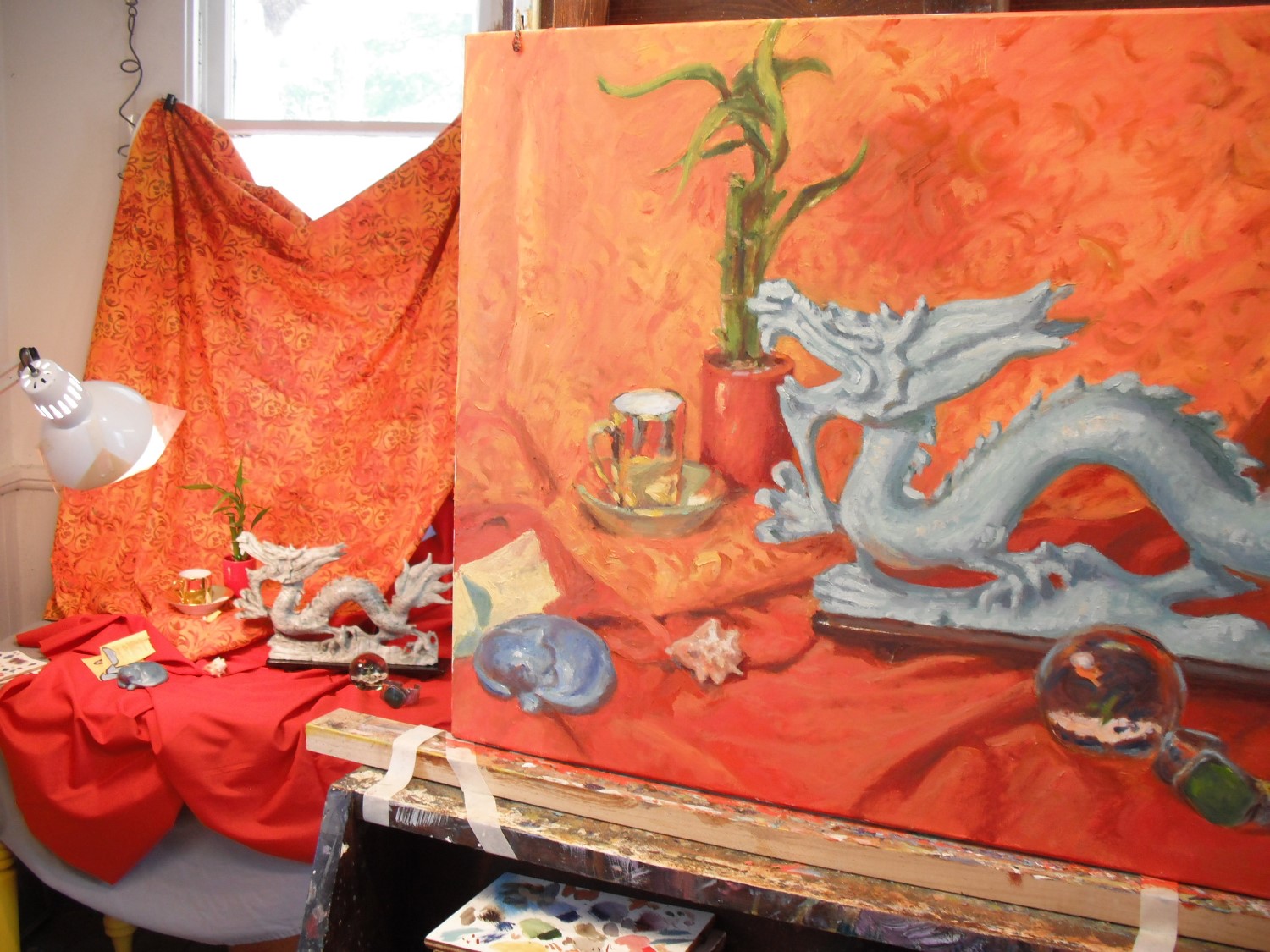
A view of the painting with the still life set up behind it.

A view of the painting with the still life set up behind it.

Lucky Red 2 - cup detail.  Notice how abstractly this gold cup is painted.

Lucky Red 2 – cup detail. Notice how abstractly this gold cup is painted.

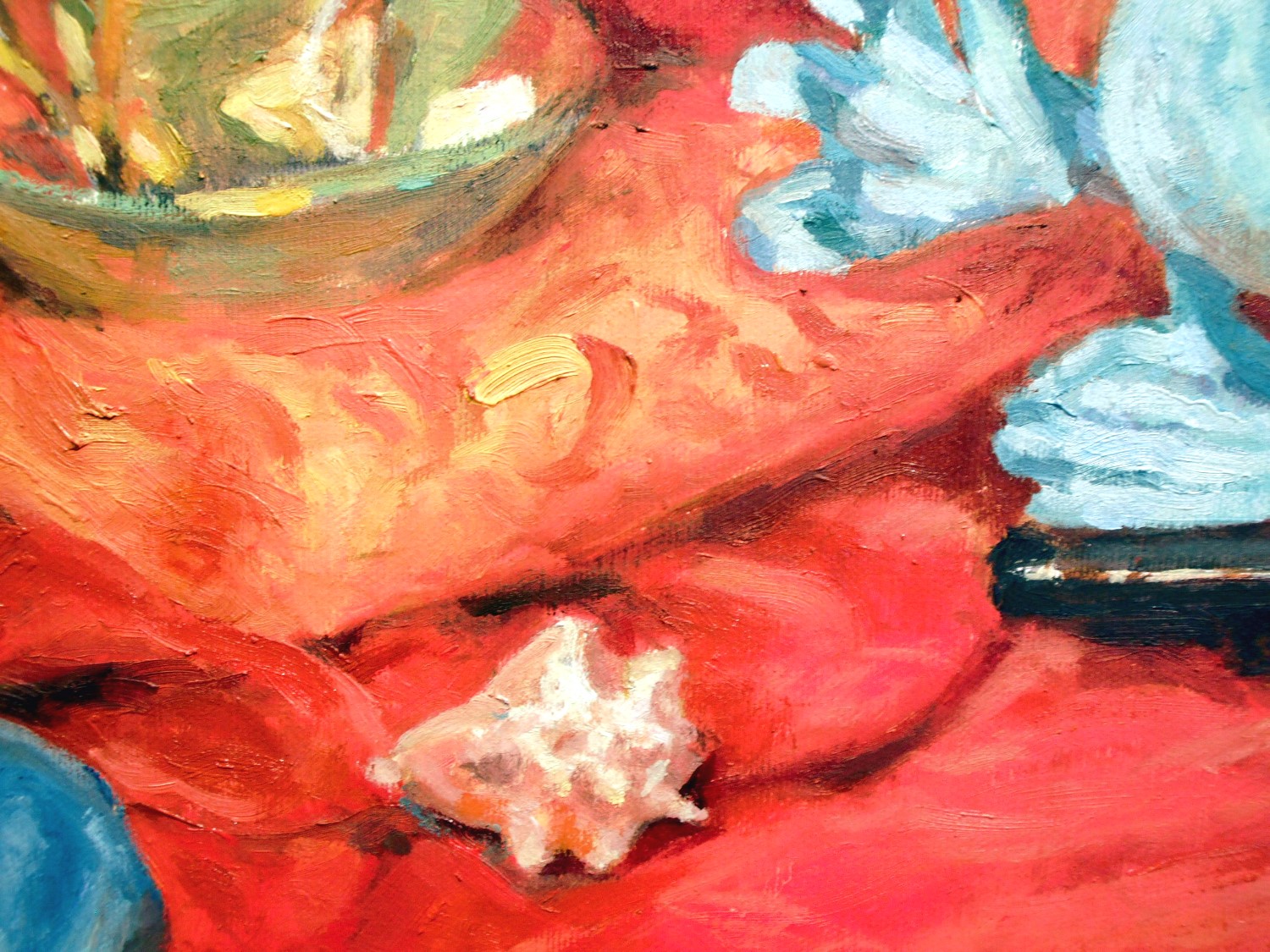
Lucky Red 2 - detail of shell.  Notice how loose the brush strokes are.  It is a real accomplishment to get the effect with just one pass.

Lucky Red 2 – detail of shell. Notice how loose the brush strokes are. It is a real accomplishment to get the effect with just one pass.

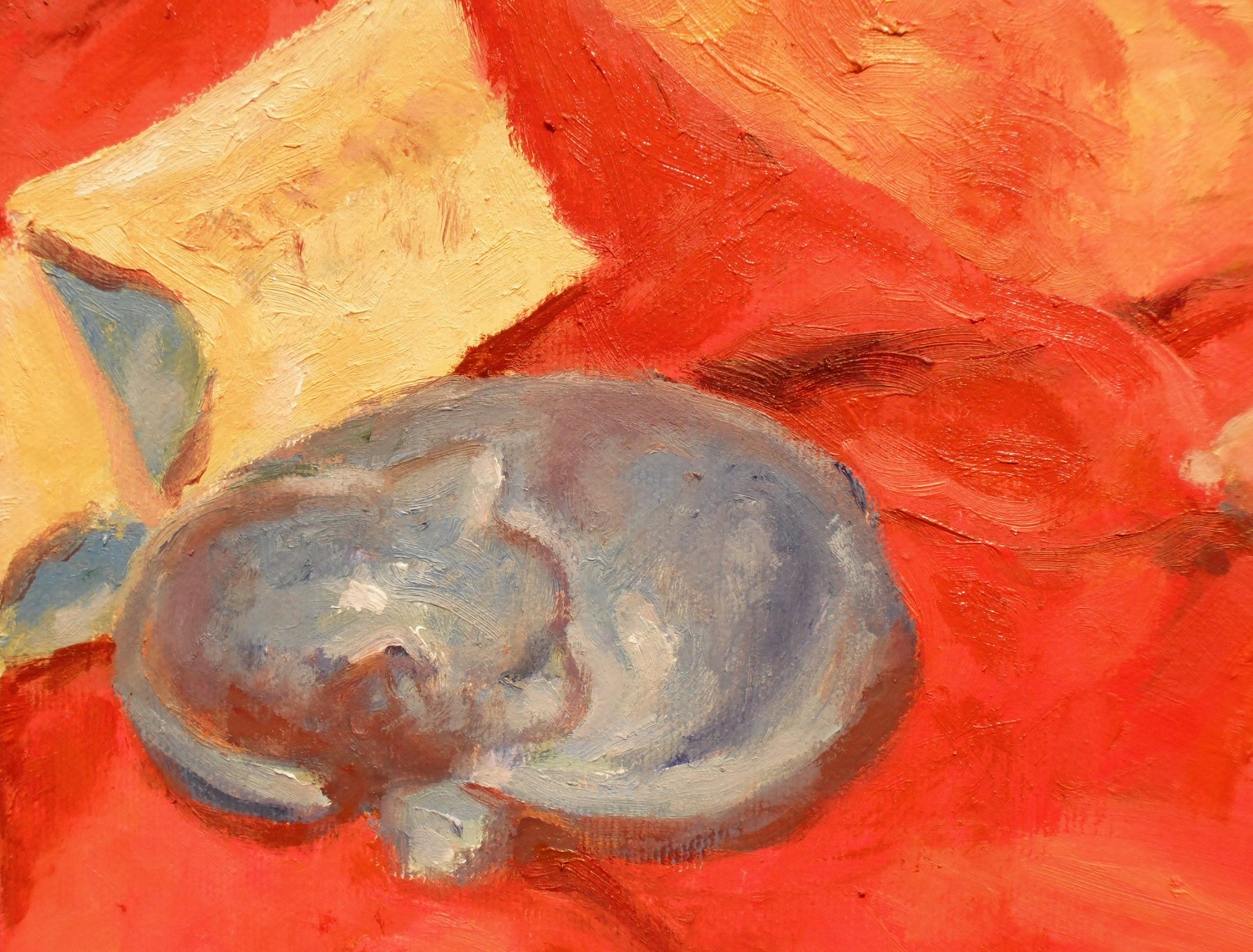
Lucky Red 2 - detail, sleeping cat

Lucky Red 2 – detail, sleeping cat

Lucky Red 2 - final.  18 x 24, oil on canvas, Kit Miracle

Lucky Red 2 – final. 18 x 24, oil on canvas, Kit Miracle

Real or illusion?

Many years ago I read that when Andrew Wyeth was complimented on the realism of his paintings that he responded, “All realistic art is an optical illusion.  You’re taking paint, applying it to a two-dimensional surface and tricking the eye into believing that they’re seeing a real object.” Although this didn’t quite sink in at the time, over the years I’ve come to understand what he was saying.

When I paint a subject in a realistic manner, I am literally fooling the eye.  My son was looking at the painting, Lucky Red, and went up close to examine it.  After a while, he commented that there really wasn’t much there.  I just laughed.  “You’re right,” I said.  “It’s all an optical illusion.”

While I admire artists who have the tenacity to paint every little hair on a rabbit, I really wonder why they are doing that.  Isn’t the entire object of the painting to convey the mood and feeling of the artist?  Personally I believe in letting the viewer become part of the painting by bringing their own knowledge and imagination to the work.  The hard edges certainly define some critical points, but soft edges let one area slide into another, creating a cohesiveness that cannot be obtained photo realism.  My personal opinion, anyway.

Go back and look at some of the original paintings that I’ve posted on here – Lucky Red, Grand Canyon at Moran Point, and Blue Bottles with Lemons.  Then look at these close-up.

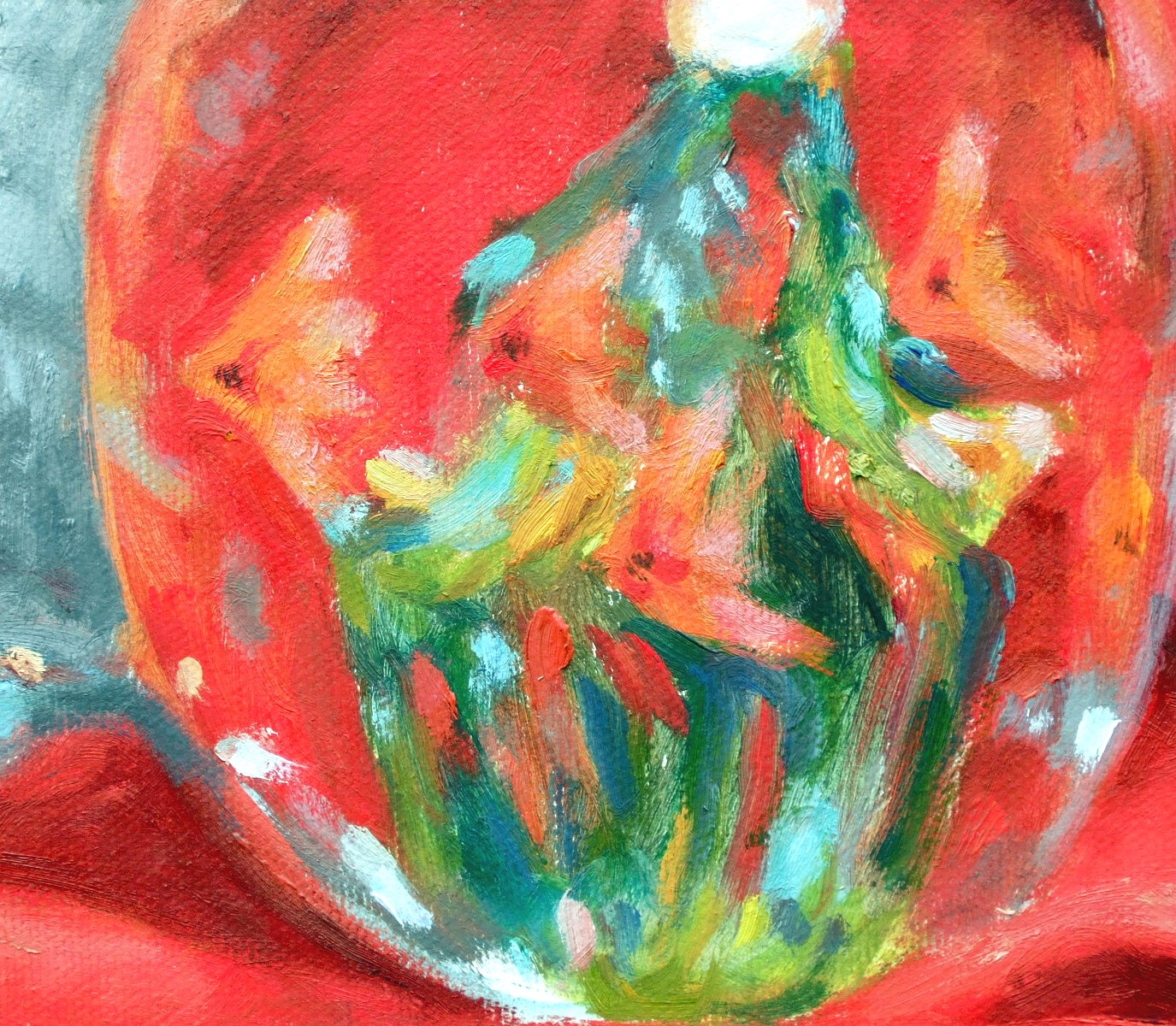
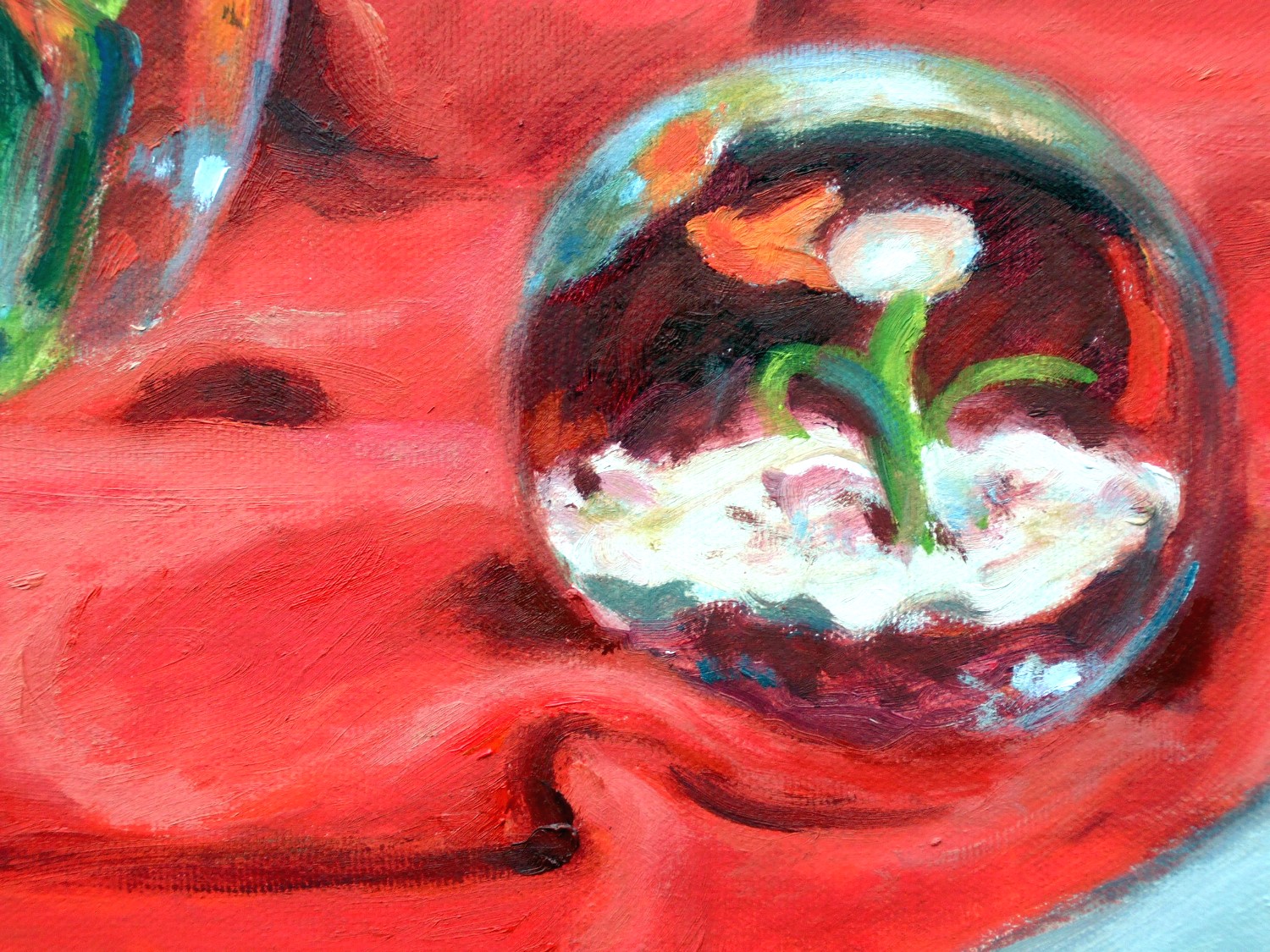
Detail - Lucky Red.  Notice how abstractly the fish and seaweed are painted in this glass paperweight.

Detail – Lucky Red. Notice how abstractly the fish and seaweed are painted in this glass paperweight.

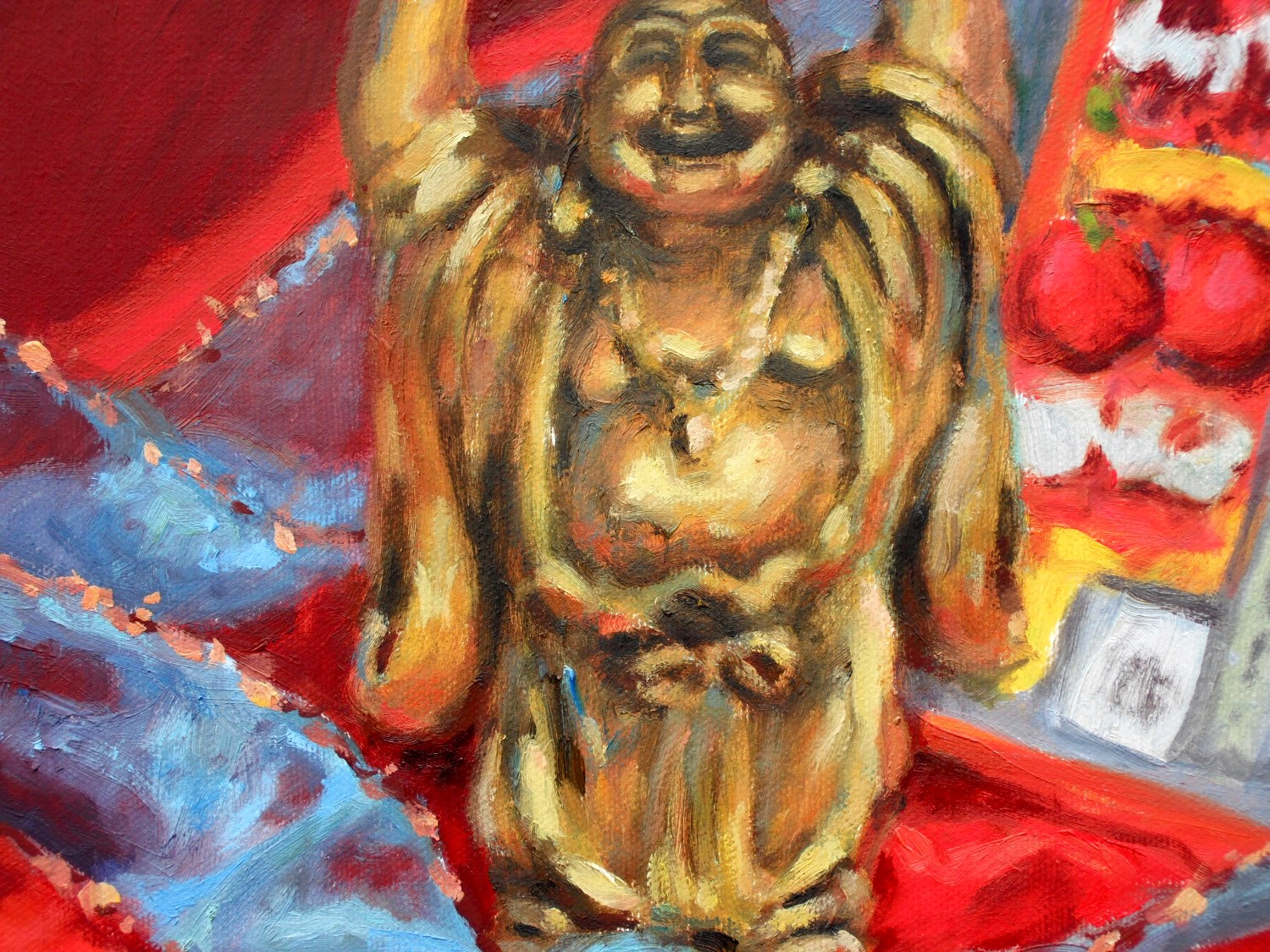
The golden Buddha is also painted very loosely.  Notice the sparkles of the ribbon, too.

The golden Buddha is also painted very loosely. Notice the sparkles of the ribbon, too.

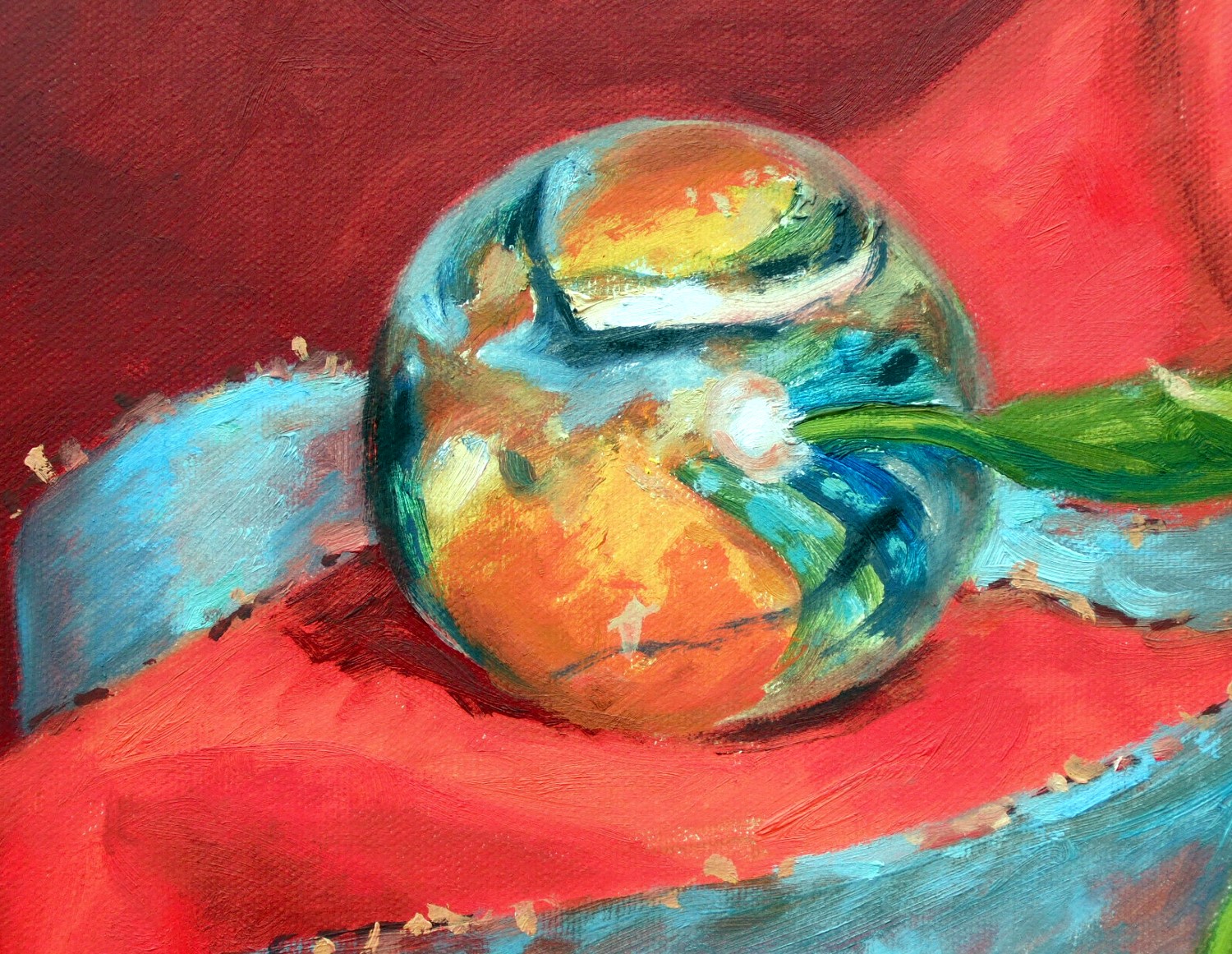
This Mediterranean glass paperweight is a mash of swirling colors.  Again, the sparkles on the blue ribbon.

This Mediterranean glass paperweight is a mash of swirling colors. Again, the sparkles on the blue ribbon.

Notice the lost edges of this paperweight blending into the folds of the cloth.

Notice the lost edges of this paperweight blending into the folds of the cloth.

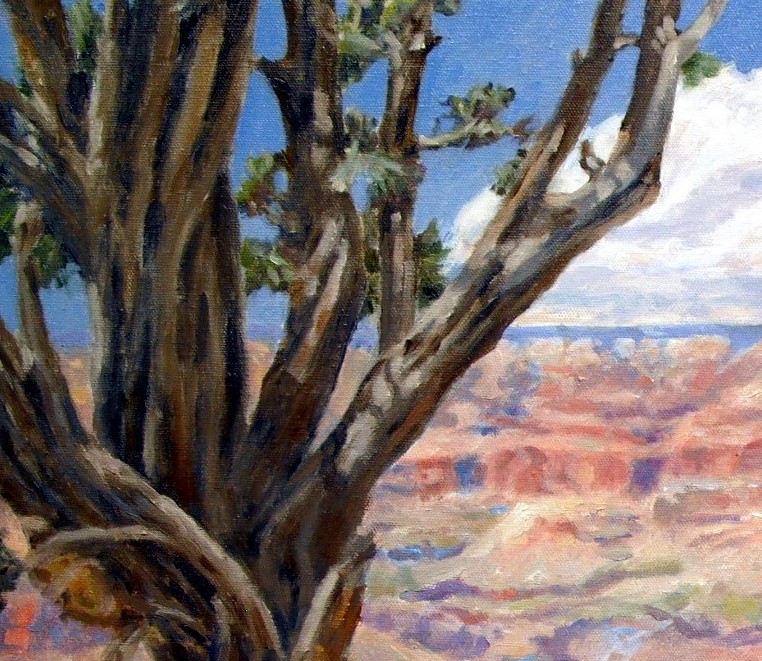
This tree in Grand Canyon at Moran Point is very loosely painted when viewed in detail.

This tree in Grand Canyon at Moran Point is very loosely painted when viewed in detail.

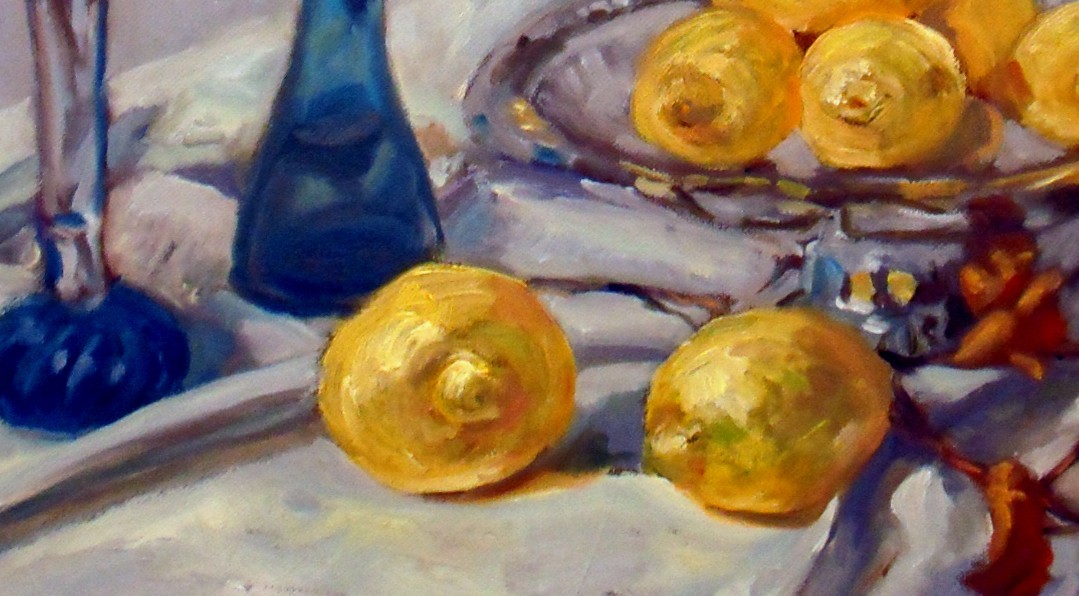
Again, the viewer's eye is blending the colors in this yellow lemon.

Again, the viewer’s eye is blending the colors in this yellow lemon.

Lucky Red

I don’t know quite why I started this painting but it’s something that has been rolling around in my head for awhile.  Sometimes I’ll think about a work for years before I get around to painting it.

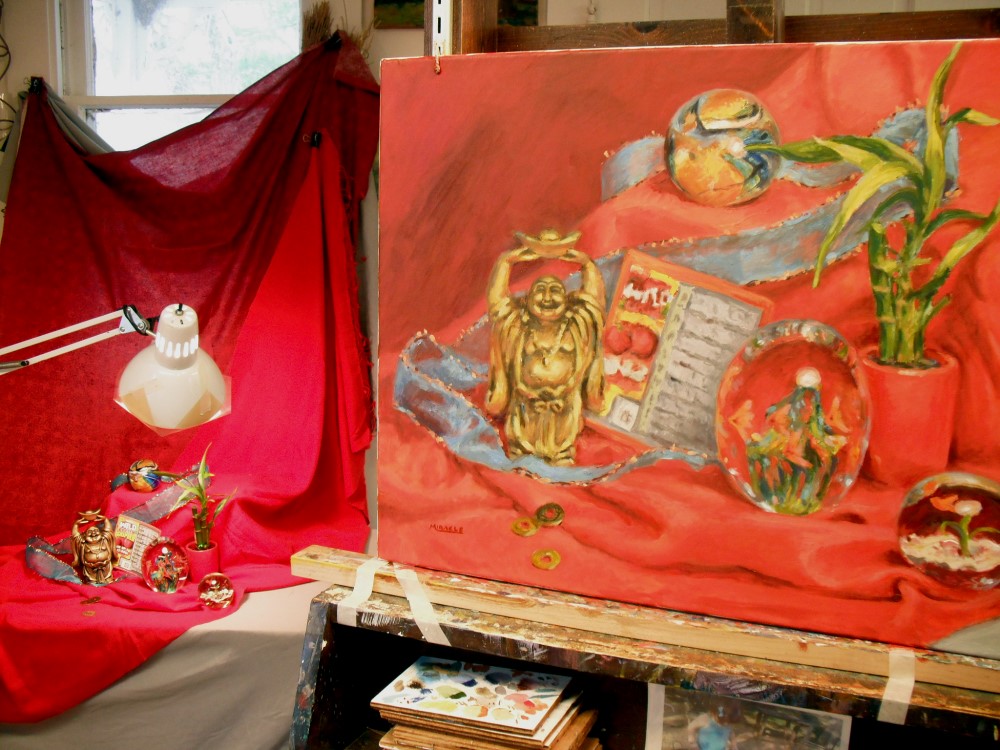
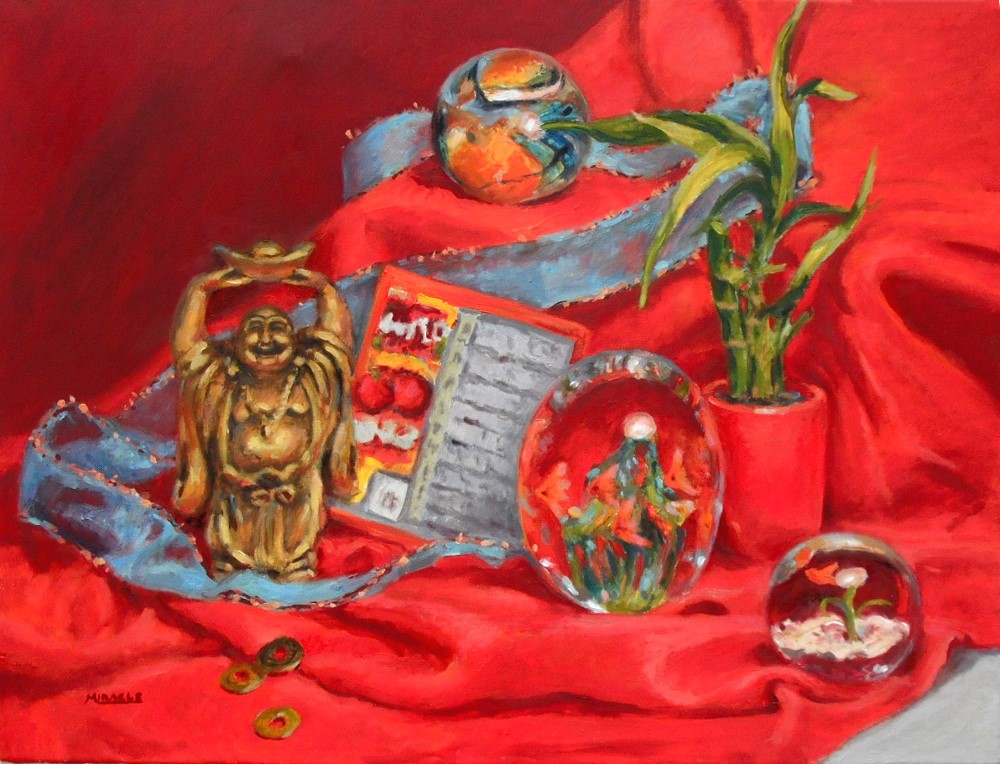
Lucky Red is a challenge of red on red on red.  Shiny and soft.  Clear objects, reflective, see-through.  Some of the symbols are pretty obvious.  The lucky Buddha, three Chinese coins, a WINNING lottery ticket.  Some are less obvious.  The lucky bamboo plant.  Two of the glass paperweights have fish swimming in them.  Fish are a lucky Chinese symbol.  And swirling throughout the still life is a lucky blue ribbon that I won at a holiday party.  (Thank you, Joan!) Topping the set up off is another glass paperweight called Mediterranean which celebrated the completion of a bike ride through France several years ago.

We all have lucky symbols in our lives.  What are yours?

Lucky Red - the initial still life set up

Lucky Red – the initial still life set up

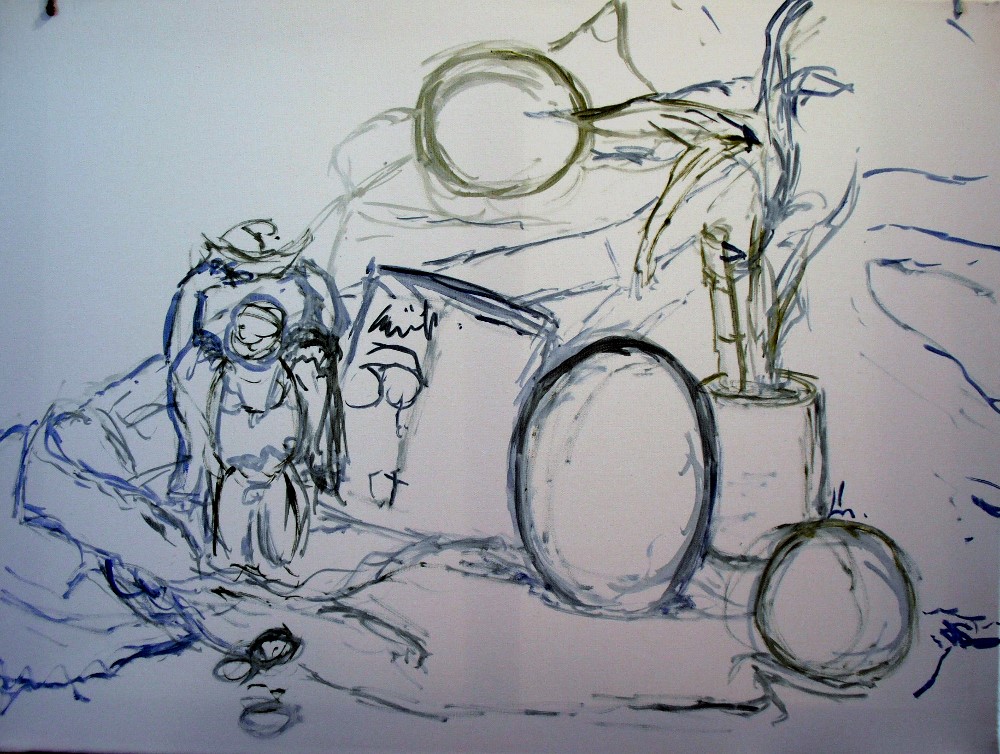
First step, drawing on the canvas

First step, drawing on the canvas

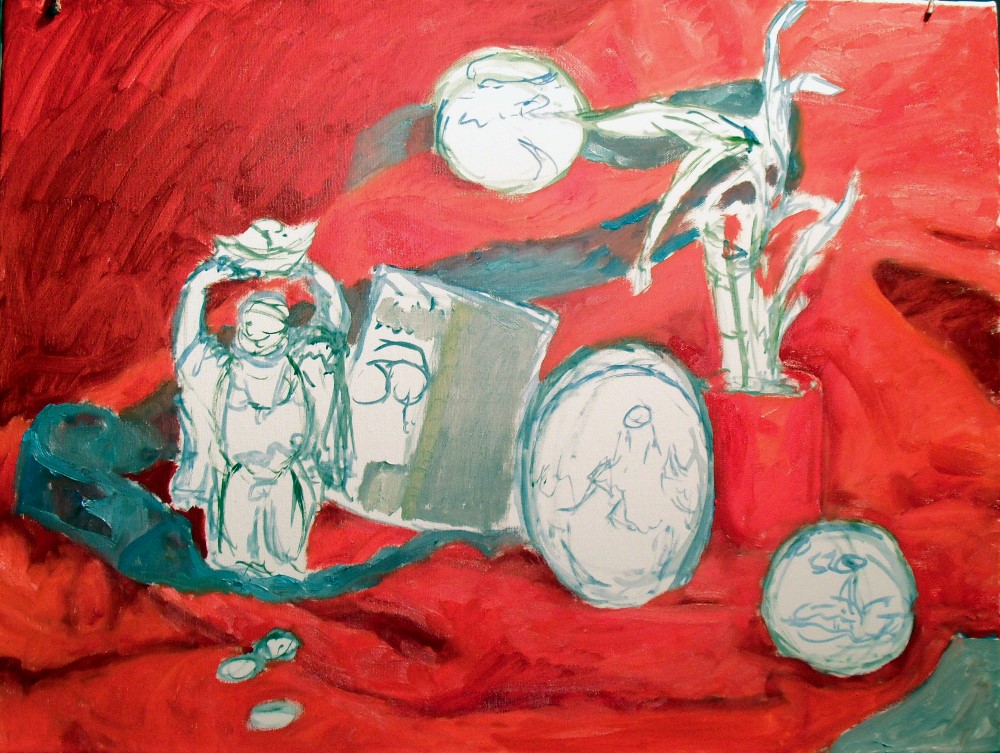
Second stage, blocking in major shapes

Second stage, blocking in major shapes

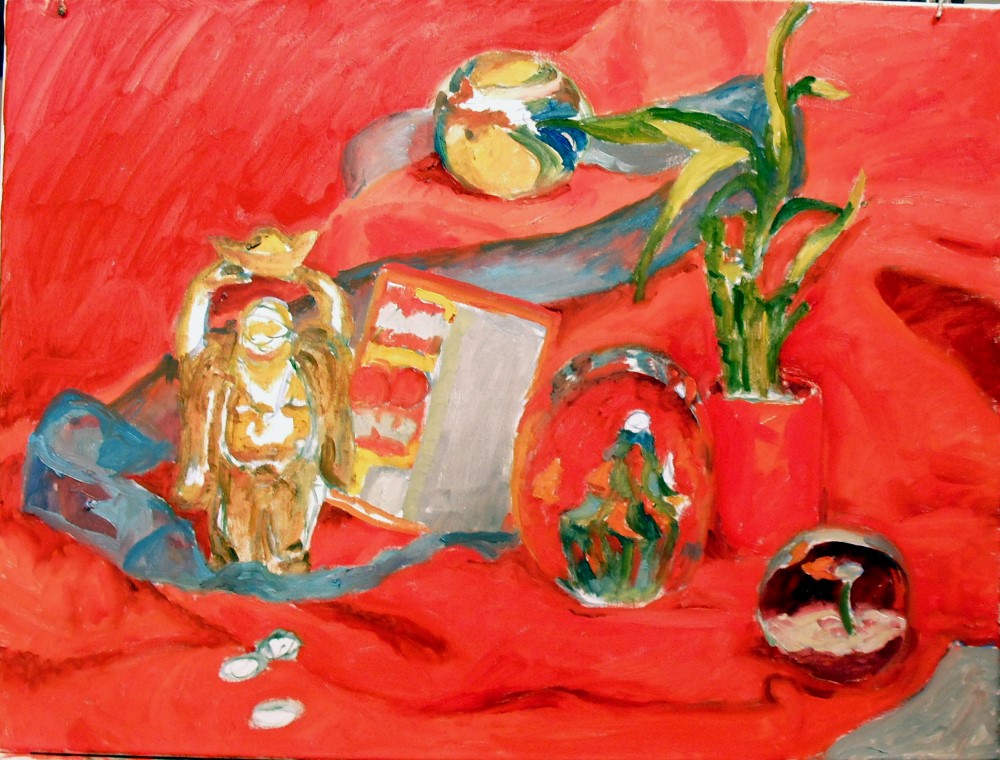
Third step, laying in base colors of the objects

Third step, laying in base colors of the objects

Fourth stage.  Almost finished.

Fourth stage. Almost finished.

What my palette looks like with a variety of reds.  Using black to tone some of them down.

What my palette looks like with a variety of reds. Using black to tone some of them down.

The painting compared with the still life.  Notice the gel I have taped over the light.

The painting compared with the still life. Notice the gel I have taped over the light.

Lucky Red, final.  Oil on canvas, 18 x 24, Kit Miracle

Lucky Red, final. Oil on canvas, 18 x 24, Kit Miracle

Silver on Grey – Oil Painting

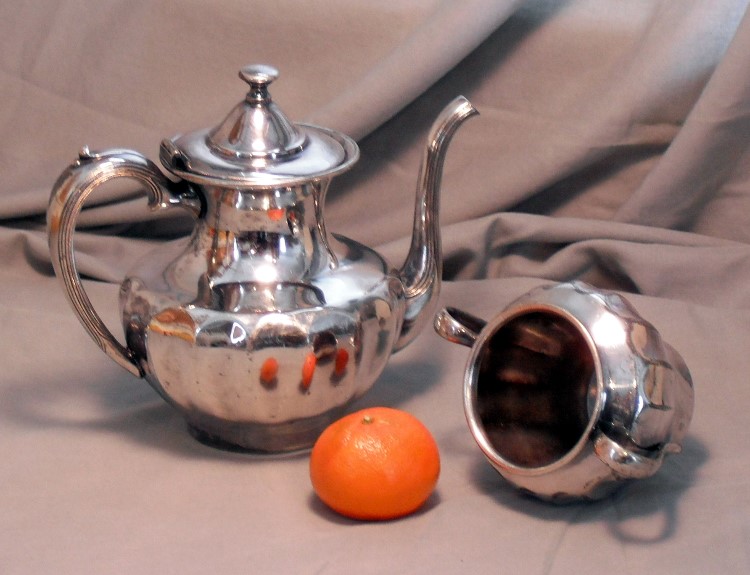
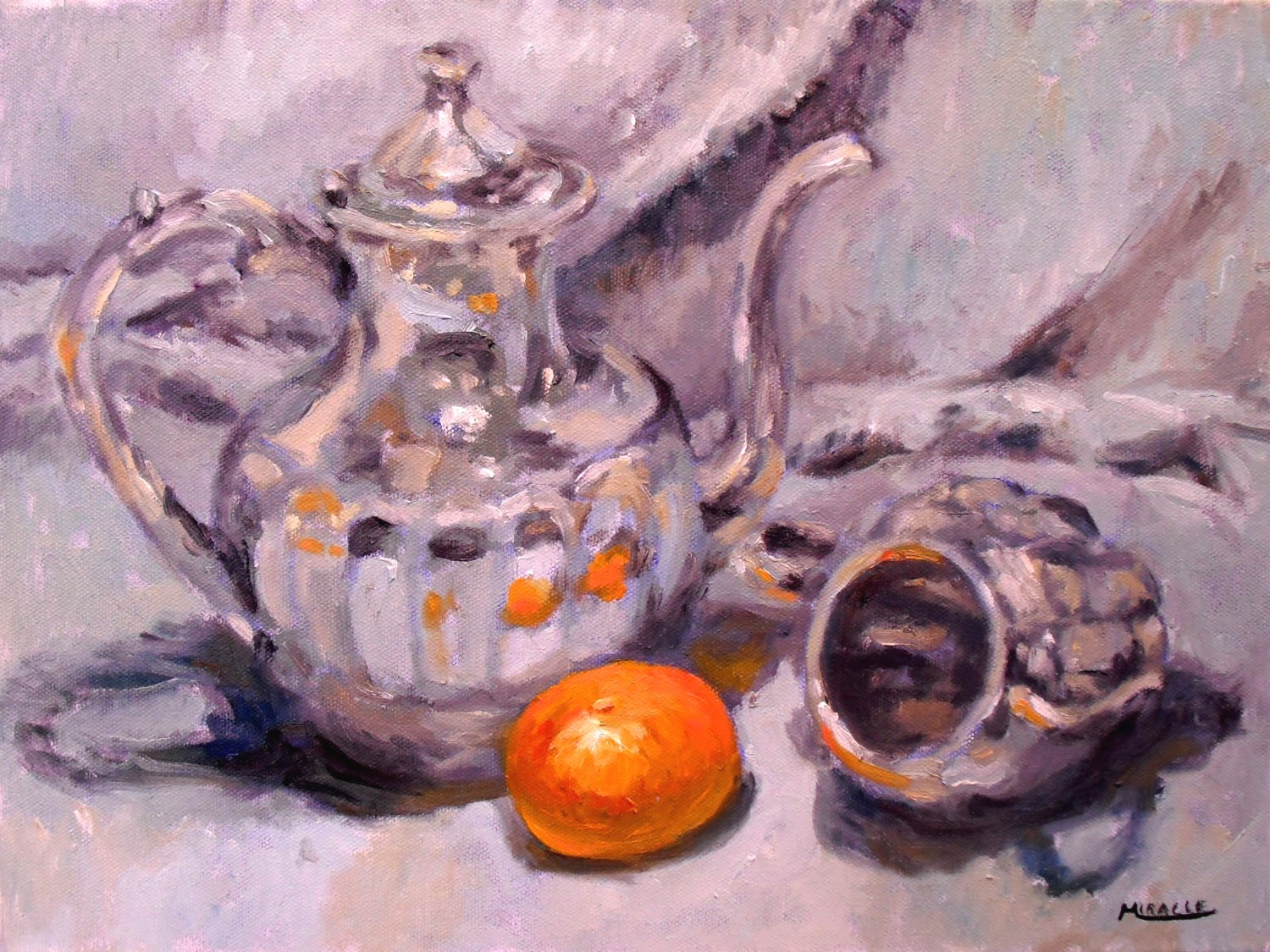
Last week I posted my silver teapot find from the flea market.  I just completed this oil painting to demonstrate the fun of dealing with reflections of shiny objects.  This will probably become a favorite still life subject in the future.

Silver on Grey still life set up

Silver on Grey still life set up

Silver on Grey, oil on canvas 12 x 16, Kit Miracle

Silver on Grey, oil on canvas 12 x 16, Kit Miracle

Pecos River Valley, Step-by-Step

Pecos River Valley, final, oil on canvas,  18 x 24,  Kit Miracle

Pecos River Valley, final, oil on canvas, 18 x 24, Kit Miracle

As much as I loved Arizona, I was also enamored with New Mexico and the Pecos River Valley.  I spent one day at the ruins of the Pecos Indians which are preserved as a national park now.  From the top of the area, I could see for miles.  This is one view of the Pecos River Valley. https://my90acres.com/artwork/pecos-river-valley-step-by-step/


Sedona Hills at Sunset

Sedona, final, oil on canvas, 15 x 27, Kit Miracle

Sedona, final, oil on canvas, 15 x 27, Kit Miracle

I fell in love with the red hills in Sedona, Arizona on my recent visit there.  This is a long painting, 15 x 27, which represents the landscape at sunset.  Just north of Bell Rock at sunset.  Check out the link for a step-by-step. https://my90acres.com/artwork/sedona-hills-at-sunset-step-by-step/

Junipers at Grand Canyon – Demonstration

Junipers at Grand Canyon, final, oil on canvas, 24 x 30

Junipers at Grand Canyon, final, oil on canvas, 24 x 30

I just completed this 24 x 30 oil painting of Junipers at the Grand Canyon.  I love their gnarly trunks and timeless quality.  Check out my demonstration at https://my90acres.com/artwork/junipers-at-grand-canyon-demonstration/


Grand Canyon – Moran Point

Grand Canyon Moran Point - Final  18 x 24 oil on canvas

Grand Canyon Moran Point – Final 18 x 24 oil on canvas

I visited the Grand Canyon last month for the first time and fell in love with the place.  I could paint there for a hundred years and still not run out of subject matter.  What I loved most…and which was most challenging to me as a painter…is how the view changes constantly, depending upon the time of day and weather.

This demonstration is from the famous Moran Point, named after Thomas Moran.  I sat under this tree and painted a nice little watercolor but the actual painting was completed in the studio.  For once, not on a toned canvas.  Check out the demo at the link below.  https://my90acres.com/artwork/grand-canyon-moran-point-demonstration/