Category Archives: oil painting

Using red gel to determine values in your paintings

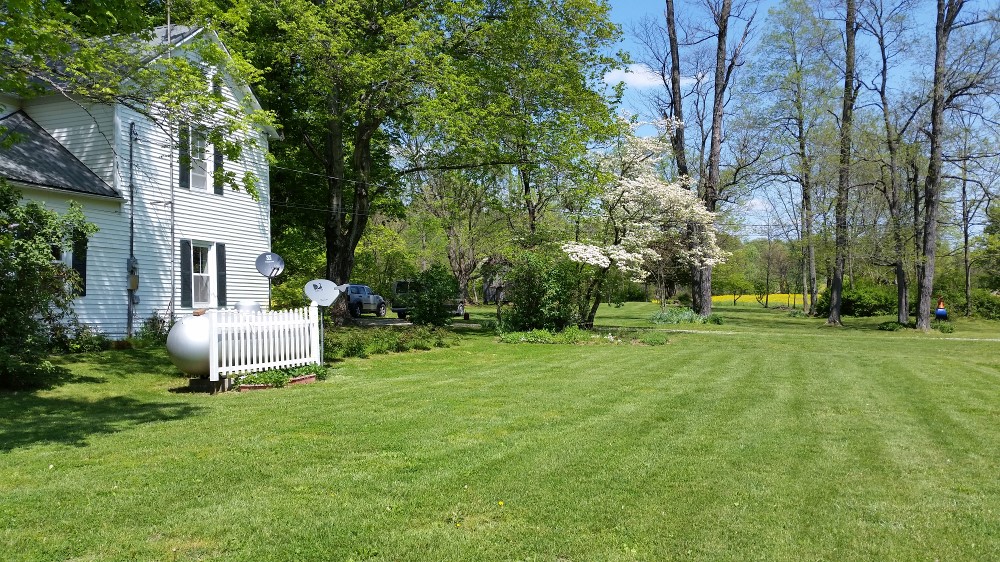
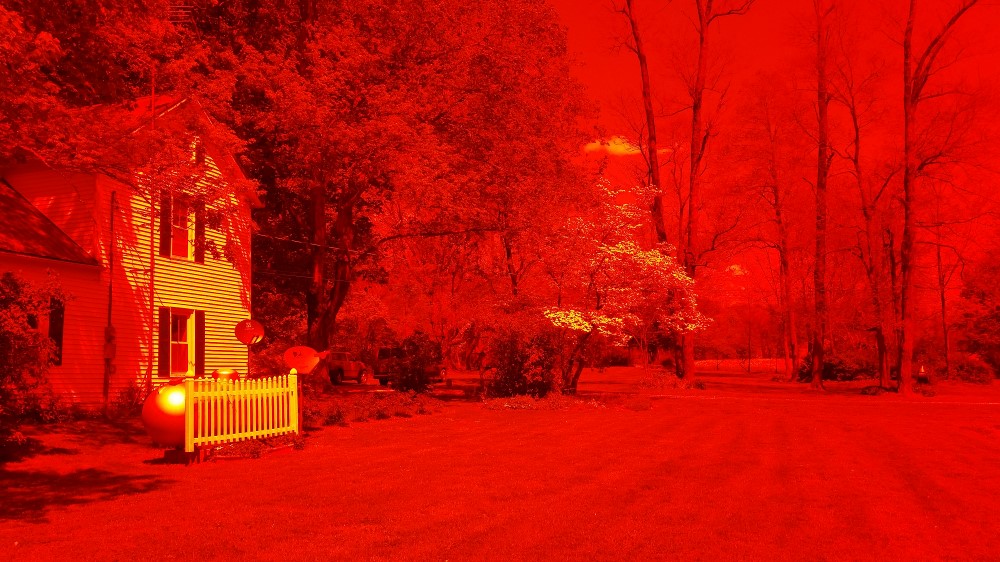
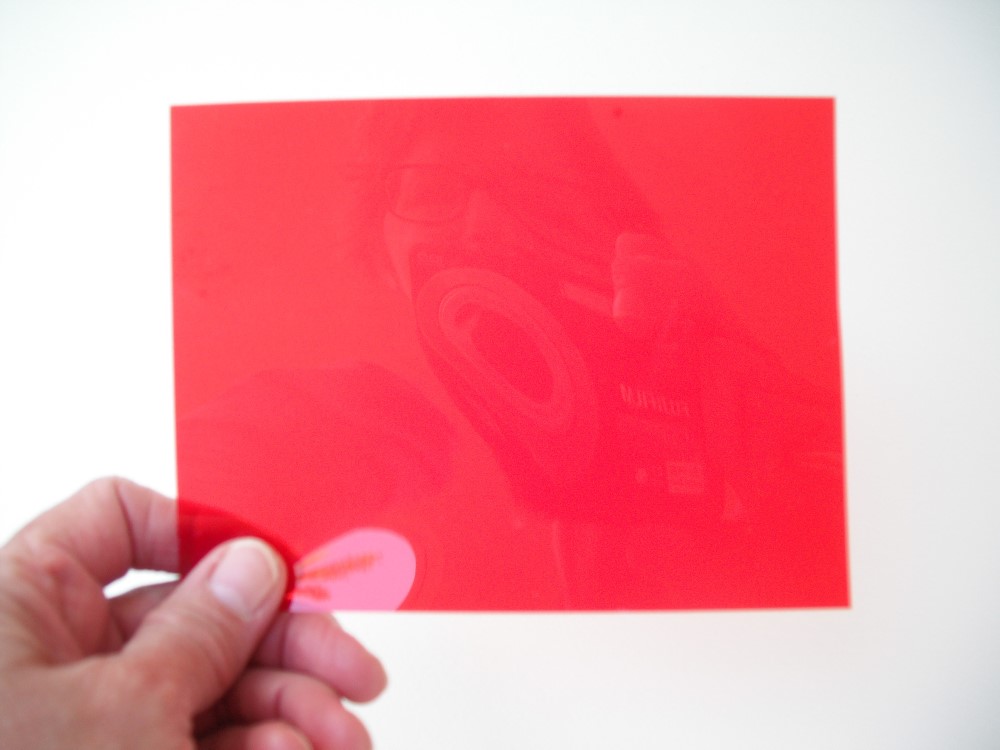
Sometimes using a piece of red gel (acetate)-  as in lighting gel – will help you see the values of your subject and painting better.  This seems to work best with landscapes as the red gel counteracts the greens, just leaving the values.

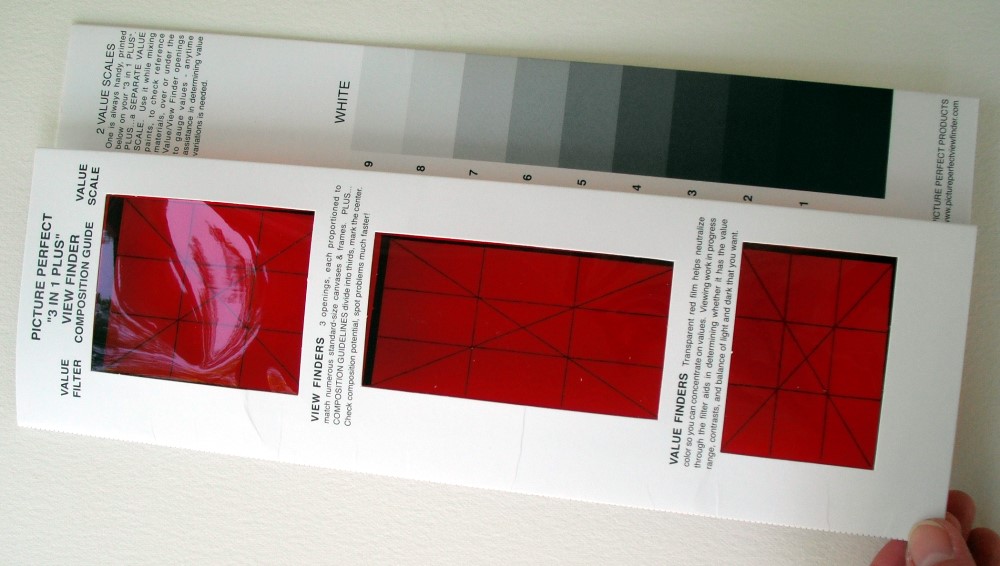
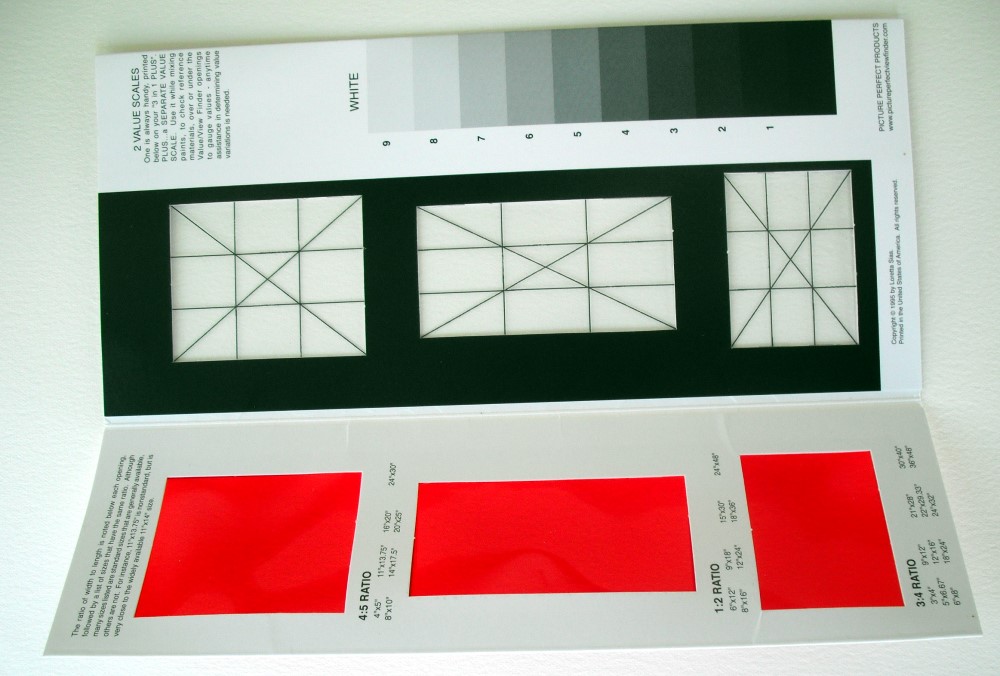
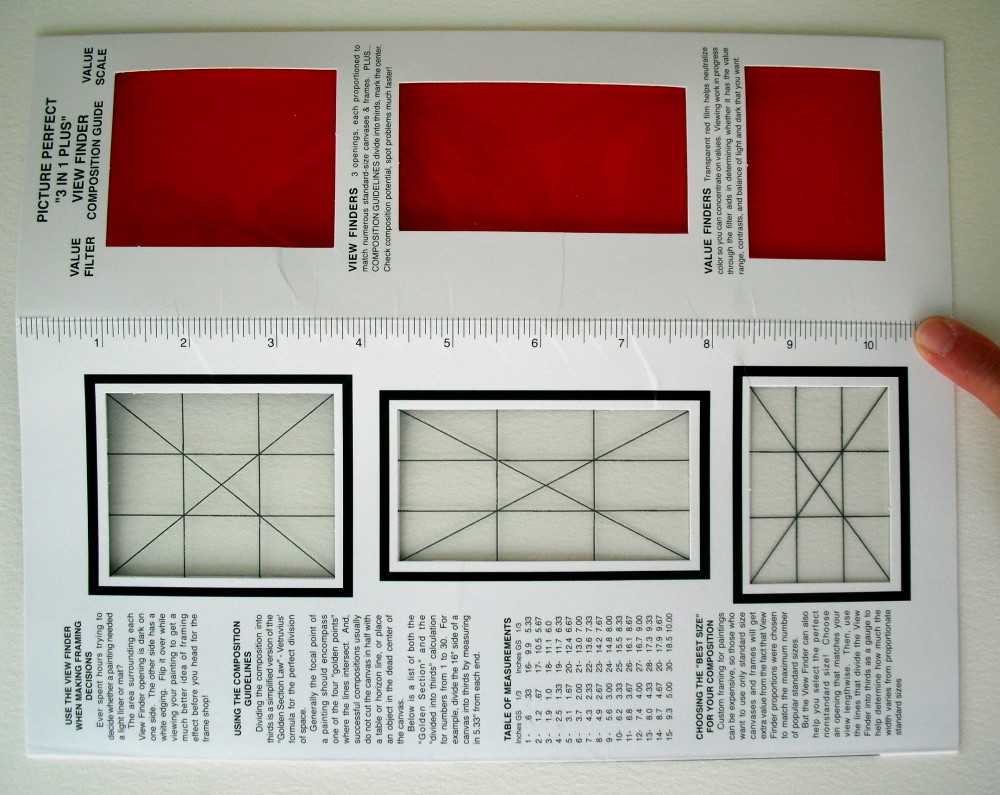
I’m not quite sure where I came across this idea but I always carry a piece of red gel with me.  You can acquire leftover pieces from most theaters in your area, even some universities. They use the gels to color the lights for the stage. Or you can buy it new on Amazon.com or at a theatrical supply store.  If you use a viewfinder, there is even a really neat gismo which you can buy at www.pictureperfectviewfinder.com which has the red gel built in, along with some value markers and different size openings for standard painting sizes.  Try it.  You’ll like it.

Piece of red gel, about 4 x 6

Piece of red gel, about 4 x 6

Folded over Picture Perfect View Finder showing the red gel and composition grids.

Folded over Picture Perfect View Finder showing the red gel and composition grids.

The Picture Perfect View Finder

The Picture Perfect View Finder

Back side of the viewfinder

Back side of the viewfinder

Landscape without the gel

Landscape without the gel

Landscape with red gel showing values

Landscape with red gel showing values

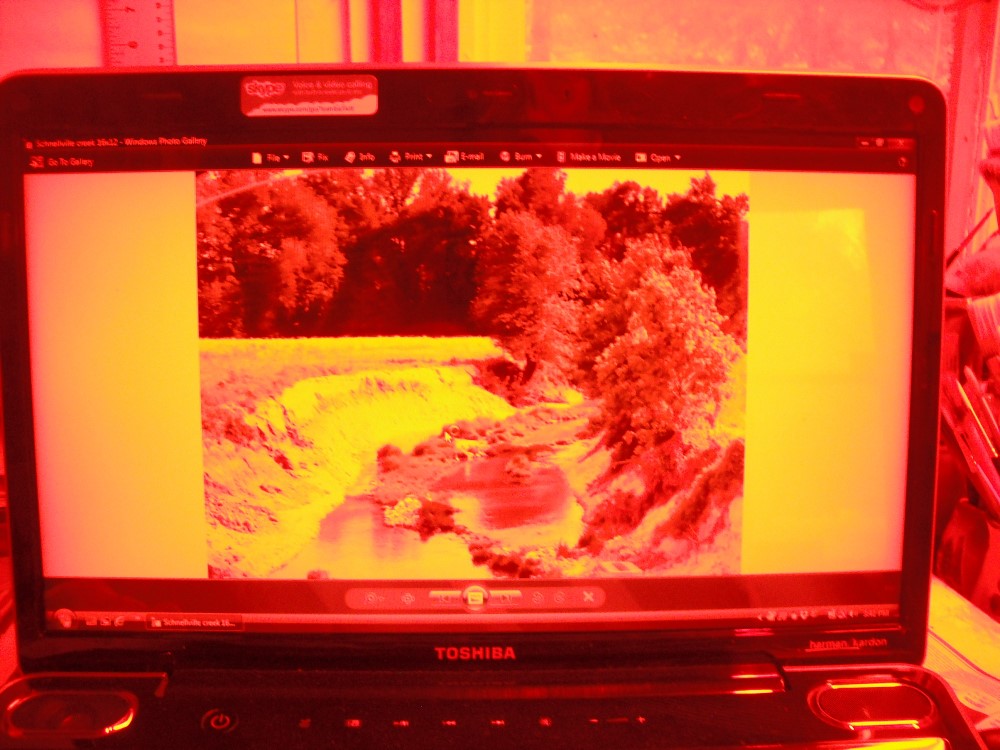
Using the red gel to look at computer photo

Using the red gel to look at computer photo

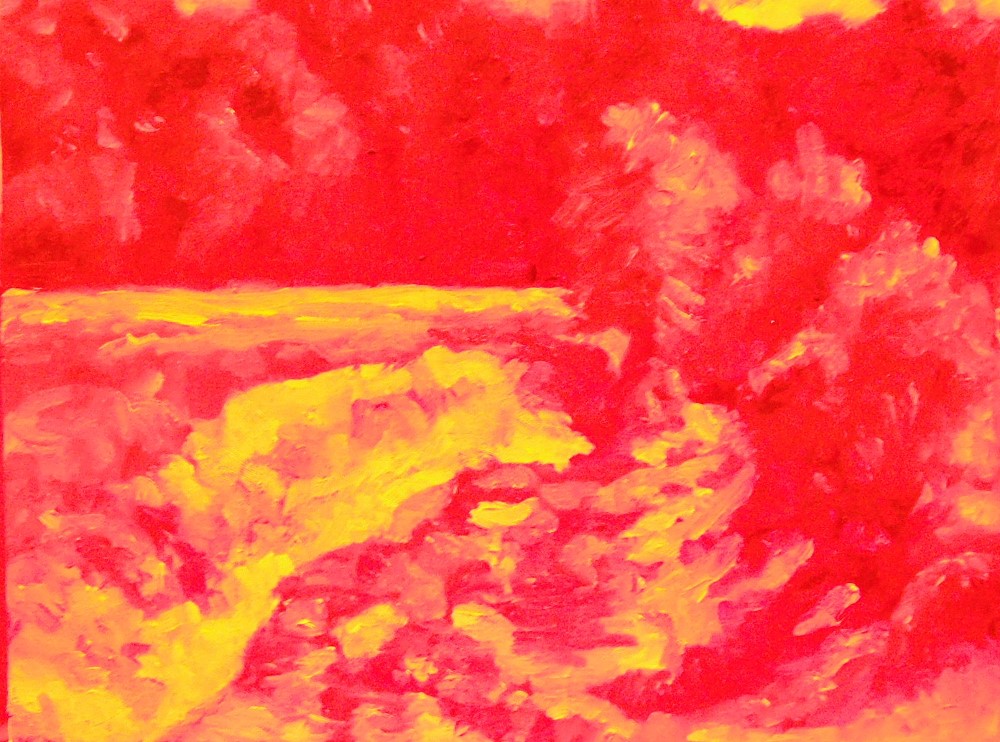
A landscape painting with the red gel

A landscape painting with the red gel

A landscape final version showing the values in the photo on the computer

A landscape final version showing the values in the photo on the computer

How to convey a feeling in painting

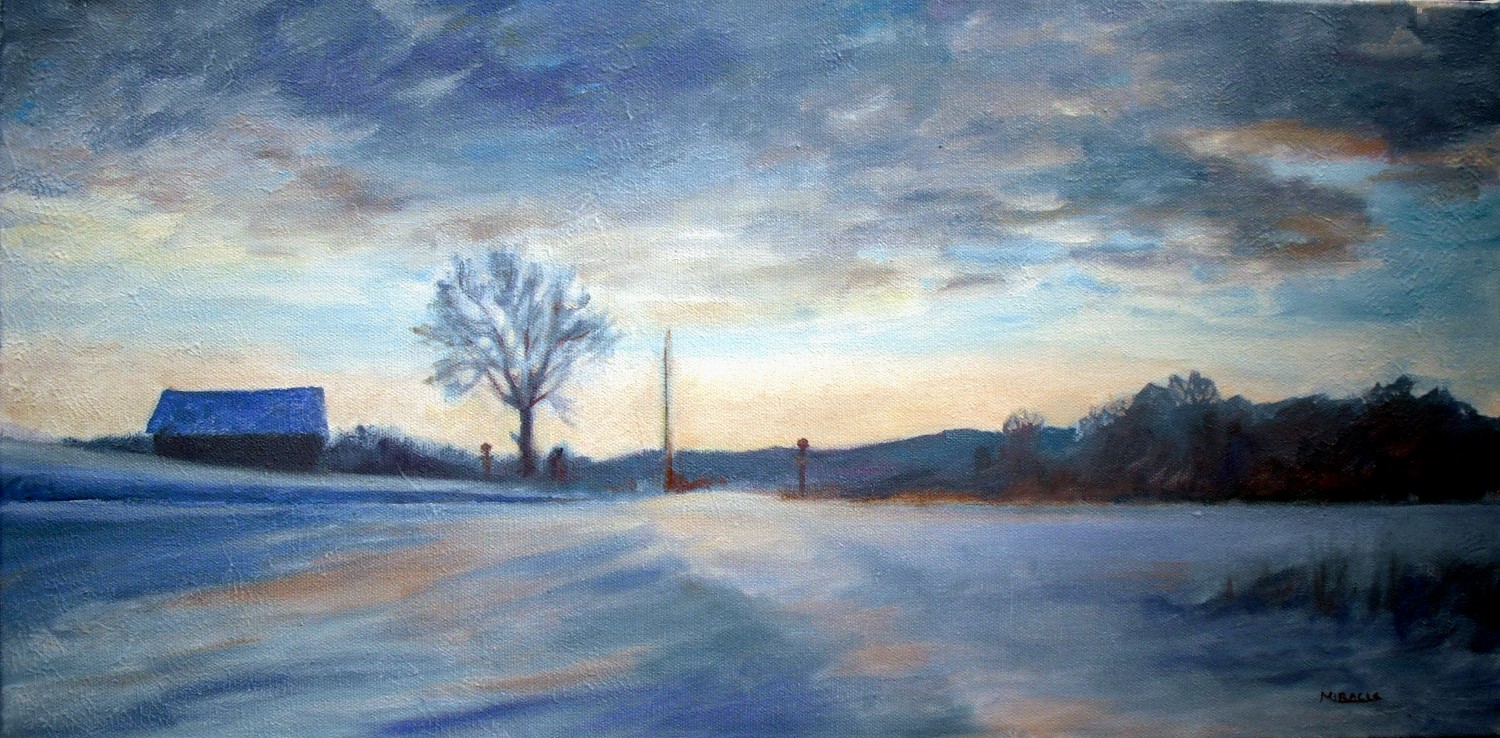
Winter in Mentor, Final, 12 x 24, oil on Canvas, Kit Miracle

Winter in Mentor, Final, 12 x 24, oil on Canvas, Kit Miracle

Artists usually have some reason that they paint a subject.  This could be a desire to convey beauty, despair, record something historical, or whatever.  In this painting, I wanted to convey the bone-chilling cold one early morning this month.  Check out my step-by-step page.

Painting New York

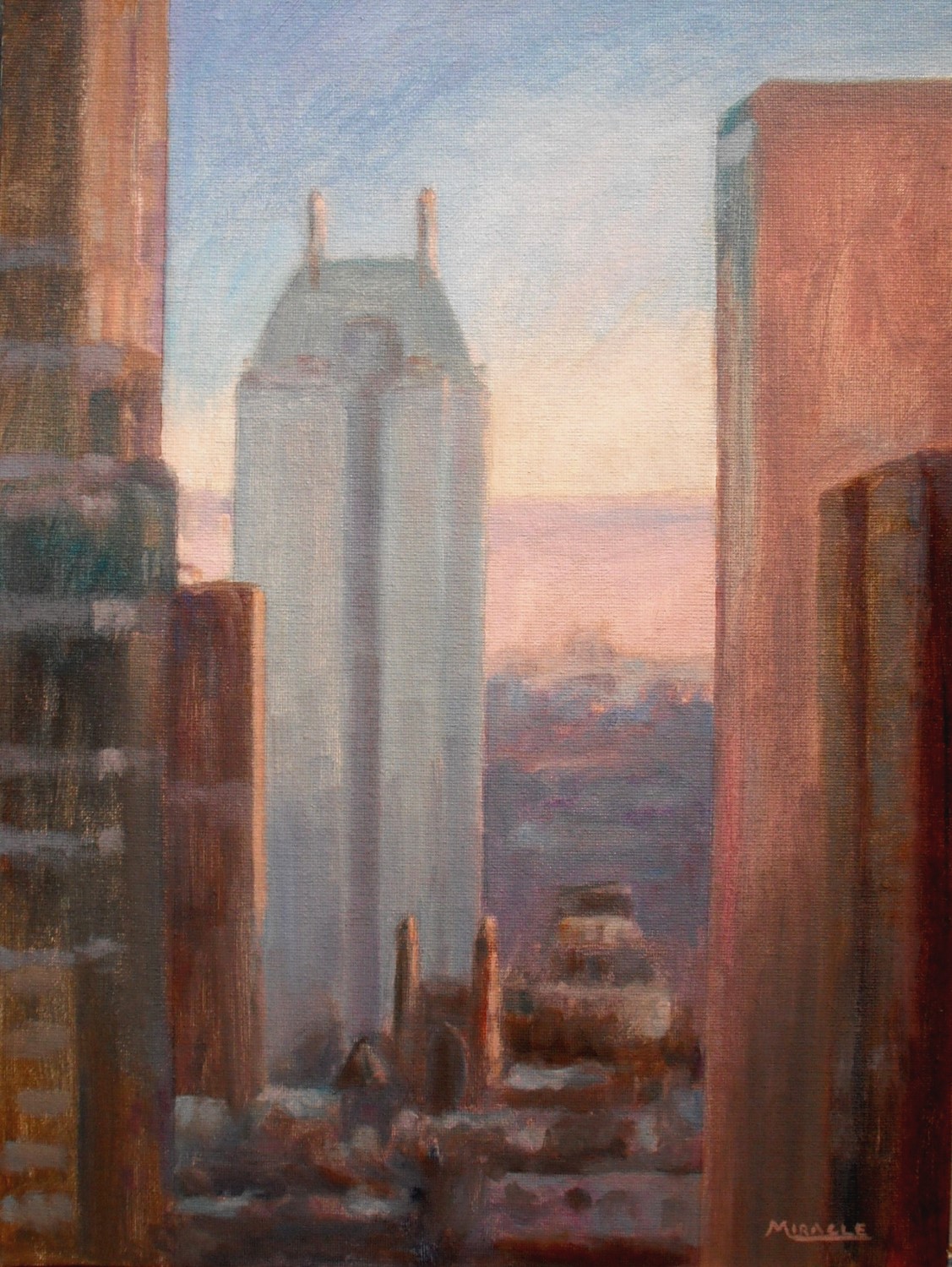
New York in January, Sunrise

New York in January, Sunrise

Each January I visit New York for conference.  Although I’m officially there for business, I never can seem to turn off my artist’s eye.  I’ve put  sketches up here before which I’ve done in museums, hotel rooms, night clubs.  Even just leaning against a wall in Times Square late at night.  Always interesting to me.  Most do not turn into finished artwork but are just memory notes.

This happens to be a painting that I did based on the view from my hotel room.  I love the early morning light dancing across the buildings with the cool colors of Central Park in the background.  There seemed to be some inversion layer going on which translated into a variety of impressionist colors.

When I create a painting like this, I’m often asked why I didn’t finish off the buildings.  But that wasn’t what attracted me to the scene, I reply.  It was the juxtaposition of hard and soft shapes, early morning light, a light dusting of snow on the roof tops.  I doubt the painting would have been improved if I had included every window, balcony, and detail.  This just leaves the soft feeling of a city wakening to a new morning.  What do you think?

Finding time to paint

A few weeks ago I was showing my studio to an elderly friend of mine who commented, “How do you find time to paint all these pictures?”  Now this woman has been a professional artist all her life, including many years as a commercial artist so I was a bit puzzled by her remark.  This reminded me of a situation a few weeks before then.  I was at a picnic with a group of friends.  They were sitting around talking about all their favorite shows, how they had downloaded several years worth of episodes.  Interestingly enough, I hadn’t watched any of the shows.  Ever.  Not one episode.

So back to the question of how I produce so many paintings.  I guess I just work at it.  It’s all about priorities.  I don’t have any more time than anyone else, probably less considering my day job as director of a multi-discipline arts center with some real crazy hours.  But this is just what I do.  It’s all about priorities.  Yes, I watch the news and might get sucked into Jeopardy or Antiques Roadshow, but mostly if I’m not painting, I’m reading or working outside.  I can usually squeeze in 15 or 20 hours per week which is the equivalent of a part-time job.  Even if I get only one painting done a week, that is still 52 per year.  Usually way more depending upon the size and complexity of the works. Not all paintings are the same quality and some are just sketches.  A plein air painting may only take a couple of hours before the light changes.  And I may work on it a bit more in the studio.  Some are just studies.  Some are more finished pieces.

So my usual reply to people who say they don’t have time to paint (or learn a musical instrument, read a novel, write a novel, etc.) is, “You can always make time for the things that are important to you.”

My question to you, is, “What are your priorities?”  Make the time for you.

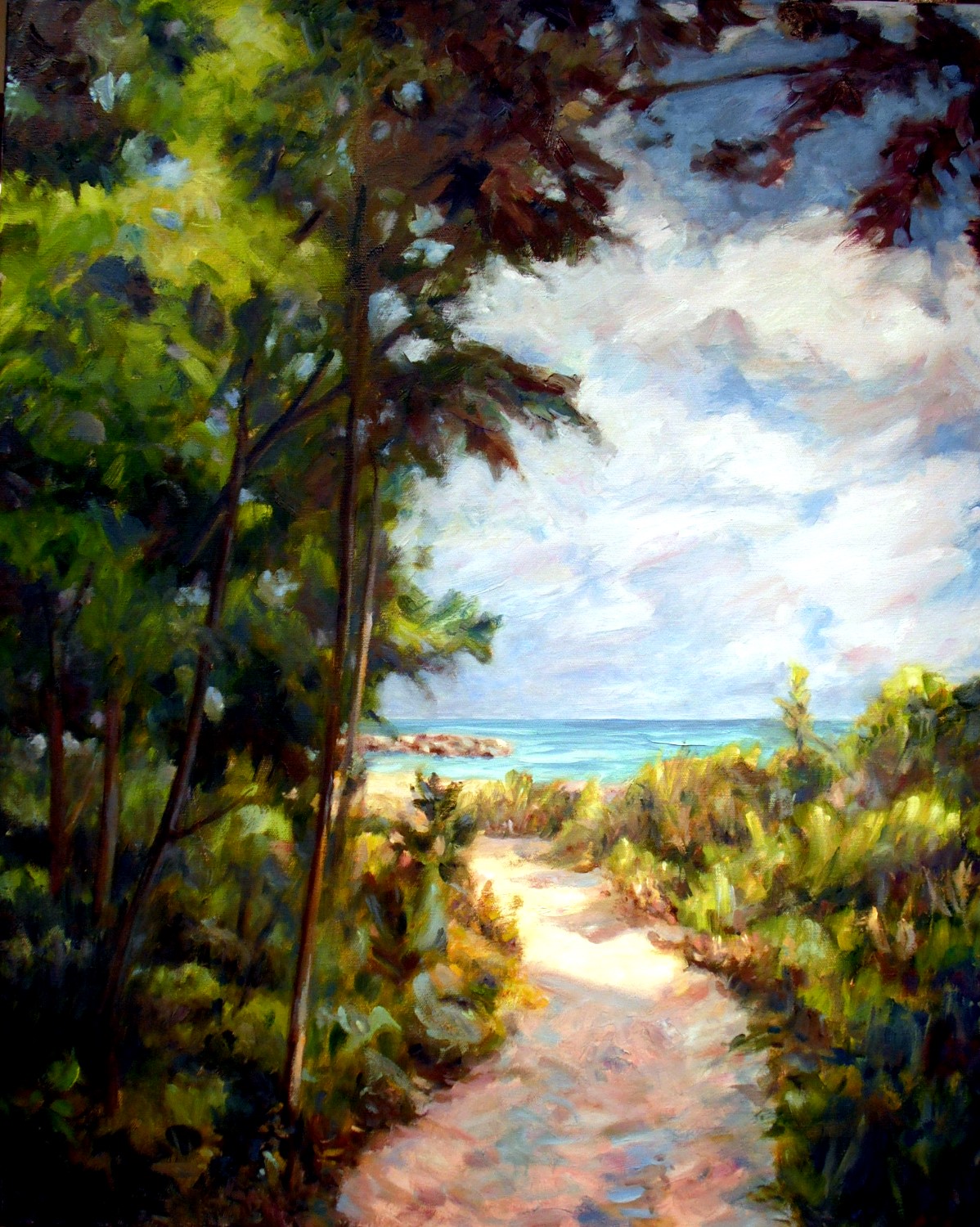
Path to the Beach, 24 x 30 oil on canvas, Kit Miracle

Path to the Beach, 24 x 30 oil on canvas, Kit Miracle

Painting Nova Scotia

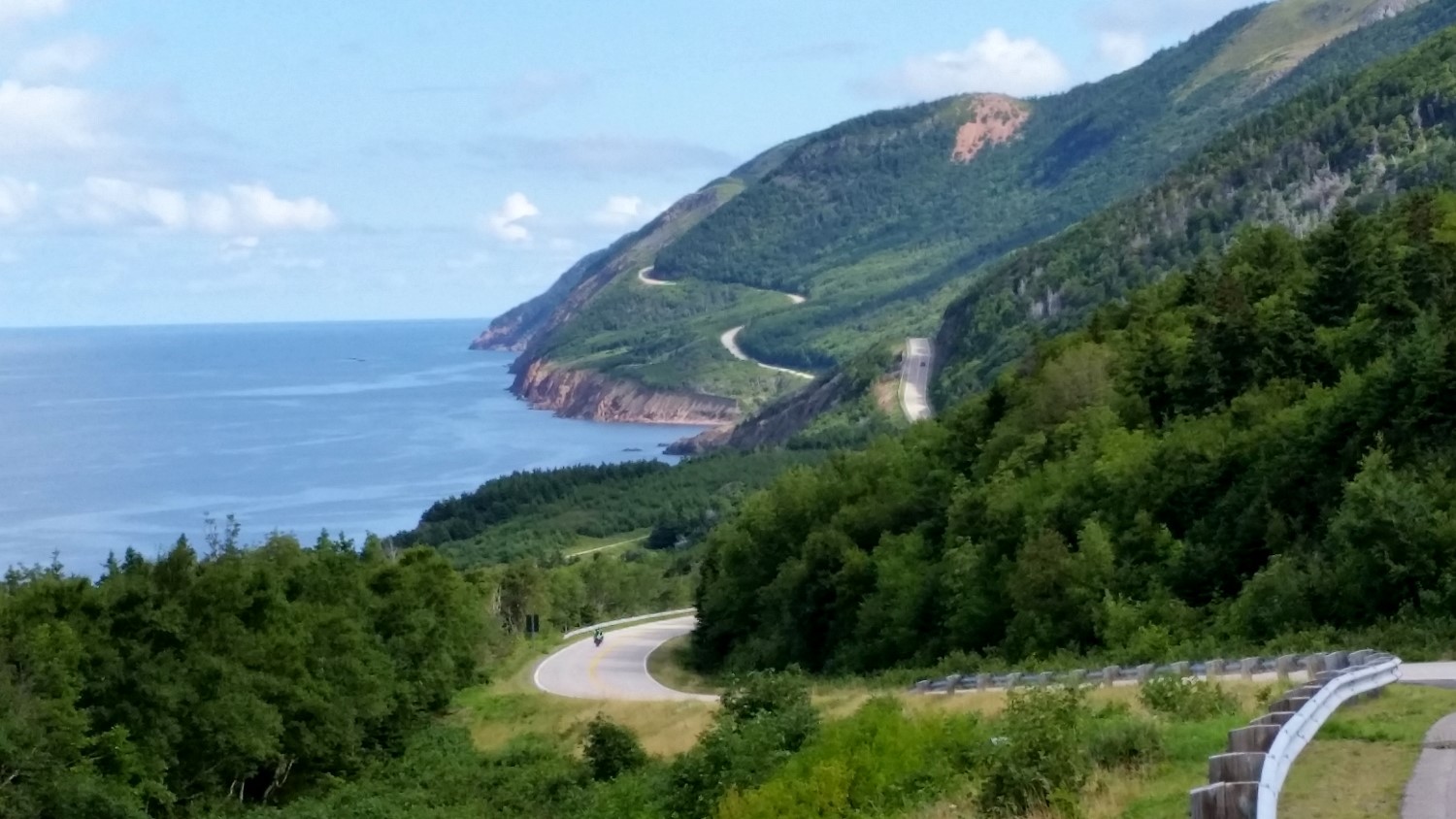
Cabot Trail, most iconic of drives.

Cabot Trail, most iconic of drives.

My husband and I made a trip to Nova Scotia last month.  Neither of us had been up that way.  It was so beautiful!  I took my painting materials but came home with enough subject matter to last for a long time.  We spent a week on Nova Scotia south shore, then toured the Cabot Trail in Cape Breton and finally ended on Prince Edward Island.  The weather was lovely with temps in the low seventies, dipping to the fifties and even forties at night.  Perfect for August, I think.

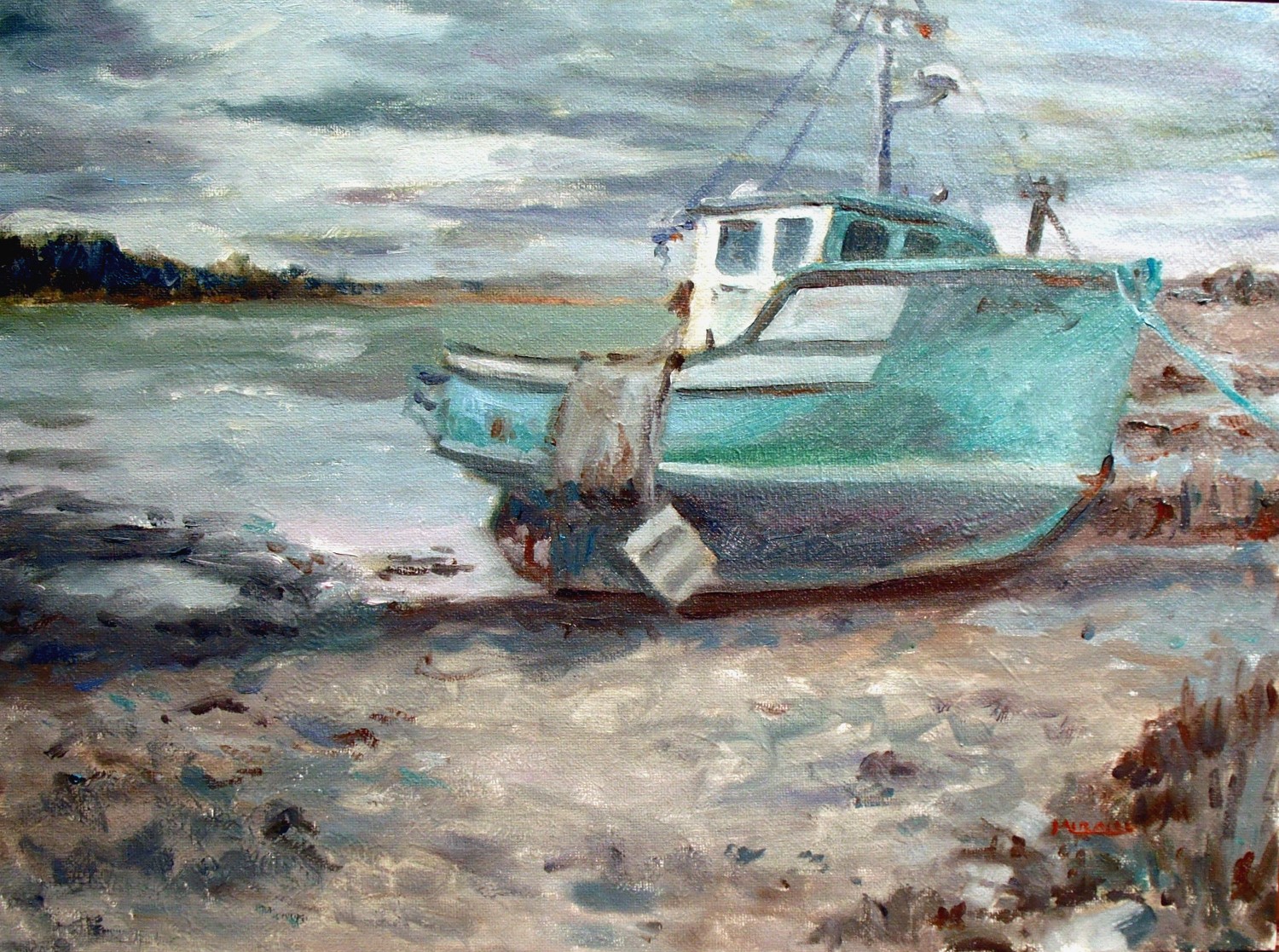
Nova Scotia Beach, Storm  Coming

Nova Scotia Beach, Storm Coming

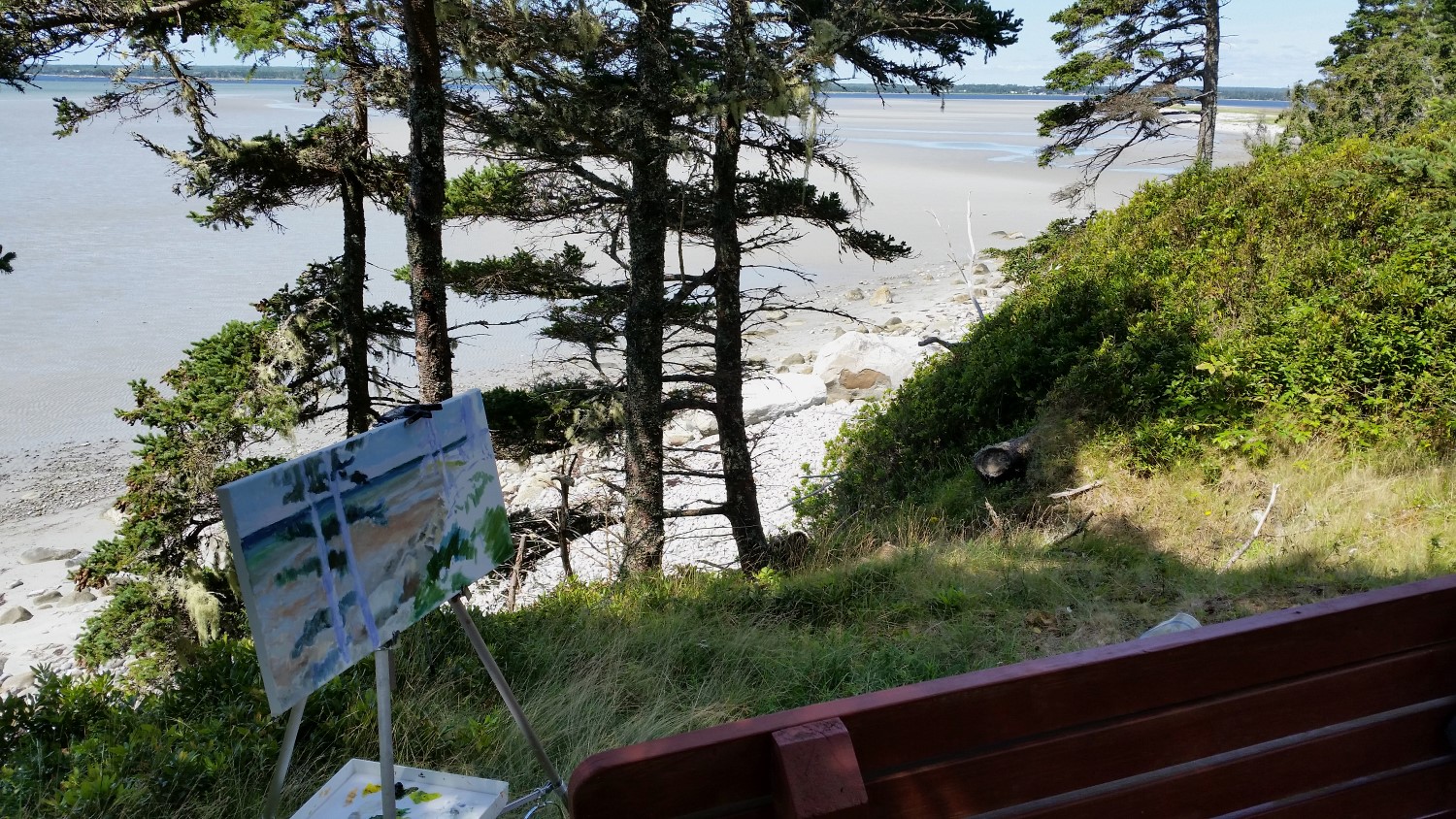
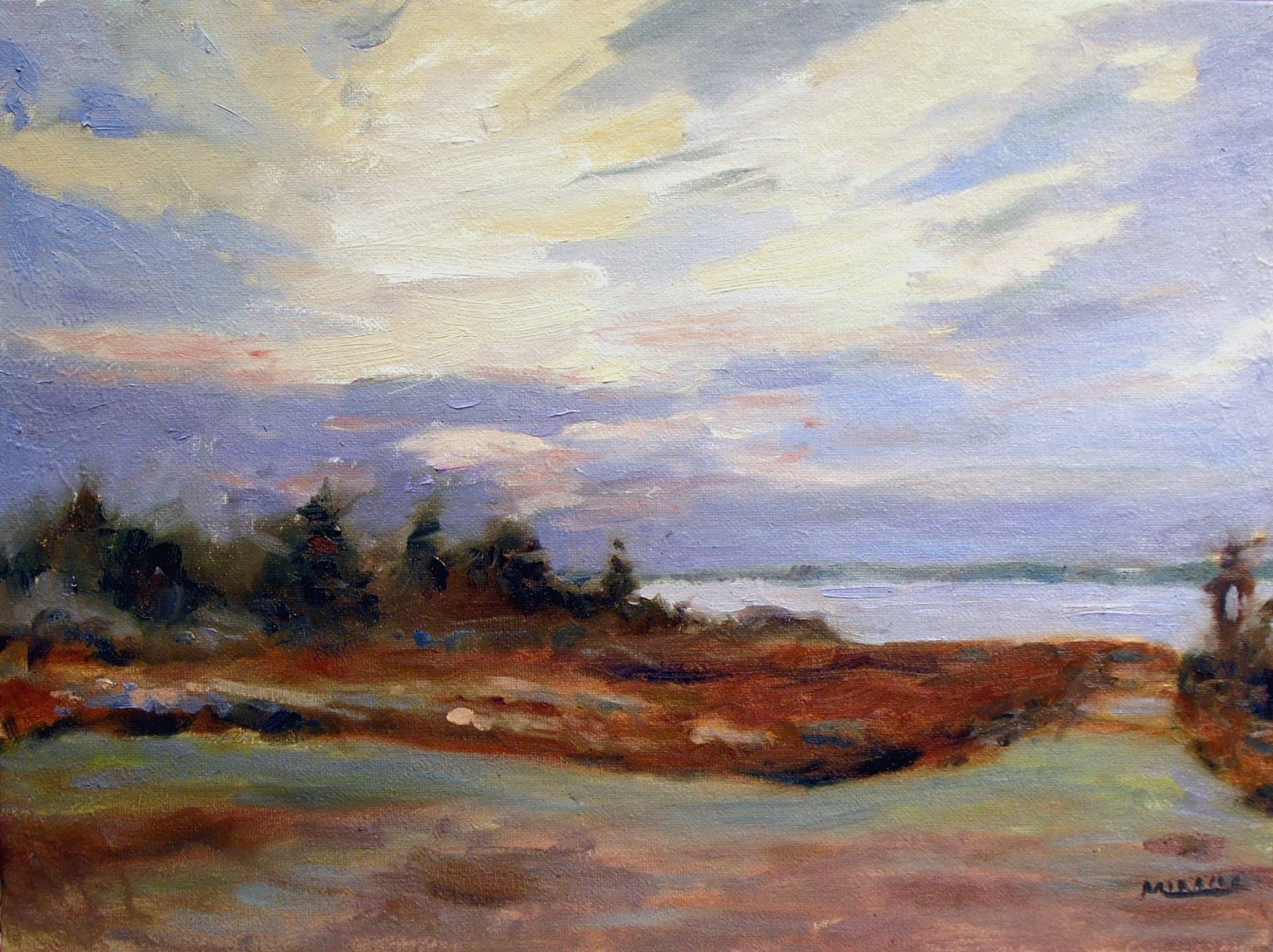
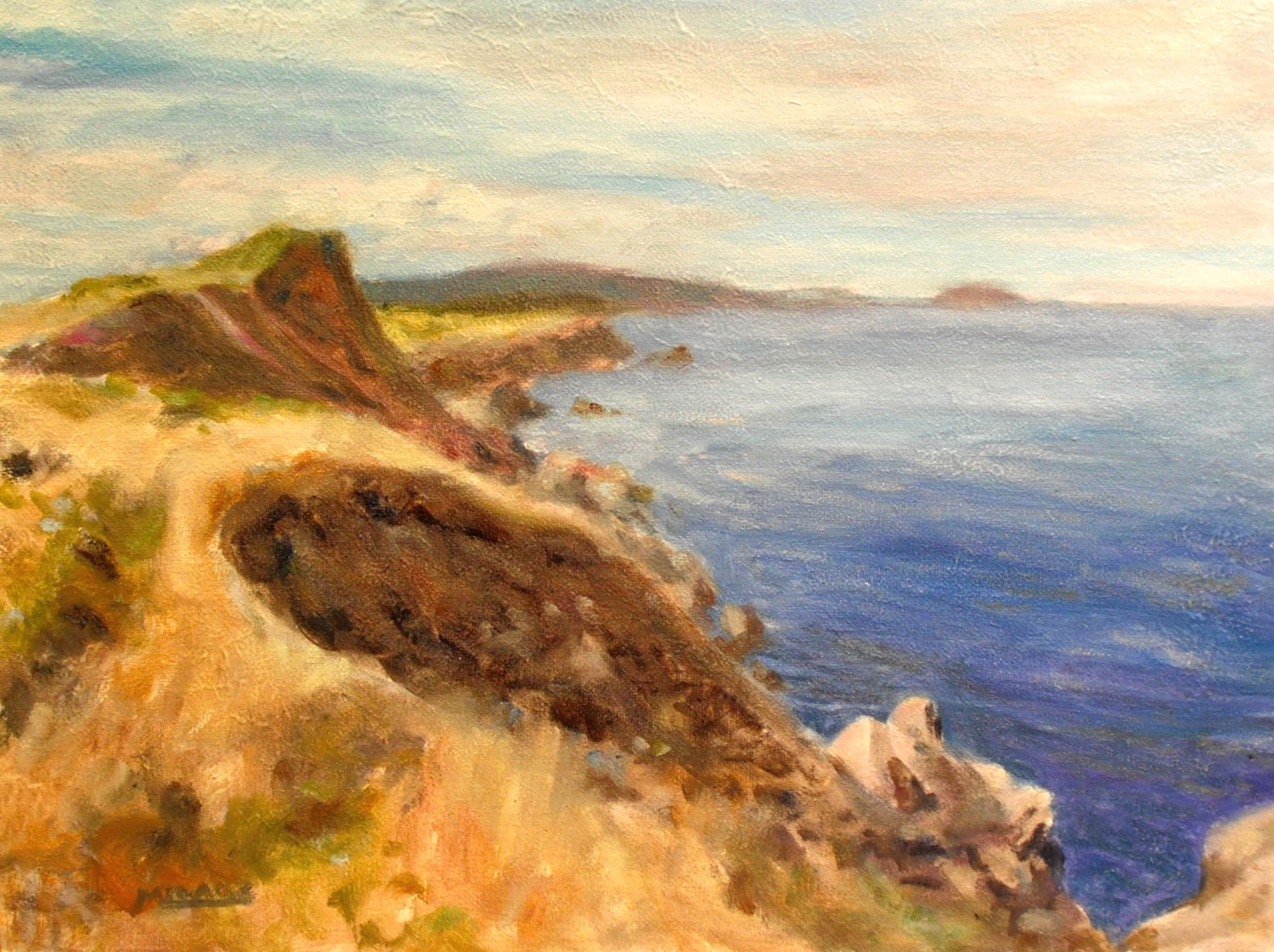
Here are the first few paintings, some painted on location, some back here at home.  Rugged shores, pines, ocean, beautiful sunsets and sunrises, quaint towns and fishing villages…what more could an artist want?  As always, I appreciate any feedback.

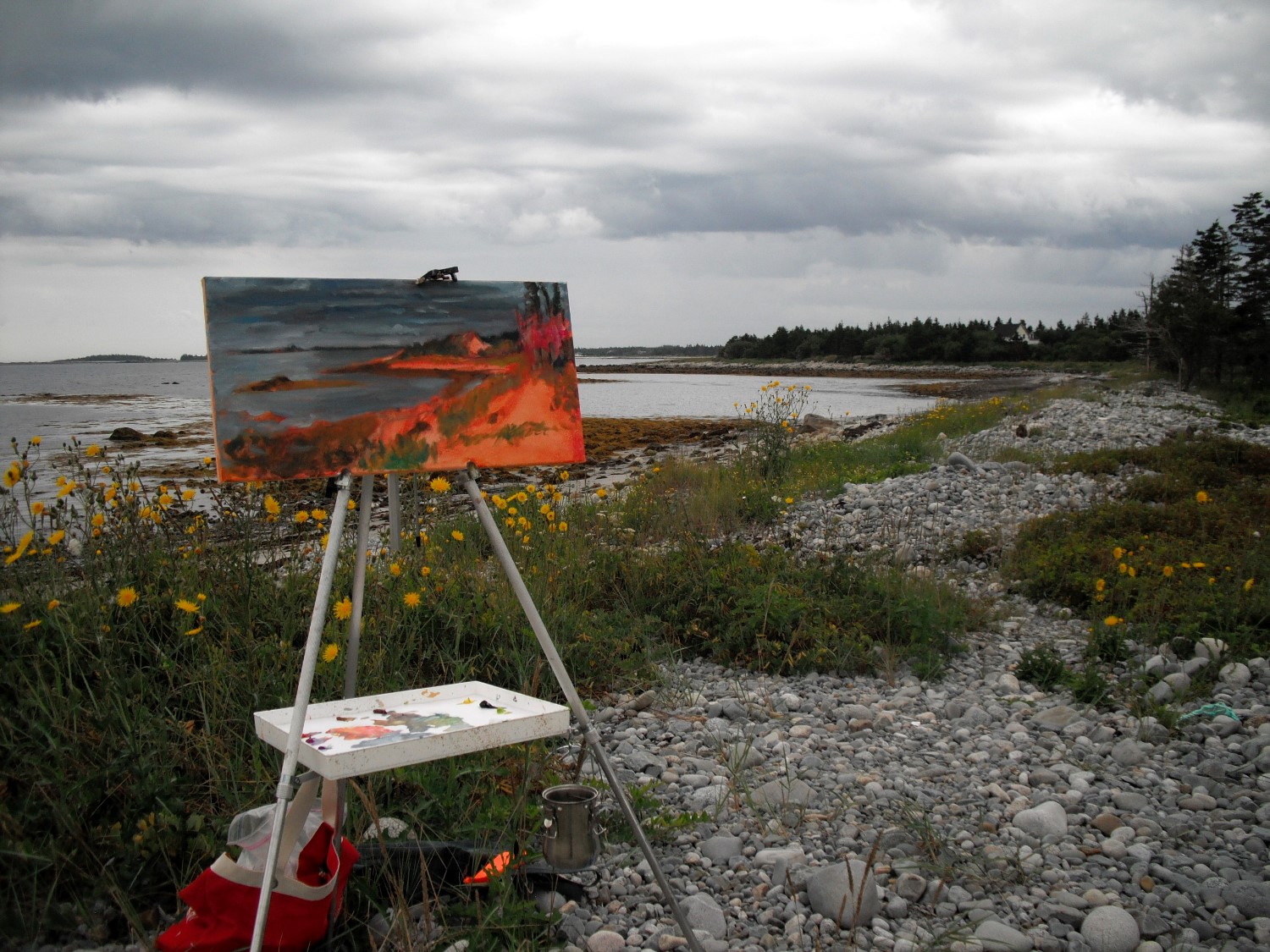
Painting at Sand Hills Beach, Nova Scotia, Kit Miracle

Painting at Sand Hills Beach, Nova Scotia, Kit Miracle

Sunrise, Nova Scotia, oil on canvas, 12x16, Kit Miracle

Sunrise, Nova Scotia, oil on canvas, 12×16, Kit Miracle

French Lily, oil on canvas, 12x16, Kit Miracle

French Lily, oil on canvas, 12×16, Kit Miracle

Cape Breton, Cabot Trail, 12x16, oil on canvas board, Kit Miracle

Cape Breton, Cabot Trail, 12×16, oil on canvas board, Kit Miracle

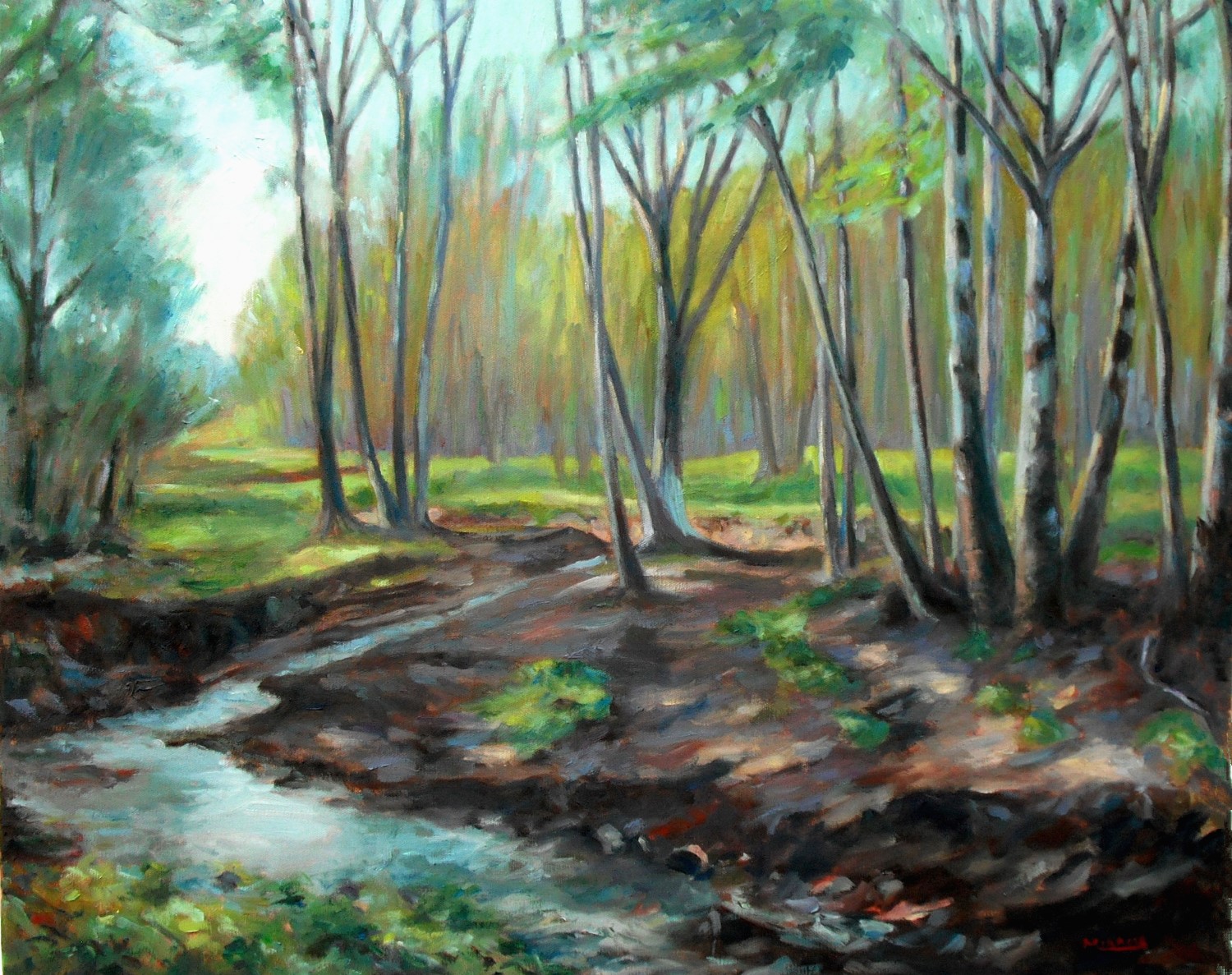
Ritter Creek, Painting A Complex Subject

Ritter Creek, Final, 24 x 30, oil on canvas, Kit Miracle

Ritter Creek, Final, 24 x 30, oil on canvas, Kit Miracle

Ritter Creek is just down the road from me.  Like my last posting of French Lick Creek, this was also painted on a toned canvas.  However, this was a very complex subject, lowland creek bottom with many trees.  Check out my step-by-step demonstration for further information.  Sometimes as the artist, you must take things out to make a better composition.  Ritter Creek, Demonstration

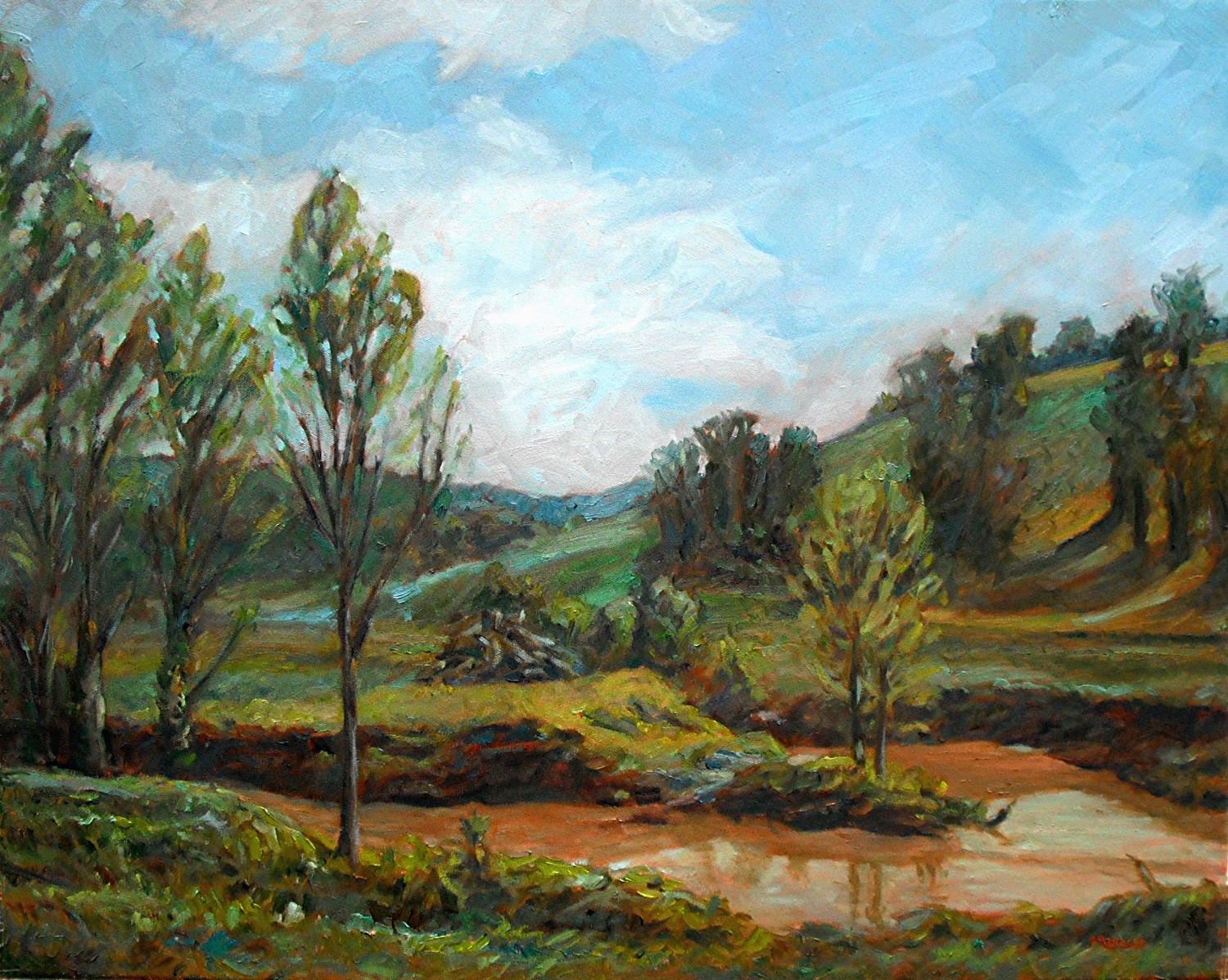
Making friends with green

French Lick Creek, final, oil on canvas, 24x30, Kit Miracle

French Lick Creek, final, oil on canvas, 24×30, Kit Miracle

Green is one of the most difficult colors for most artists to handle.  However, if you’re going to paint landscapes, you’d better make friends with green.  I think the biggest mistake inexperienced artists make is not really looking at the color.  Green comes in many varieties – yellowish, orangey, silver, blue, purple.  Even just looking closely and slightly emphasizing what you see will help you immensely.  To learn more about the painting above and to see a demo, check out the page French Lick Creek, making friends with green, demonstration.

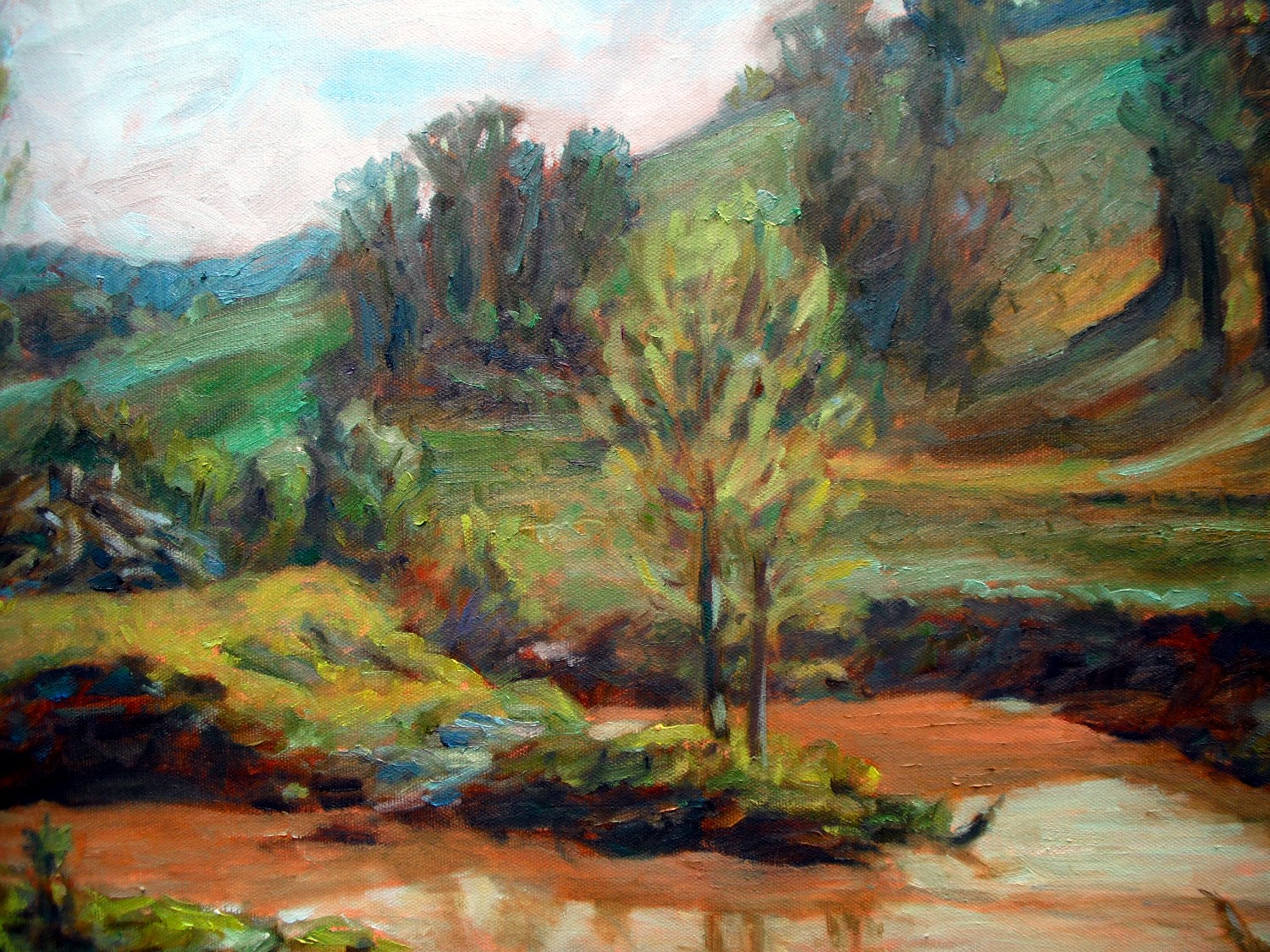
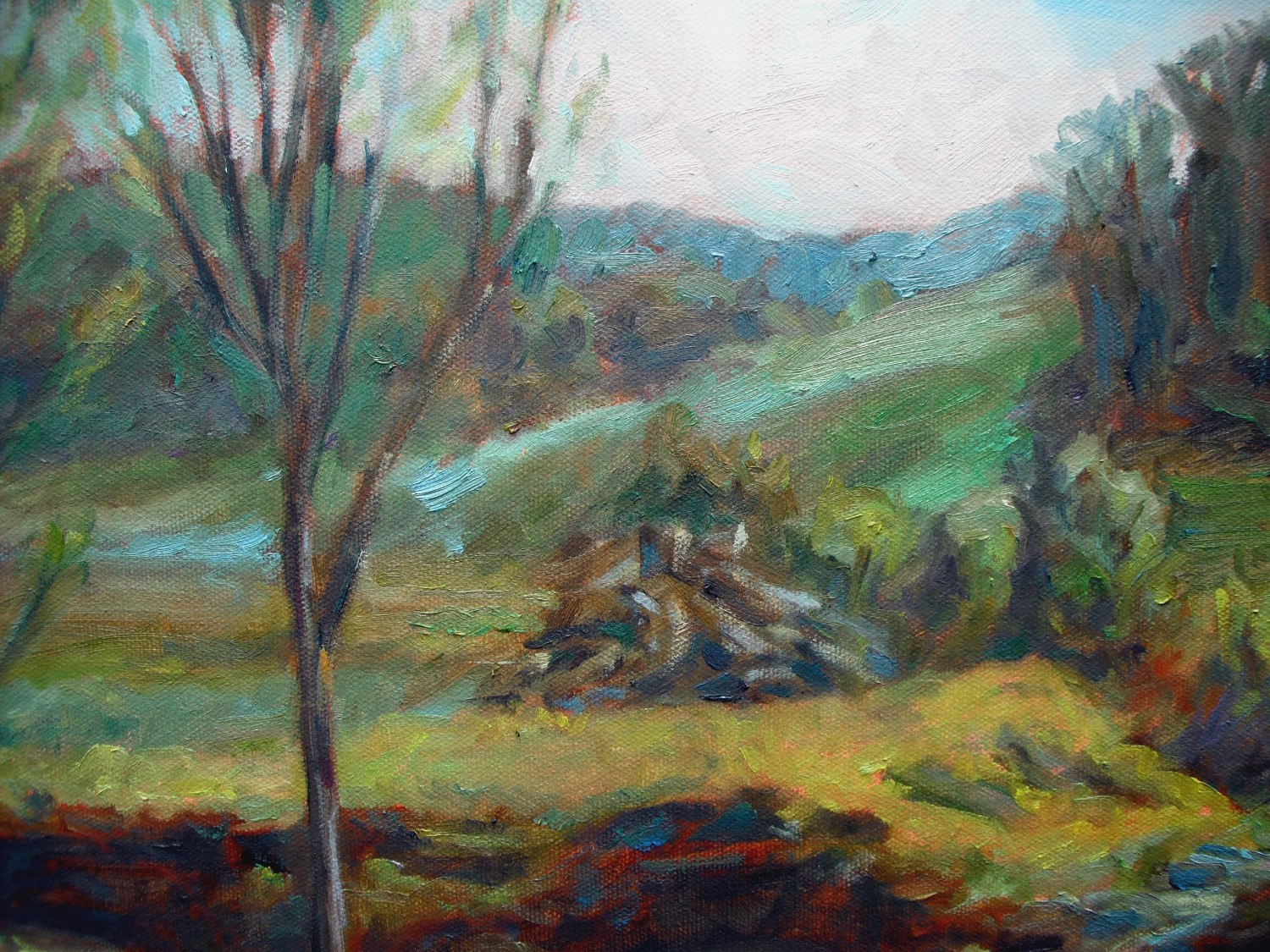
FrenchLickCreek,detail1 FrenchLickCreek,detail2 FrenchLickCreek,detail3 FrenchLickCreek,detail4

Simplify your backgrounds

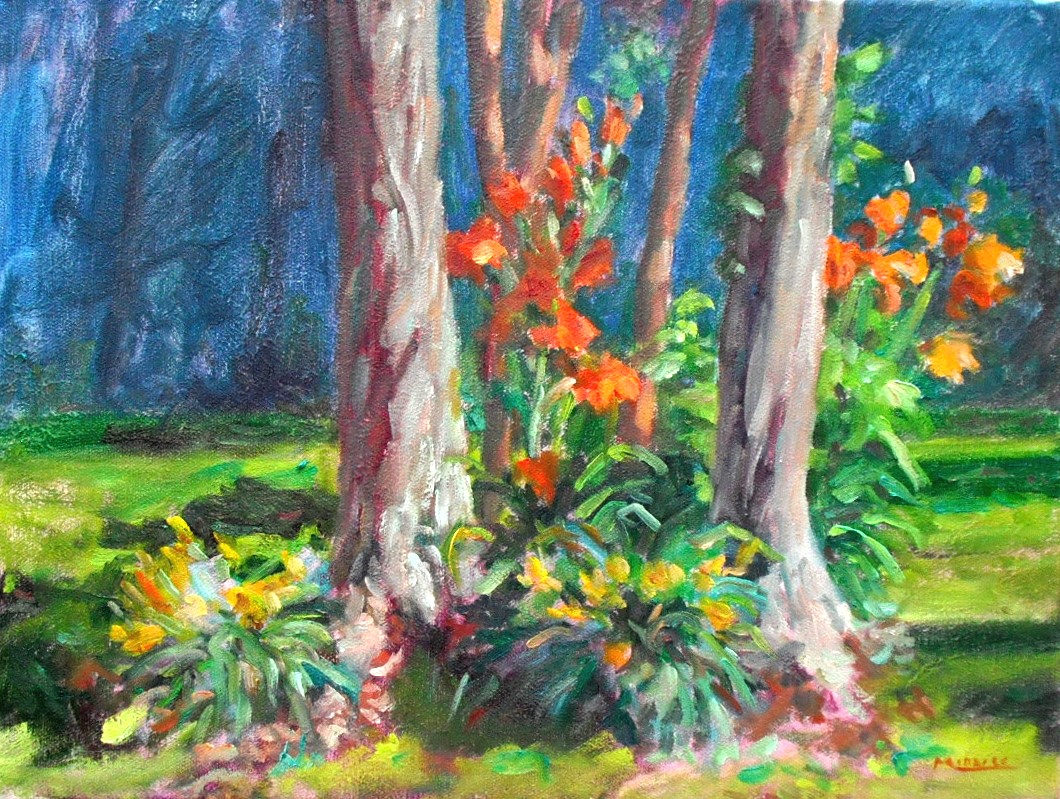
Often, when we venture into the great outdoors to paint, we are assaulted with visual overload.  There’s just too much out there!  I find that a good way to approach the problem of too much is to simplify my backgrounds.  In this recent plein air painting of June lilies, I could have added a lot of trees and stuff in the background but decided to emphasize the flowers instead.  I chose to do this by painting the background with a muted variety of purples and blues.  As you can see, this really makes the flowers pop.  By the way, the orange day lilies grow wild in great masses along the country roads this time of year.

June Day Lilies, oil on canvas, 12x16, Kit Miracle

June Day Lilies, oil on canvas, 12×16, Kit Miracle

The original area with a busy background.

The original area with a busy background.

Painting Main Street

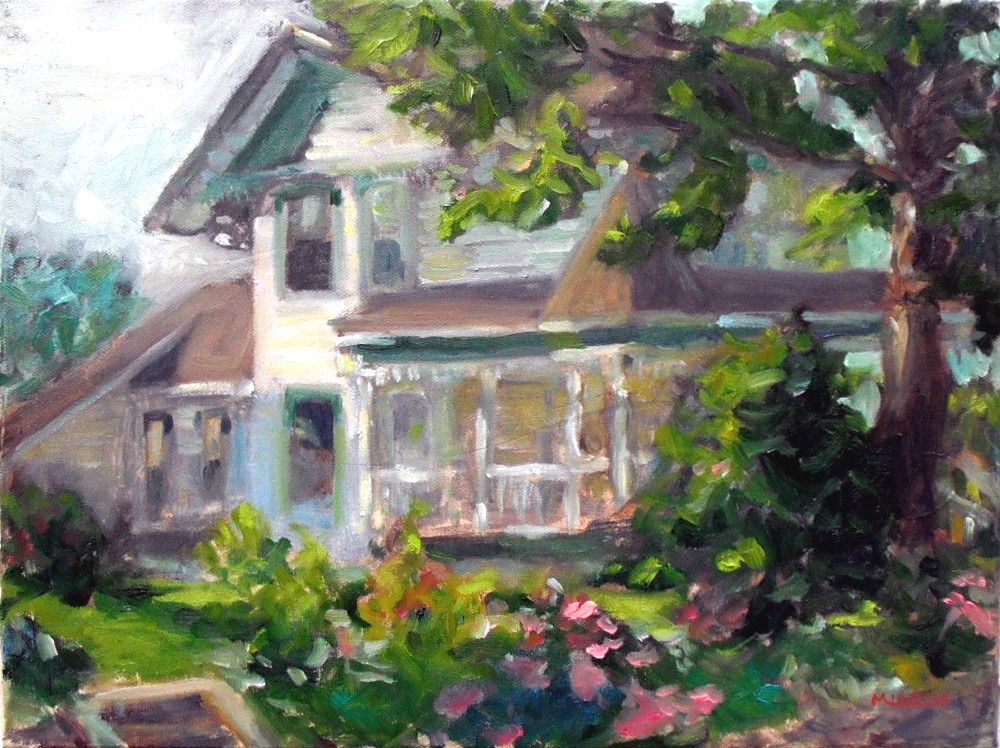
Main Street House #1, oil on canvas, 12x16, Kit Miracle

Main Street House #1, oil on canvas, 12×16, Kit Miracle

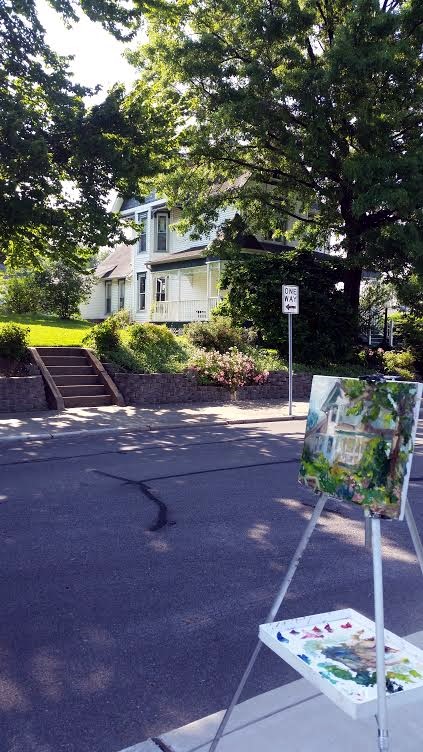
I went out painting this past Sunday morning in town.  Sundays are usually pretty quiet if you’re painting an urban setting.  There is a row of old houses on Main Street which have been renovated and provide some pretty interesting subject matter.  The first house, with all the gingerbread and roses is almost too saccharine but I thought I’d give it a stab.  I was actually planning to paint it from the other side (south) but since I arrived pretty early, I caught this morning light on the north side. There are some who would like to see every little detail but I believe that you should let the viewer’s eye fill in some of the details.  If I tried to paint a photo-realist painting…what IS the point, eh? …then I think the painting would have lost a lot.

Main Street House #1 en plein air, Kit Miracle

Main Street House #1 en plein air, Kit Miracle


Main Street House #2, oil on canvas, 12x16, Kit Miracle

Main Street House #2, oil on canvas, 12×16, Kit Miracle

A friend went with me this morning but she had other obligations and had to leave.  I wasn’t ready to pack up so I turned around and then painted the neighboring house.  I really like the light in both of them.  I could probably find subject matter for several paintings in a few blocks of Main Street, especially if I come back at different times of day.

What does YOUR Main Street look like?

Main Street House #2, en plein air

Main Street House #2, en plein air

Spring Busyness

Beginning around March, outdoor work really kicks up here in the country.  This amounts to cleaning up debris left over from the winter, tidying flowerbeds, trimming dead branches, etc.  Then preparing the garden patch and beds for planting.  While it’s rewarding when it’s finished, at times I wish I lived in a condo near a big park.  Well, not really but it is tiring.

This is also one of the most beautiful times outdoors here in southern Indiana.  The trees start sporting a haze of pink and purple buds, understory trees like Dogwood and Redbud assault the eyes.  Other times of the year, you wouldn’t even notice their scrawny selves.  Spring also displays some of the most beautiful shades of greens from lime green to sea blue.  By June, the woods and fields display a pretty even state of crayon green. Not my favorite color, I admit.  Strange for a landscape painter.

This is also the time of year when I’m torn between my “have to” garden work and my vagabond painter self who just wants to toss the gear into the car and take off.  I usually manage a bit of both.

Below are an assortment of a variety of spring paintings, some quite small at only 8 x 10, which is far smaller than my usual sizes.  And, I’ll admit, while it’s always a joy to dive into the spirit of painting, the results are not always so great.  Well, I tell myself, I always learn something.  Even if it’s only something of what not to do next time.  As usual, I always welcome your comments and feedback.  Don’t be shy.

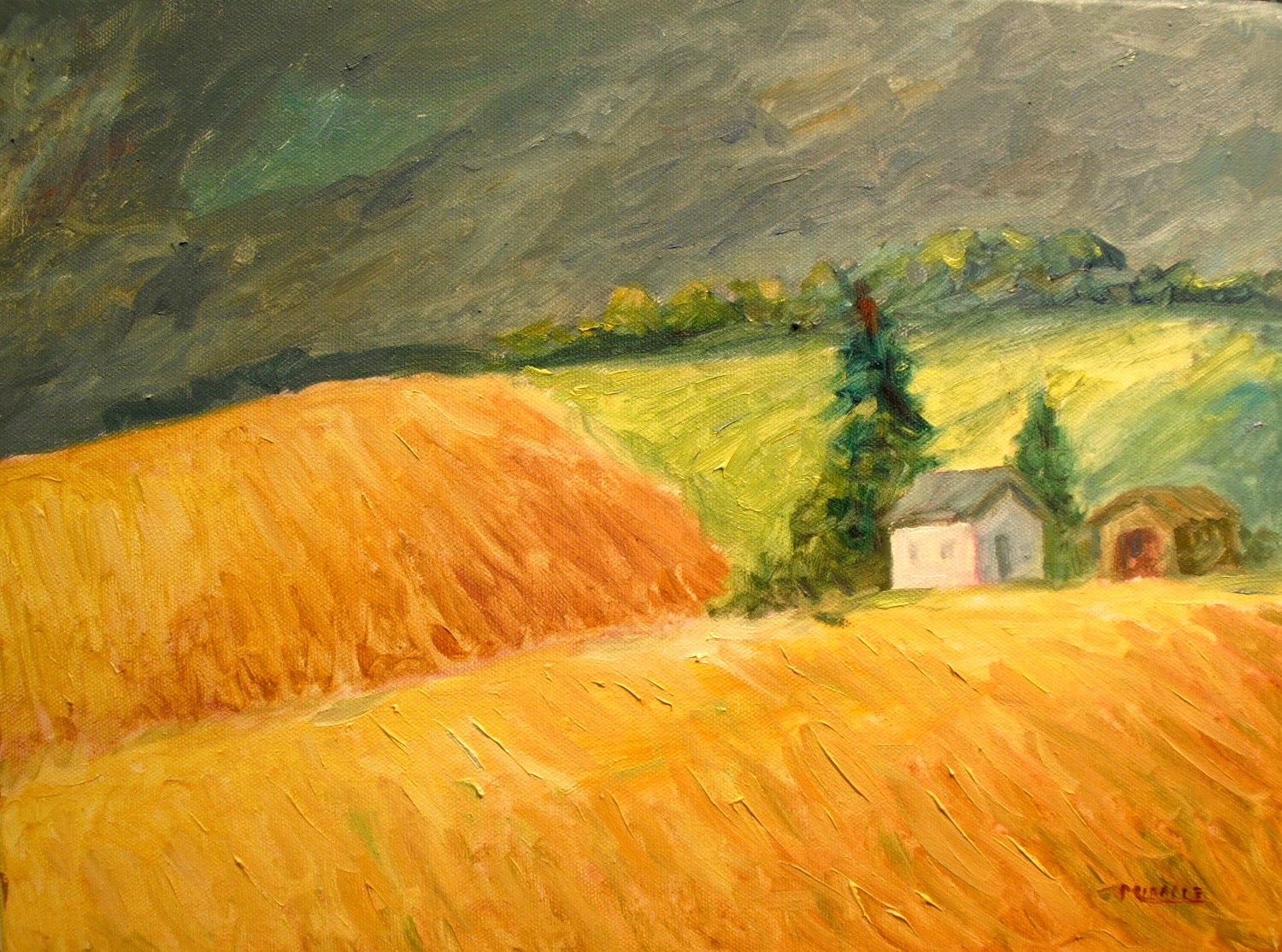
One of the most interesting colors is the limey-greenish-yellow of fields of wild mustard.  I spotted this field one day with a dark grey storm rolling in which really set off the yellow.  I did the first one from memory but it looks more like a Van Gogh spin-off.  Later I went back and painted it from life.  I think I like the second one better.

Abbett's Field 12 x 16 oil on canvas - from memory

Abbett’s Field 12 x 16 oil on canvas – from memory
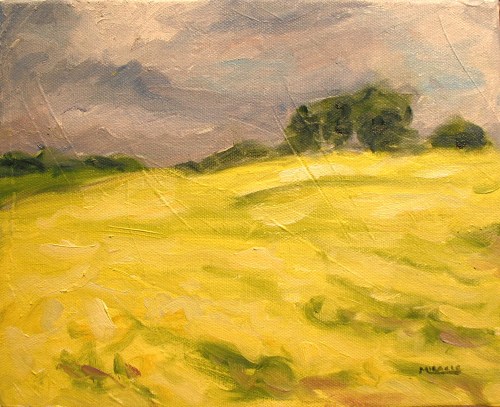
Abbett's Field from life, 8 x 10, oil

Abbett’s Field from life, 8 x 10, oil

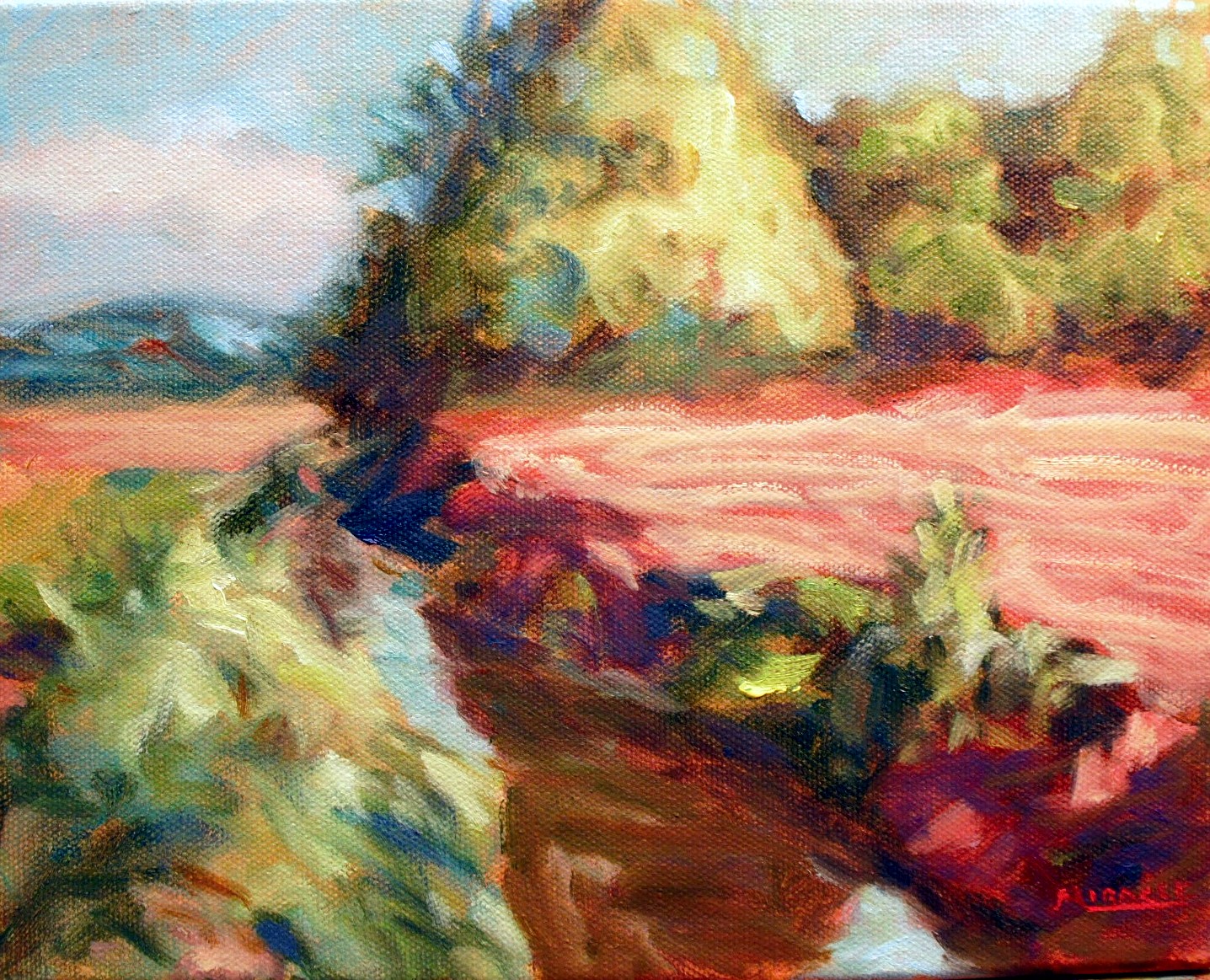
This is a creek that I pass on my drive to work.  Mostly attracted to the reflection in the water which is always a challenge.  Again, from memory.

Creek near St. Anthony, 8 x 10, oil

Creek near St. Anthony, 8 x 10, oil

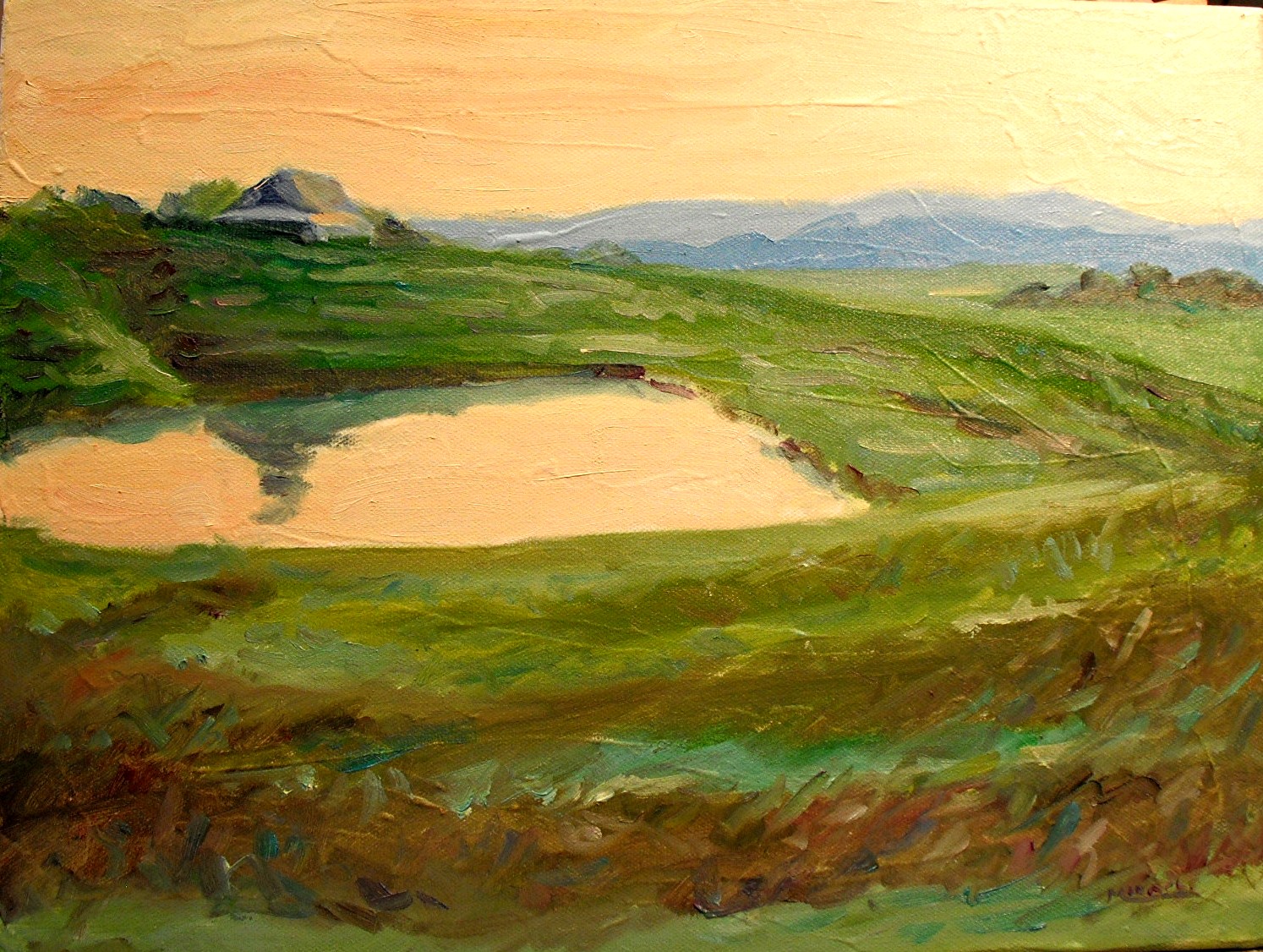
And another drive-by painting of a farm with the distant blue hills, hazy sunrise and pond reflection.

Farm at sunrise on a hazy day, 12 x 16, oil

Farm at sunrise on a hazy day, 12 x 16, oil

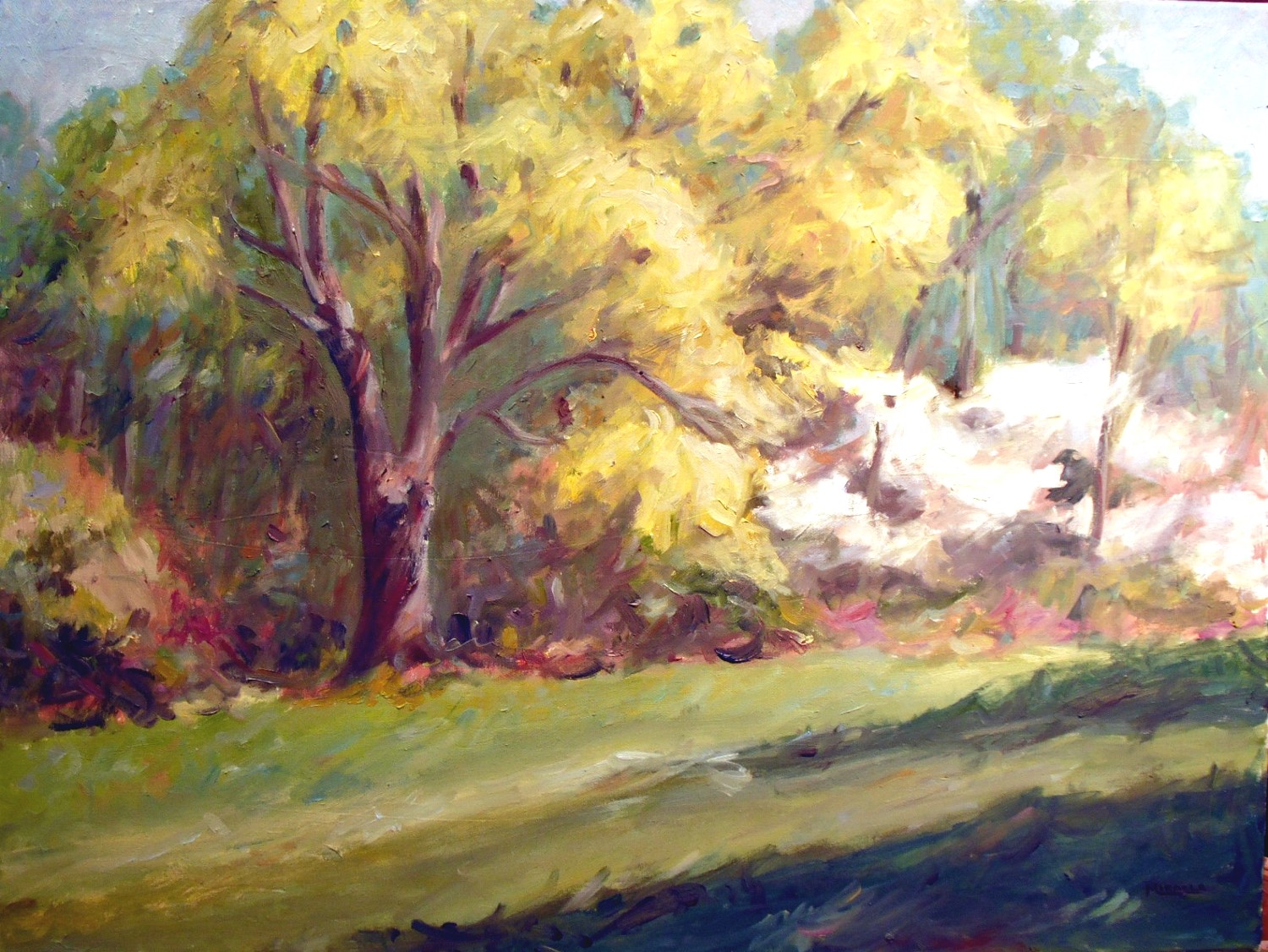
And this painting was started outdoors then brought inside.  White oak trees have the most interesting spring green color with racemes of flower/pods.  I didn’t quite capture it but it’s a good start.  Since it’s near the house, I will try to paint it under other conditions and seasons.
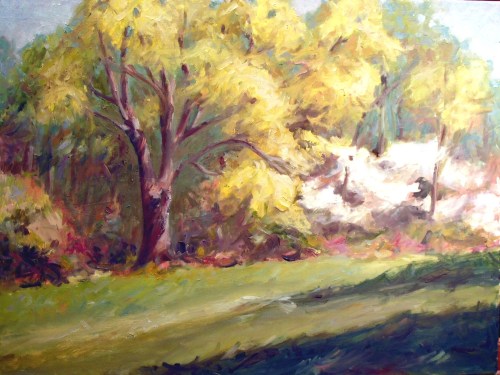
White oak in spring with dogwoods, 18 x 24, oil

White oak in spring with dogwoods, 18 x 24, oil

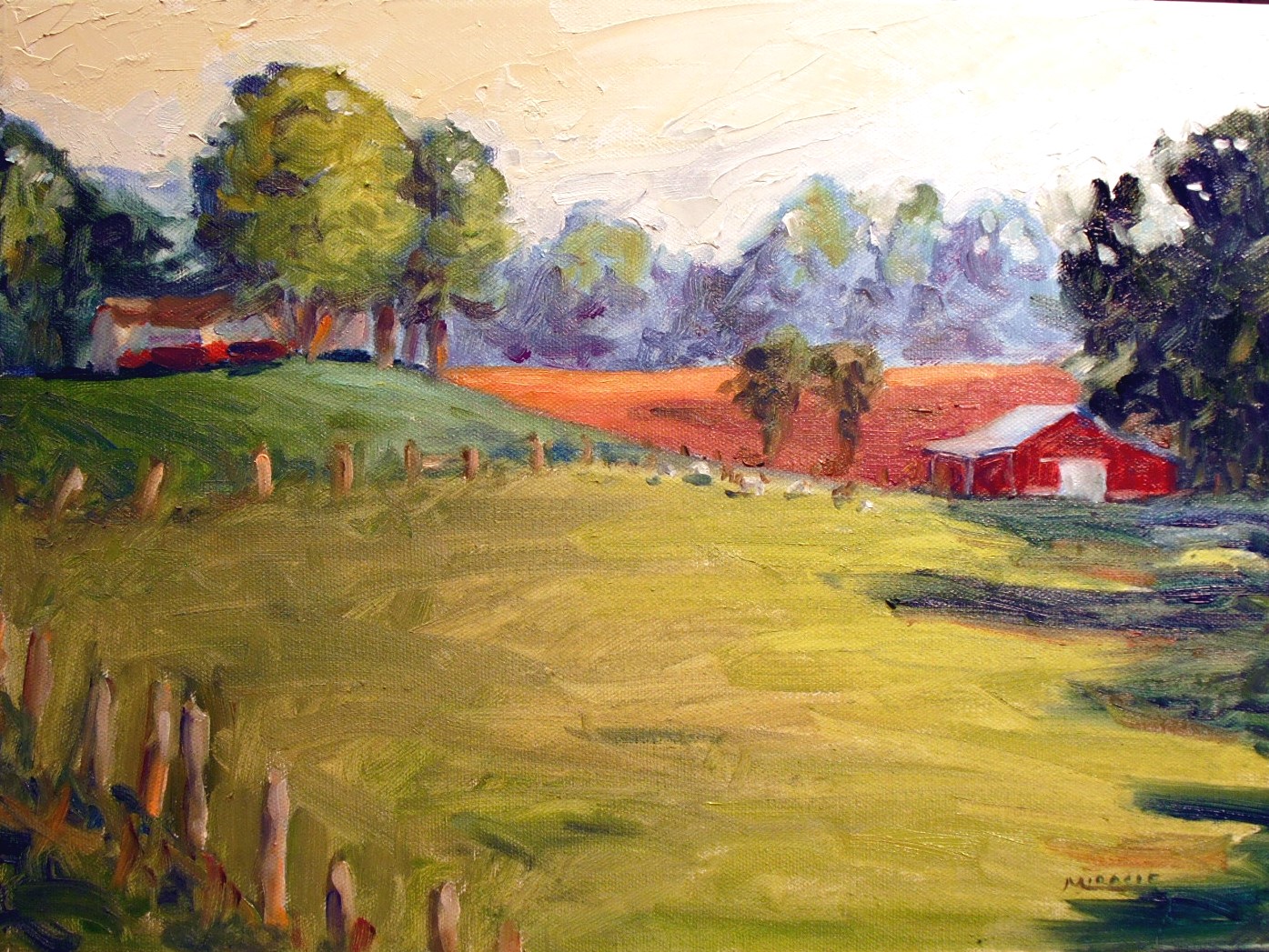
The final painting that I just completed is a goat farm that I pass each day.  I love the evening shadows.  They usually have about 30 goats but I thought that would be overkill.
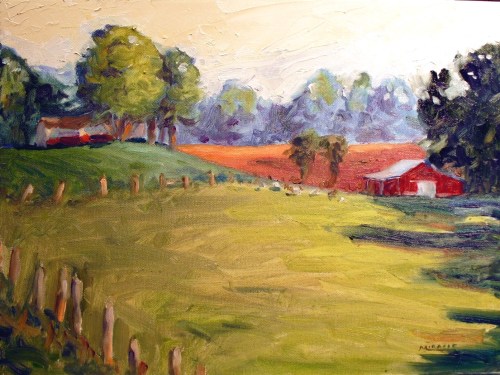
The Goat Farm 12 x 16, oil
The Goat Farm 12 x 16, oil